Geochang County Council Audit: Assemblyman A Raised Questions Without Verifying Amount... ‘Verification Lapse’ Controversy
Assemblyman’s Inquiry Based on Incorrect Korea Elevator University Advertising Figures Provided by County Official
First-Term Assemblyman Cites Specific Amounts in Public Audit
Insufficient Fact-Checking Raised as Issue
At the administrative audit of the Geochang County Council in South Gyeongsang Province, controversy has arisen after it was revealed that Assemblyman A had raised concerns about the advertising expenses of Korea Elevator University without first verifying the exact amount that formed the basis for his inquiry.
During the administrative audit of the Geochang County Council held on August 31, Assemblyman A questioned whether part of the publicity expenses provided by Geochang County to Korea Elevator University, which had been used for an anniversary advertisement by a local media outlet, was executed in line with the intended purpose of the subsidy project.
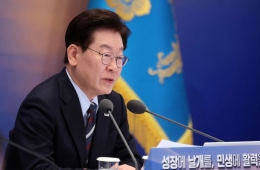
![[Photo by Choi Soonkyung] The head of a media company is conversing with Assemblyman A regarding the administrative audit inquiries related to the advertising expenses of Korea Elevator University.](http://www.asiae.co.kr/news/img_view.htm?img=2026090716065818778_1788764819.jpg)
[Photo by Choi Soonkyung] The head of a media company is conversing with Assemblyman A regarding the administrative audit inquiries related to the advertising expenses of Korea Elevator University.
View original imageHowever, the amount of advertising expenses Assemblyman A cited during his audit inquiry was not calculated based on actual executed figures, but was instead derived from materials prepared by a county official.
Moreover, it was found that the figure for advertising expenses in question had been recorded incorrectly during the county official's preparation of the documents.
If a county official entered an incorrect amount in a report, responsibility for data preparation and verification within county administration cannot be overlooked. However, since the Geochang County Council's administrative audit serves as a watchdog over the executive branch's budget execution, if the council publicly raised issues citing specific figures without verifying those numbers against actual settlement documents or expenditure evidence, the process of pre-verification by the assembly member also warrants scrutiny.
Especially if Assemblyman A, who is in his first term, raised questions about the appropriateness of subsidy execution without thoroughly verifying the most basic fact—the sum involved—this could lead to criticism regarding the credibility of the administrative audit and the member’s ability to verify documents.
An administrative audit is not simply a matter of citing material submitted by the executive branch to raise issues, but a core oversight mechanism for local councils that must assess administrative appropriateness based on actual expenditure records and supporting documents.
The initial responsibility for the incorrect figure rests with the county. However, having used that number as the basis for official inquiries during an administrative audit, Assemblyman A likewise cannot be exempt from critiques that he should have checked the facts once more before proceeding with his questions.
Furthermore, when publicly discussing matters related to specific vendors—such as advertising expenses for media outlets—and including specific figures, rigorous verification is even more critical. Disclosing numbers that differ from reality can lead to unnecessary misunderstandings about the companies involved.
In the end, while the issue began with a documentation error on the part of a county official, the fact that incorrect figures were used in the audit inquiry without independent verification has prompted reflection on the verification process for data by both the executive branch and the council.
When demanding accurate budget execution and strict management of subsidies from the executive branch, council members conducting audits should also base their inquiries on precise data and factual relationships. Only when administrative audits of Geochang County Council are underpinned by accurate fact-checking can their oversight and monitoring functions earn trust and credibility.
Hot Picks Today
 "Please Pay Me at Least 3 Million Won a Month": More Than Half of Young People Today Prioritize "Working Conditions" Over Company Size
- Selling Like Crazy Every Year... 30-Year-Old Hetbahn Takes on a New Challenge: Tastes Better Than "Mom's Home Cooking" [On-Site Report]
- "Americans Would Be Amazed If They Came": Wide-Eyed at a Sight They've Never Seen Before... Foreigners Also Fall for K-Baseball [K-Holic]
- Ministry of Finance and Economy's 'FSC Check' Theory, Lawsuit Allegedly Aimed at Securing Reappointment... Sh Suhyup Bank Chief Selection Grows More Contentious
- Beachgoer Finds 'Plastic' That Turns Out to Be Perfume Ingredient Worth More Than Twice as Much as Gold
While the county official’s documentation error was the initial cause, there is also criticism that Assemblyman A should have conducted thorough pre-verification, rather than referencing specific figures during the public audit without confirming their accuracy.
© The Asia Business Daily. All rights reserved. Unauthorized AI training and use prohibited.