Ministry of Oceans and Fisheries Launches “Public Institution Functional Reform TF”… Discusses Employment Succession and Prohibition of Unfavorable Treatment
Discussion on Functional Adjustment and Efficiency Strategies for Public Institutions Targeted for Reform
Kickoff Meeting on Port Authority Integration Scheduled for September 8
The Ministry of Oceans and Fisheries has established a dedicated task force to reorganize the functions of public institutions in the maritime and fisheries sector and to streamline similar or overlapping functions between agencies. Through this initiative, the ministry plans to discuss matters such as employment succession and the prohibition of unfavorable treatment before and after mergers and consolidations.
On September 7, the Ministry of Oceans and Fisheries announced the launch of the Public Institution Function Reform Task Force (TF), which will involve affiliated public institutions.

On September 3, the government announced a public institution function reform plan to merge Busan, Incheon, Ulsan, and Yeosu-Gwangyang Port Authorities into the Korea Port Authority (provisional name). The separately established port security and management corporations for each port authority will also be merged into the Korea Port Security Facilities Corporation (provisional name).
Additionally, the National Maritime Museum, the National Incheon Maritime Museum, and the National Uljin Marine Science Museum—which have each carried out similar work in maritime relic preservation, exhibition, and maritime culture promotion—will be merged into the Korea Maritime Culture Promotion Agency. General affairs and accounting functions will be unified, while individual museums and science centers will focus solely on their core functions of exhibitions and cultural activities.
The Korea Institute of Ocean Science and Technology and the National Marine Biodiversity Institute of Korea, which have overlapping research functions, will be integrated into the Korea Institute of Ocean Science and Technology. Additionally, the Korea Maritime Transportation Safety Authority and the Korea Institute of Aids to Navigation, both of which oversee maritime traffic safety, will be consolidated under the Korea Maritime Transportation Safety Authority. This is intended to prevent the excessive subdivision of functions and roles and to unify administrative service points for users.
Through this task force, the Ministry of Oceans and Fisheries aims to establish a detailed roadmap for functional reform and encourage its prompt implementation. The ministry also plans to discuss concrete measures to address issues that may arise on site, including employment succession, the prohibition of unfavorable treatment before and after consolidation, and the provision of incentives for consolidation.
Following the establishment of the task force, on September 8, the Ministry of Oceans and Fisheries, led by Vice Minister Nam Jae-heon, will hold the kick-off meeting for the task force on public institution functional reform. The CEOs of all four port authorities will attend the meeting to discuss the formation of the Port Authority Integration Task Force and other key items necessary for the integration.
Hot Picks Today
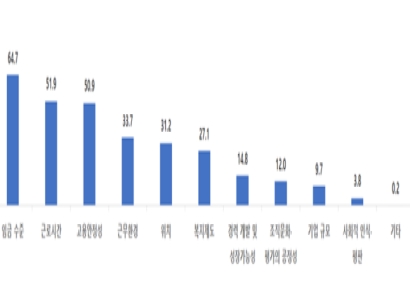 "Please Pay Me at Least 3 Million Won a Month": More Than Half of Young People Today Prioritize "Working Conditions" Over Company Size
- Selling Like Crazy Every Year... 30-Year-Old Hetbahn Takes on a New Challenge: Tastes Better Than "Mom's Home Cooking" [On-Site Report]
- Ran 18 km With 9-Year-Old Tied to Him at the Waist... "Man Banned From Competing for 3 Years"
- "Hey, Lady, Teach Your Kids to Behave!" ... 300,000 Won in Cash and a Bodily Injury Claim Demanded Over Child's Door Ding
- Beachgoer Finds 'Plastic' That Turns Out to Be Perfume Ingredient Worth More Than Twice as Much as Gold
Minister Hwang Jongwoo of the Ministry of Oceans and Fisheries stated, "The core of this functional reform is to organically connect dispersed functions so that public institutions can focus on their original roles. We will strengthen communication with major stakeholders such as public institution employees, labor unions, and local communities, and minimize any inconvenience that may arise during the functional reform process."
© The Asia Business Daily. All rights reserved. Unauthorized AI training and use prohibited.





![[Market ING] KOSPI Seeks Rebound in Superweek Packed with Corporate Earnings and FOMC](https://cwcontent.asiae.co.kr/asiaresize/307/2026102514484873155_1792907327.jpg)