Mokpo City Implements 'Two-Track' Fiscal Strategy for Ninth Administration: Focus on Management and Perceptible Finance
Limited Discretionary Funds for City Projects Within the 1.2 Trillion Won Budget
Early Issuance of 100 Billion Won in Local Gift Certificates
Expansion of Budgets for Everyday Citizen Needs
Mokpo City, designated as part of the proposed Jeonnam-Gwangju Unified Special City, will shift its fiscal management system for the ninth popularly elected administration to focus on two pillars: “Management-Oriented Finance,” which efficiently governs limited resources, and “Perceptible Finance,” which enables citizens to directly experience positive change in their daily lives.

Mayor Seonghwi Kang of Mokpo City announcing the financial management direction at the 1st regular session of Mokpo City Council on the 7th. Provided by Mokpo City
View original imageThe city’s plan is to rigorously cut unnecessary spending while actively channeling budgets into areas necessary for the local economy and residents’ livelihoods, essentially practicing selective prioritization and concentration.
On September 7, at the 408th Regular Session of the Mokpo City Council, the city government announced the fiscal management policy for the ninth administration under the slogan, “A Robust Fiscal Structure and Tangible Improvements for Citizens.”
The city assessed that, although the recently reduced Local Allocation Tax has partially rebounded, this does not yet signify a normalization of fiscal flexibility.
Mokpo City’s annual budget totals approximately 1.2 trillion won. Of this, after subtracting 570 billion won which is earmarked for central and provincial government allocations, around 630 billion won is available for discretionary use by the city.
However, with fixed expenditures—such as personnel costs, welfare expenses, and facility management fees—amounting to roughly 550 billion won annually, the actual resources left for launching new city-led initiatives are severely limited.
In particular, following a reduction of about 130 billion won in Local Allocation Tax during 2023 and 2024, there has been a recovery of roughly 60 billion won in 2025 and 2026. Yet, since emergency reserves such as the Fiscal Stabilization Fund had to be mobilized to cover shortfalls during the decrease, much of the current rebound must now also be directed toward restoring fiscal buffers, according to the city’s analysis.
In response, Mokpo City will implement a fiscal system for the ninth administration based on the two categories—“Management-Oriented Finance” and “Perceptible Finance.” The core of Management-Oriented Finance consists of the concepts “Fiscal Diet (-)” and “Fiscal Plus (+).”
Through the Fiscal Diet, the city will adjust underutilized or overlapping public facilities and recurring projects with weak outcomes, while also strengthening the management of fiscal assets such as local government bonds and municipal property.
Conversely, the Fiscal Plus policy focuses on expanding the revenue base.
The city will step up the sale of general-owned properties and the collection of tax arrears, aiming to increase the local tax collection rate to 98% by actively identifying and managing potential tax sources. It will also strategically pursue additional external funding by securing more central and provincial government support and government grants.
Beyond short-term expenditure adjustments, Mokpo City will pursue so-called “Priming Fiscal Policy” by attracting companies and investment to boost long-term local revenues.
The plan is to actively attract headquarters, manufacturing facilities, and public institutions to the region to drive job creation and local investment. This, in turn, is expected to create a virtuous fiscal cycle where expanded corporate activity and economic growth lead to greater tax revenues for the city.
The city will actually expand “Perceptible Finance,” which directly impacts citizens’ daily lives and the local economy.
For example, Mokpo City plans to quickly issue 100 billion won worth of local community gift certificates to stimulate local consumption and reinforce support for traditional markets and small business owners.
The city also intends to expand next year’s main budget to include “Immediate Response Fiscal Policy,” rapidly addressing everyday civic inconveniences that residents frequently encounter, such as road damage, garbage, traffic, and parking issues.
In sum, the ninth administration’s fiscal strategy can be described as reducing low-impact spending to secure sound public finances, while strategically concentrating resources on areas vital to the local economy and citizens’ wellbeing, instead of implementing blanket austerity measures.
Kang Seong-hwi, Mayor of Mokpo, remarked, “Neither unconditional austerity nor indiscriminate expansion provides an answer. We will cut what needs to be cut, properly collect the funds due to the city, create future revenue streams, and make sure to spend effectively where necessary.”
Hot Picks Today
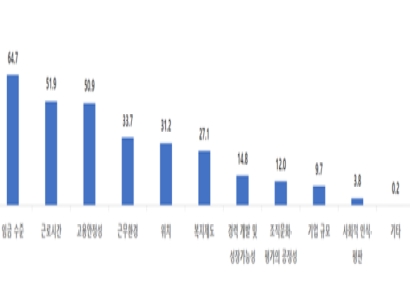 "Please Pay Me at Least 3 Million Won a Month": More Than Half of Young People Today Prioritize "Working Conditions" Over Company Size
- Selling Like Crazy Every Year... 30-Year-Old Hetbahn Takes on a New Challenge: Tastes Better Than "Mom's Home Cooking" [On-Site Report]
- "Is This Really Possible?" The World Is Watching... Could My Car Become a "Mobile ESS"? [Energy Odyssey] 15
- "Hey, Lady, Teach Your Kids to Behave!" ... 300,000 Won in Cash and a Bodily Injury Claim Demanded Over Child's Door Ding
- "Don't Trust This Woman": Documentary on 'Investment Scammer' Earns KRW 22 Billion in One Week
He added, “Building a robust fiscal structure and ensuring tangible improvements for citizens is the guiding principle of fiscal management for Mokpo’s ninth administration. By managing our limited resources efficiently, we will strive to enhance both accountability and the real impact of municipal finances so that citizens can feel real change in their daily lives.”
© The Asia Business Daily. All rights reserved. Unauthorized AI training and use prohibited.