AI and Semiconductors Drive Economic Recovery, but Consumption and Youth Employment Remain Stagnant
Although the South Korean economy continues its recovery, driven primarily by investments related to artificial intelligence (AI), a national research institute has reported that household consumption and youth employment remain sluggish. While exports and facility investments, particularly in semiconductors, are experiencing strong growth, the ongoing slump in construction investment and constraints on household purchasing power have been identified as obstacles to economic recovery. Additionally, uncertainty remains high due to instability in the Middle East and ambiguity surrounding U.S. trade policy.
According to the "September Economic Trends" released by the Korea Development Institute (KDI) on September 7, all-industries production in July increased by 3.1% year-on-year. Although this was a smaller increase than June’s 4.4%, it is above the second-quarter average growth rate of 2.9%, indicating an ongoing general improvement in production. Mining and manufacturing output grew by 3.6%. While the rate of growth decreased from 6.0% the previous month due to a high base effect and fewer working days, on a seasonally adjusted basis, it rose by 0.2% from the previous month. The average operating rate also edged up to 74.9% from 74.7% in the previous month. In particular, production of items closely tied to AI infrastructure investment remained robust: machinery equipment rose by 9.6%, fabricated metal products by 6.9%, and electrical equipment by 4.0%. In contrast, service sector production increased by 3.5%, but this represented a slowdown from June’s 5.4% increase. Retail trade growth dropped from 4.1% to 0.1%, and the accommodation and food services sector shifted from a 1.1% rise to a 1.0% decline.
Facility Investment and Exports Surge, Led by Semiconductors
Facility investment continued to post strong gains, particularly in semiconductor-related fields. In July, facility investment grew by 24.9% year-on-year, expanding from 22.5% in June. Investment in semiconductor manufacturing equipment soared by 66.0%, while electrical and electronic devices increased by 11.0% and general industrial machinery by 12.1%. However, KDI noted that the recent exceptional increase in facility investment also largely reflects a base effect and a surge in investment in transport equipment, which tends to be highly volatile.
Exports remained robust, buoyed by global demand for AI-related investments. In August, exports rose by 68.7% year-on-year, and average daily export value grew by 72.5%. On a daily average basis, semiconductor exports skyrocketed by 216.1%, while computer exports jumped by 431.2%. Exports of steel products and non-ferrous metals rose by 10.4% and 26.7%, respectively.
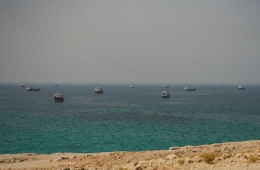
Imports increased by 22.5%, but the growth in exports was significantly larger, resulting in a trade surplus of 34.75 billion dollars in August. However, logistical bottlenecks stemming from heightened tensions in the Middle East led to a 13.1% decline in average daily exports to the region, indicating ongoing external uncertainty.

According to the "May 2026 Trade Trends" announced by the Ministry of Trade, Industry and Energy on the 1st, last month's export value was $87.75 billion, an increase of 53.2% compared to the previous year. This is the highest performance ever recorded in May and exceeded $80 billion per month for three consecutive months since March. The photo shows containers piled up at Busan Port Sinsen-dae Pier on the day. Photo by Yonhap News
View original imageSluggish Recovery in Consumption and Youth Employment

The domestic sector is recovering at a far slower pace. The retail sales index in July fell by 0.8% year-on-year, reversing from a 3.9% increase in June. Declines in sales of durable goods, such as passenger cars, home appliances, and communication devices/computers, led the overall drop in retail sales. The average growth rate in retail sales for June and July was 1.5%, lower than the first-quarter average of 3.2%. A meager 0.3% increase in the real wage growth rate for all workers in the first half of the year also limited the recovery in household purchasing power, which KDI cited as a constraint on consumption growth.
The slowdown in the labor market has partially eased, yet recovery among young adults remains restricted. The number of employed persons in July increased by 108,000 compared to a year ago, which is an improvement from the 63,000 gain seen in June. The decline in manufacturing employment also narrowed from 97,000 to 68,000. However, the employment rate for people in their twenties remained at a low level of 59.1%, unchanged from the previous month, while the unemployment rate rose by 0.5 percentage points. The rise in the overall employment rate was primarily driven by those in their fifties and people aged sixty and over.
Construction Slump, Inflation Rise, and Heightened External Uncertainty
Construction investment continues to lag, particularly in the residential building sector. In July, construction completions decreased by 3.2% year-on-year. While non-residential construction is showing signs of improvement, persistent weakness in the residential sector is holding back the overall recovery in construction investment. Housing permits and starts remain significantly below the 2021-2025 average, raising concerns that the recovery in residential construction may continue to be delayed. Although new orders for private factories and warehouses, including those for semiconductor plants, have shown solid growth, rising construction costs have also been cited as a factor restraining recovery.
Inflation has risen mainly due to base effects. In August, the consumer price index rose by 3.1%, up 0.3 percentage points from July’s 2.8%. Most of the increase was due to a sharp rise in public service prices stemming from a base effect linked to telecommunication fee discounts in the previous year, with the public service price inflation rate jumping from 1.4% to 6.5%. Excluding the impact of telecom fees, the core inflation rate stood at 2.6%, unchanged from July but still above the inflation target. The potential for renewed oil price increases, driven by instability in the Middle East, was also identified as an upward pressure point for inflation.
Hot Picks Today
!["Just 5 Minutes to Departure" Ride a Maybach to Your Flight... Ultra-Luxurious VIP-Only Terminal Available for 950 Euros [Reportage]](https://cwcontent.asiae.co.kr/asiaresize/93/2026090414502016544_1788501020.jpg) "Just 5 Minutes to Departure" Ride a Maybach to Your Flight... Ultra-Luxurious VIP-Only Terminal Available for 950 Euros [Reportage]
"Just 5 Minutes to Departure" Ride a Maybach to Your Flight... Ultra-Luxurious VIP-Only Terminal Available for 950 Euros [Reportage]
- "Five Dresses for Travel at 40,000 Won"...After the Perfect Photo, Straight to the Trash
- "Once a Dream Job With 1,000-to-1 Competition, Now on the Verge of Becoming an Unpopular Career in China"
- Proposal to Provide Annual Public Transportation Subsidies of 160,000 Won for Middle and High School Students in Seoul
- "The Smart Newcomer Never Stops Working... This 'Rookie' Is Intimidating [Click e-Industry]"
KDI concluded that the Korean economy is maintaining its recovery trend, mainly in sectors closely tied to AI-related investment. However, the institute noted that the improvement in economic activity has not sufficiently spread to household income, resulting in only a moderate recovery in consumption. KDI also highlighted the persistent uncertainty caused by tensions in the Middle East and U.S. trade policy.
© The Asia Business Daily. All rights reserved. Unauthorized AI training and use prohibited.