Mayor Minkyung Sun: "Taking the Lead in UAM and Medical Bio Industries... Transforming Goyang into a Self-Sufficient City"
[Interview] Minkyung Sun, Mayor of Goyang Special City, Gyeonggi Province
Building a UAM Industrial Ecosystem Linked with KINTEX and Korea Aerospace University
"Utilizing National Cancer Center Medical Data... Fostering New Drug and Precision Medicine Companies"
"Establishing an Ecosystem Where Startups Grow at Baekseok and Expand to Ilsan Techno Valley"
"Preventing the GTX-A Straw Effect, Advancing into a Stay-Type Cultural and Tourism City"
"Goyang Special City has a strong foundation to take the lead in urban air mobility (UAM) and the medical bio industry. By combining existing infrastructure with the capabilities of universities, hospitals, research institutes, and companies, we will transform Goyang into a self-sufficient city centered on future industries."

Minkyung Sun, mayor of Goyang Special City, revealed her vision for a self-sustaining city centered on future industries based on urban air mobility (UAM) and the medical bio industry during an interview with our publication on the 31st of last month in her mayoral office.
View original imageMinkyung Sun, Mayor of Goyang Special City, stated this during an interview with our publication at her office on the 31st of last month, saying, "For future industries, what matters is which city enters the market first and builds the foundation."
Mayor Sun emphasized, "A UAM demonstration infrastructure is being established at KINTEX, and in the area we have Korea Aerospace University, which specializes in the aerospace field. By utilizing the Baekseok Office Building as well, we can create an industrial ecosystem that extends from R&D to demonstration, corporate settlement, and commercialization."
Regarding the medical bio sector, she stated, "The medical infrastructure possessed by Goyang—such as the National Cancer Center, Dongguk University Hospital, Myongji Hospital, Ilsan Paik Hospital, and CHA Hospital—is an asset that is difficult to find in other cities. We will connect medical data and research capabilities with companies and focus on fostering industries such as new drug development, precision medicine, and AI-based diagnosis and treatment."
Regarding the GTX-A metropolitan express railway, Mayor Sun said, "While it is a key transportation network to enhance Seoul accessibility, it can also trigger the 'straw effect,' where consumption and population drain into Seoul. We need to link KINTEX, the arena, Daegok station area, and medical tourism so that people disembark and stay in Goyang and spend money here." The following is a Q&A with Mayor Minkyung Sun.
-What is the reason for selecting UAM and the medical bio industry as Goyang's key growth engines?
"Goyang has a population of 1.07 million, convenient transportation, and excellent universities, hospitals, and research institutes, but has not been able to sufficiently translate these assets into business and jobs. It’s now time to move away from being a residential-centric city and transition into a self-sufficient city where companies come and citizens can work in Goyang.
UAM and the medical bio industry are fields where Goyang already has a competitive foundation. It's not about creating something from scratch, but connecting existing assets to develop them into industries. Just as it's important which city builds the ecosystem first, Goyang must take the lead."
-What is Goyang's strength in developing the UAM industry?
"The second-phase UAM demonstration project promoted by the Ministry of Land, Infrastructure and Transport envisions connecting KINTEX along the Han River waterway to Gimpo Airport, Yeouido, Jamsil, and Suseo. The core demonstration facility is also being established at KINTEX. Compared to downtown Seoul, Goyang has advantageous land conditions for building such facilities.
In addition, the educational and research capabilities of Korea Aerospace University can be leveraged. If KINTEX handles the demonstration and Korea Aerospace University handles R&D and talent development, Goyang can become a hub for the metropolitan area’s UAM industry."

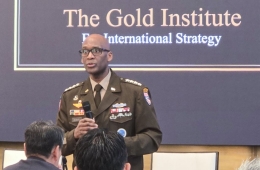
Minkyung Sun, Mayor of Goyang Special City (sixth from the right), is taking a commemorative photo with officials from related organizations at the "2026 Urban Air Mobility (UAM) Service Showcase" site. Provided by Goyang City.
View original image-Can UAM lead to attracting businesses and job creation?
"UAM is not just a passenger transport solution. Its applications are broad, including logistics, wildfire and disaster response, emergency medical services, and tourism. Operations require communication, air traffic control, security, maintenance, boarding and search systems, and more. It is an industry in which related companies and research institutes can naturally cluster.
We will establish the Aerospace Industry-Academia Convergence Center around Korea Aerospace University and attract related companies and research institutes. By connecting the demonstration infrastructure at KINTEX, the research capabilities of Korea Aerospace University, and the corporate space at Baekseok Office Building, we will ensure that all processes from R&D to demonstration and commercialization take place in Goyang."
-What is Goyang's competitiveness in the medical bio industry?
"Goyang is home to excellent medical institutions such as the National Cancer Center, Dongguk University Hospital, Myongji Hospital, Ilsan Paik Hospital, and CHA Hospital. Dongguk University is advancing new drug development and nurturing bio venture companies. The fact that hospitals, universities, and research institutes are concentrated in one city is a tremendous advantage.
In the past, these assets were not consolidated into a single industrial ecosystem. Having a foundation does not guarantee industrial growth by itself. The city will take the lead and build a 'job alliance' where hospitals, universities, research institutes, and companies all participate, ensuring a virtuous cycle of research, startups, and company inflow."
-What role does the National Cancer Center play in the medical bio ecosystem?
"The National Cancer Center is the leading oncology institution nationwide, holding clinical data from about 4.5 million cancer cases accumulated from all over Korea. By utilizing this data, we can achieve global competitiveness in new drug development, precision medicine, and AI-based diagnostic and therapeutic research.
The important thing is not to keep medical data only for research but to link it to corporate technology development and commercialization. Centered on the National Cancer Center, universities, hospitals, and bio companies will collaborate on joint research, and these achievements will lead to new startups, investment, and quality jobs.
We will utilize the Baekseok Office Building as a launchpad for medical bio research and corporate activities and enable successful companies to expand and relocate to Ilsan Techno Valley. Currently, business attraction to Ilsan Techno Valley is below expectations. We will create a virtuous cycle in which companies that began their research and startups at Baekseok settle in Ilsan Techno Valley."

-What role will the Baekseok Office Building play?
"Speed is crucial in future industries. Securing space where companies and research institutes can immediately move in is a significant competitive advantage. We will use the Baekseok Office Building as a hub for aerospace and medical bio R&D and startups.
We plan to establish a structure where startups and research institutes develop technology at Baekseok and then, as they grow, expand and relocate to Ilsan Techno Valley. Baekseok Office Building will not just be an office space but will be transformed into an incubator nurturing future companies."
-Is there a plan to connect the medical industry with medical tourism?
"Medical tourism must be added to the medical bio industry. Myongji Hospital is actively pursuing medical tourism, and CHA Hospital possesses competitiveness in obstetrics and gynecology. By also connecting the National Cancer Center’s expertise in cancer treatment and surgery, we can create a differentiated Goyang model of medical tourism distinct from Gangnam’s cosmetic surgery-centered model.
Overseas patients can stay for as little as one week or up to two to three months. When patients and their guardians stay and spend in Goyang, the achievements of the medical industry will revitalize the local economy. We will integrate transportation, healthcare, and tourism into a single industry."
-How are the Free Economic Zone and the UAM·medical bio industries connected?
"The Free Economic Zone provides the institutional and spatial foundation for the growth of Goyang’s future industries. We will realize the development area to the level where designation feasibility and implementability are maximized, and expand step by step according to industrial demand.
We will create the Free Economic Zone as an advanced industrial hub combining aerospace industry centered on UAM, medical bio, K-Culture, and AI. We will provide land and infrastructure required by companies, the capabilities of research institutes, and administrative support in a package, fostering an ecosystem where anchor companies, partners, and talent gather together.
The ultimate goal is business attraction and quality jobs. By the end of the 9th civil administration, we will ensure that citizens feel there is no longer any need to leave Goyang in search of good jobs, realizing a truly self-sufficient city."
-What are the plans to maximize the benefits of the GTX-A opening and bridge local transportation gaps?
"GTX-A is the central axis of Goyang’s metropolitan transportation network, linking KINTEX and Seoul’s Samseong Station. When all sections are connected, Seoul accessibility will greatly improve, but there are also concerns about the 'straw effect' of people and consumption flowing out to Gangnam. By linking KINTEX, the arena, Daegok station area, anchor hotels, and medical tourism, we will ensure that outside visitors get off in Goyang and stay for at least three hours to spend money.
We will seek to reflect the extension of Goyang-Eunpyeong Line to Ilsan and Siksi Districts, the establishment of Goyang-Sinsa Line, and the extension of Incheon Line 2 to Goyang in national plans. We will expand support for quasi-public metropolitan buses in areas excluded from railway services. If we fail to have these reflected in the 5th National Rail Network Construction Plan, we’d have to wait another five years. That’s why we are working as a 'one team' with local lawmakers to persuade the government, and I will personally oversee each project’s issues until they are included in national plans."
-What is your strategy to prevent the 'straw effect'?
"We must offer things to see, eat, and ways to stay. We will further invigorate large-scale concerts and events at Goyang Sports Complex, and closely cooperate with developers to quickly commence and complete construction of the planned arena.
When the third KINTEX exhibition center is completed in 2028, we will have an international-scale exhibition and convention foundation along with the first and second centers. By adding the arena, anchor hotels, and medical tourism, we can increase visitors’ length of stay. People will stay in Goyang longer if there are accommodations."
-Is the direction for developing the Daegok station area in line with this approach?
"Daegok Station is a crucial transportation hub where several railway lines intersect, but right now, it’s mostly used as a transfer station. There is little reason for passengers to get off, stay, or spend here.
We should not develop the Daegok station area as just a residential complex or transfer facility. It must include self-sufficiency functions as well as cultural and tourism content. We will ensure the transportation network serves not as an exit for Goyang’s population and consumption, but as a channel to bring in companies, tourists, and investment."

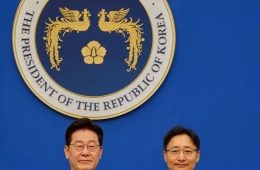
Minkyung Sun, Mayor of Goyang Special City (third from right), is taking a commemorative photo after concluding a meeting with K-Culture Valley officials. Provided by Goyang City
View original image-What is your strategy to normalize K-Culture Valley and develop Goyang into a stay-type cultural and tourism city?
"We will rapidly advance administrative procedures for K-Culture Valley and Goyang Arena to establish the foundation for large-scale performances and the content industry. Once the third KINTEX exhibition center is built, we’ll have an international-scale exhibition and convention complex with the existing centers.
We need to connect performances, exhibitions, and festivals to tourism and local businesses and also expand accommodation such as anchor hotels. Our aim is to create a stay-type cultural and tourism city where visitors don’t just come and go after a show, but dine and shop while staying in Goyang."
-What are your plans to strengthen self-sufficiency in Changneung New Town and to redevelop first-phase new towns and old city centers?
"Changneung New Town must not become just another residential-centered city. By attracting industrial districts and companies, and connecting with Ilsan Techno Valley and the aerospace and medical bio industries, we will turn it into a self-sufficient job-centered city. For Beolmal Village, which is prone to flooding, we will work with LH to swiftly proceed with integration into the district and planning changes to ensure residents’ safety.
For Ilsan New Town, we will practically increase the standard floor area ratio to secure redevelopment business feasibility and reduce resident burden. We will also simultaneously promote relocation, transportation plans, and expand parks, parking, and educational facilities. Old city centers such as Wondang, Hwajeong, and Haengsin will be improved in parallel to achieve balanced development of the entire city."
-How will you resolve the long-running issue surrounding the new Goyang City Hall?
"We will put an end to fruitless debate and build the new city hall as originally promised to citizens. In cooperation with Gyeonggi Province, we will carry out all possible administrative and approval procedures simultaneously, accelerating the project based on citizen consensus. The goal is to start construction in the first half of 2028."
-What are the core policies and highest priorities in the 9th civil administration?
"Our priority is to transform Goyang from a residential-centered city into a self-sufficient city by attracting businesses and creating quality jobs. Although Goyang has a population of 1.07 million, convenient transportation, and excellent cultural and industrial infrastructure, these assets have not been sufficiently connected to business and jobs until now.
We will organically link the Free Economic Zone, Ilsan Techno Valley, and K-Culture Valley, and focus on cultivating future industries where Goyang is competitive, such as aerospace, medical bio, and K-Culture. By building a 'job alliance' involving universities, hospitals, research institutes, and companies, we will also create an industrial ecosystem where talent, technology, and businesses circulate in a virtuous cycle.
Hot Picks Today
 "Tried leveraged semiconductor stocks, watched 3.5 billion won shrink to 200 million won": Salaried investor in tears
- "Please Let Me Go Home"... Customers Trapped in Department Store Parking Lot for 5 Hours Vent Their Anger
- "I Should Enjoy It After Retirement": Prices Quadruple... Memberships Over 100 Million Won Popular, but Closures Mount
- “The Strong Drink This” Goes Viral on Social Media... What China's Millennials and Gen Z Are Hooked on After Ditching Coffee and Milk Tea
- "Come Live With Me on My Farm": Man Sells Everything and Travels 1,930 km, Trusting a Beautiful Woman
The goal by the end of the 9th civil administration is for citizens to really feel that there is no longer a need to leave Goyang to find good jobs. We will make sure Goyang becomes a self-sufficient city, where businesses come and citizens can work and live."

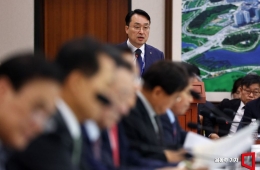
Minkyung Sun, Mayor of Goyang Special City, presided over the "2026 Second Half Large-Scale Performance Administrative Support Measures Report Meeting" on the 6th, reviewing the cooperative system for safety and transportation with related organizations such as the police, fire department, and Korea Railroad Corporation. Photo provided by Goyang City
View original image-What is ‘Minkyung Sun’s communication-focused administration’ and what kind of mayor do you hope to be remembered as after your term?
"The core is not just listening to citizens’ voices but actually linking feedback to changes in administration. By visiting the field, using direct text messaging, and having the mayor’s office on the first floor, we will narrow the distance with citizens, and by encouraging 3,500 public officials to break down departmental barriers, we’ll create an agile organization. After my term, I hope to be remembered as ‘the mayor who listened to citizens’ stories more closely than anyone else and responded with action rather than words.’"
© The Asia Business Daily. All rights reserved. Unauthorized AI training and use prohibited.