150,000 Flock to Kiaf and Frieze: Wallets Open Despite Downturn
Frieze Draws 70,000, Kiaf 80,000 as Seoul Art Week Concludes
Yoo Youngkuk Work Tops 2 Billion Won; Sales Expand to Emerging Artists
Continued Visits from International Collectors and Museums
Next Year, Fairs to Split Between COEX and
Frieze Seoul and Kiaf Seoul, held amid a global art market downturn, concluded after attracting approximately 150,000 visitors. With transactions occurring across a broad price range—from blue-chip works valued in the billions of won to pieces by emerging artists priced in the millions of won—there is renewed optimism for a market recovery. However, unlike the overheated speculative boom focused on ultra-high-value works in 2022, this year was marked by end collectors carefully evaluating and purchasing artworks, forming the solid foundation of the market.

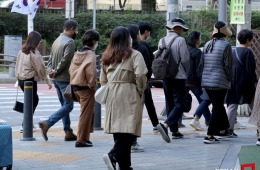
On the 2nd, visitors at COEX in Gangnam-gu, Seoul, admired artworks at "Frieze Seoul 2026." Now in its fifth year, Frieze Seoul featured participation from 133 galleries representing 30 countries and regions. Major global galleries such as Gagosian, Hauser & Wirth, David Zwirner, Pace, White Cube, Lehmann Maupin, and Thaddaeus Ropac, along with local galleries like Gallery Hyundai, Kukje Gallery, Gana Art, Hakgojae, and Johyun Gallery, set up booths. 2026.9.2 Photo by Kang Jin-hyung
View original imageAmong the two art fairs that opened together at COEX in Gangnam-gu, Seoul, on September 2, Frieze Seoul ended first on the 5th, and Kiaf Seoul closed on the 6th. This year marked the fifth edition of Frieze Seoul, which featured participation from over 130 galleries representing 30 countries and regions; the 25th-anniversary Kiaf Seoul saw 175 galleries from 18 countries take part.
The number of visitors remained similar to last year. According to Frieze organizers, more than 70,000 people visited the fair over its four-day run. Visitors came from 54 countries and regions—the highest number ever recorded—and representatives from 178 museums and institutions across 25 countries attended, which was also an all-time high.
Kiaf attracted about 80,000 visitors over its five days. On the opening day (Wednesday) and the following day, attendance increased by 5–10% compared to the previous year. Even on the last day, when only Kiaf remained open after Frieze ended, nearly 8,000 people visited. Organizers of Kiaf noted a significant increase in young audiences and new collectors.
The most striking feature in this year’s transactions was their “range.” The highest-priced work was Yoo Youngkuk’s 1971 painting “Work,” which was exhibited at Frieze. Kukje Gallery sold the piece for between 2.2 billion and 2.5 billion won, marking the highest price on record for a Korean artist’s work at Frieze Seoul. Hauser & Wirth sold a painting by Rashid Johnson to a prominent Korean institution for USD 1.2 million. At Thaddaeus Ropac, a painting by Adrian Ghenie sold for EUR 1.1 million, and a sculpture by Antony Gormley sold for GBP 750,000.

On the 2nd, visitors at COEX in Gangnam-gu, Seoul, attended "Frieze Seoul 2026" and admired artworks. Now in its fifth year, Frieze Seoul featured 133 galleries from 30 countries and regions. Major global galleries such as Gagosian, Hauser & Wirth, David Zwirner, Pace, White Cube, Lehmann Maupin, and Thaddaeus Ropac set up booths alongside Gallery Hyundai, Kukje Gallery, Gana Art, Hakgojae, and ChoHyun Gallery. September 2, 2026. Photo by Kang Jinhyung
View original imageAt Gladstone Gallery, ten paper works by Keith Haring from 1982 sold to an overseas collector for a total of USD 2.5 million. Gallery Hyundai achieved sales exceeding USD 2.3 million, including five works by Kim Tschang-Yeul and three by Lee Seung-taek. At White Cube, two “Ecriture” paintings by Park Seobo sold for USD 300,000 and USD 190,000, respectively.
It was not just high-value works that drew buyers. Whistle, participating in Frieze Focus, presented sponge block works by dpgp78 starting at USD 70, selling more than 400 of 500 pieces. Make Room gallery sold seven works priced between USD 6,000 and 50,000 on opening day. In a summary report, Frieze highlighted the full transaction spectrum—from promising new artists’ works at USD 70 to notable pieces of Korean modern and contemporary art priced in the 2 billion won range—as a key achievement this year.
A similar pattern was observed at Kiaf. Kukje Gallery sold Yoo Youngkuk’s “Work” for between 600 million and 720 million won, with total sales of over 20 works. Gallery Hyundai posted sales exceeding 1.8 billion won with works by Nam June Paik, Chung Sang-Hwa, Kim Bohie, and Kim Sunghyun. Gana Art sold six works by Park Eun Sun for over 500 million won. Pyo Gallery sold six works by Kim Tschang-Yeul, Ha Chong-Hyun, and Kim Kang-yong for about 500 million won.

On the 2nd, visitors at COEX in Gangnam-gu, Seoul, admired artworks at 'Frieze Seoul 2026.' Now in its 5th edition, Frieze Seoul featured 133 galleries from 30 countries and regions. Major international galleries such as Gagosian, Hauser & Wirth, David Zwirner, Pace, White Cube, Lehmann Maupin, and Thaddaeus Ropac set up booths alongside local galleries including Gallery Hyundai, Kukje Gallery, Gana Art, Hakgojae, and Cho Hyun Gallery. 2026.9.2 Photo by Kang Jinhyung
View original imageMid- and lower-priced artwork sales were also active. Kidari Gallery sold all 11 works submitted by Im Il-Min, totaling 46 works and sales of around 200 million won. Maekhwarang sold 25 works by eight artists for 170 million won. At Space Willing & Dealing, 16 works by emerging artists Lee Joonhak and Park Jiyoung were sold at prices ranging from 400,000 to 3 million won. At Gallery Hue, about 25 works by Park Younghwan, born in 1998, were sold.
International galleries also reported steady sales. Opera Gallery sold a work by Alex Katz for about USD 180,000. Whitestone Gallery sold two pieces by Jung Haeyoon for USD 33,000 and USD 20,000 respectively. Thailand’s Trendy Gallery sold more than half its presented works on day one and nearly sold out its entire collection by the end of the fair.
The on-site atmosphere also ended up diverging from previous worries. Given the continued global art market slump and absence of certain major international galleries, expectations for this year’s Seoul Art Week were not high. However, from the start, an influx of VIPs and collectors—and actual purchases taking place—quickly changed the mood. This year saw a pronounced increase in collectors from China, Hong Kong, and across wider Asia, as well as more visits from collectors and institutional representatives from Europe, North America, and the Middle East at Frieze.
International industry opinion focused less on “explosive growth” and more on the maturing potential of the Seoul market. The Art Newspaper highlighted that while the Korean art market has receded from its 2022 peak, it remains larger than before the COVID-19 pandemic and is currently undergoing a period of adjustment. Frieze’s record numbers in participating countries and overseas institutions demonstrate that Seoul is functioning as a major network hub for the Asian art community, beyond simply being a venue for art sales.

On June 2nd, visitors at COEX in Gangnam-gu, Seoul, are appreciating artworks at "Kiaf Seoul 2026." Marking its 25th anniversary this year, "Kiaf Seoul 2026," the largest art fair in Korea, serves as a leading platform connecting domestic and international art markets alongside the growth of contemporary Korean art. This year, under the theme of "Coexistence," it presents enhanced content including special exhibitions, artist support programs, talks, and classical performances. 2026.9.1 Photo by Kang Jin-hyung
View original imageThe appraisal of the Korean market by international galleries continued at Kiaf. Maximilian Egger, Junior Partner at Germany’s Kornfeld Gallery, commented, “Korea is our second largest market after Germany,” and noted that he meets new collectors and museum officials every year. Dokor Jaitang, founder of Thailand’s Trendy Gallery, explained that he sold almost all of his exhibited works during his first visit to Korea.
Domestic gallery representatives provided a more detailed picture of market changes. Oh Soojung, CEO of Supportment Gallery, remarked, “I have met an unusually high number of new collectors who spend time with the works, ask questions, and carefully select their first collections.” In contrast, Brian, CEO of Gallery BHAK, pointed out that focusing on small works is a practical sales strategy but regretted that it falls short of the true spirit of an art fair, which should introduce new artists and works.
Kiaf, marking its 25th anniversary, introduced a creative director system for the first time this year. Director Jung Kuho was responsible for the entire space and content. With “Coexistence” as the overarching theme, the event expanded its special exhibitions, media art, and talk programs, while also debuting “Kiaf Classic,” featuring pianist Seong-Jin Cho. This represented an effort to broaden the visitor experience from a traditional sales-focused art fair to a cultural event that combined music, gastronomy, and digital technology.

On the 2nd, visitors at 'Kiaf Seoul 2026' held at COEX in Gangnam-gu, Seoul, are appreciating artworks. Marking its 25th anniversary this year, the largest art fair in Korea, 'Kiaf Seoul 2026,' serves as a representative platform connecting the domestic and international art markets alongside the growth of Korean contemporary art. This year, under the theme of 'Coexistence,' it presents enhanced content including special exhibitions, artist support programs, talks, and classical music performances. September 1, 2026. Photo by Jin-Hyung Kang
View original imageIt would be premature to conclude that this year’s results signal a full recovery of the global art market. The Korean market, too, has not regained its 2022 peak, and purchases of high-value works remain more selective than before. However, the stream of transactions ranging from multi-billion-won masterpieces to works priced below a million won, along with increased participation by new collectors and overseas art institutions, confirms that the foundation of the market remains intact.
Hot Picks Today
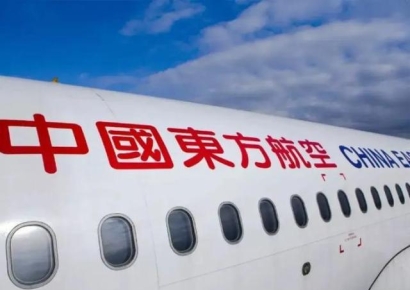 Flight Attendant Kneeled to Apologize... China Eastern Airlines Bans Passenger Who Continued to Complain
- An Apartment Once Worth 400 Million Won Nears 1 Billion... "Still Worth It" as 1990s-Born Pangyo Workers Flock to Gyeonggi Gwangju [Report]
- "Didn't Want to Buy a Home"... Seoul Apartment Buyers Flocked to Mid- to Low-Priced Segment After Tax Reform Plan [Real Estate AtoZ]
- "Huge Sum in Pension Account He Never Knew About... What Happened to Chinese Man in His 70s Who Collected Scrap for 21 Years?"
- Musk's Partner Reveals Sudden Breakup Just a Week After Saying "I Love You"
Next year will bring significant changes to the joint operation of the two fairs. Due to remodeling at COEX, Frieze Seoul will move to Dongdaemun Design Plaza (DDP), while Kiaf will remain at COEX. For the first time since the launch of Frieze Seoul in 2022, the two events will be held at separate venues. Joint programming, promotions, and integrated ticketing will continue. Having built up Seoul’s autumn art market together under one roof for five years, Kiaf and Frieze will now be tested on how distinctly they can showcase their own unique colors and competitive advantages.
© The Asia Business Daily. All rights reserved. Unauthorized AI training and use prohibited.