Chun Haram: "Kang Shinchul Acquired Seocho Apartment via Fraudulent Address Change for Displaced Resident Special Allocation"... Kang Denies Allegations
From July 2007 to October 2008, nominee Kang changed his address
Hwacheon, Gangwon-do → Guro, Seoul → Hwacheon, Gangwon-do
Chun Haram: "Fraudulent address change to gain displaced resident status"
Kang Shinchul: "Gifted house in Guro was my primary residence"
Chun Haram, acting Representative and floor leader of the Reform New Party, argued on September 6 that Kang Shinchul, the nominee for Minister of National Defense, had reportedly acquired an apartment in Seocho Nature Hill Complex 3 in Seocho-gu, Seoul, by making a fraudulent change of address during his military service in order to gain eligibility for special allocation reserved for residents displaced by redevelopment.
At a press conference at the National Assembly on this day, acting Representative Chun stated, "It appears that the nominee deliberately changed his address to obtain the status of a displaced resident, which enabled him to receive a special allocation for an apartment in Seocho-gu that is currently valued at 2.2 billion won."
According to acting Representative Chun’s analysis of documents including the personnel hearing request, real estate registry, and housing application announcement, nominee Kang received a house in Cheonwang-dong, Guro-gu, Seoul as a gift in July 1997.
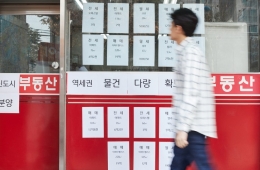
In July 2007, when Kang was a lieutenant colonel, he was appointed as deputy commander of the 8th Regiment, 7th Division in Hwacheon, Gangwon-do and registered his address at a military apartment in that region. Eight months later, in March 2008, while serving as a battalion commander in the same unit, he and his wife filed a move-in report back to the Cheonwang-dong house in Guro-gu, Seoul.
Just seven months after reporting the move to Cheonwang-dong, in October 2008, Guro District Office purchased the Cheonwang-dong house as part of compensation for the relocation of Seoul Nambu Detention Center, granting Kang the status of a displaced resident.
Seven months after acquiring the displaced resident status, nominee Kang moved back to the military apartment in Hwacheon, Gangwon-do in May 2008, and in August 2012, he was supplied an apartment in Seocho Nature Hill Complex 3 in Seocho-gu, Seoul, through the “special allocation for displaced residents” program.
According to acting Representative Chun, the fact that nominee Kang moved his official address from where he was stationed in Hwacheon, Gangwon-do to the gifted house in Cheonwang-dong, Guro-gu, then returned to Hwacheon after only a few months, suggests that he strategically sought a special allocation for displaced residents.
Chun further stated, "The 84-square-meter apartment that the nominee received through special allocation was reserved 100% for displaced residents under the Seoul city urban planning project. In other words, it was a building for which applications could not even be filed without displaced resident status. The pre-sale price at the time was 520 million won, but its current market value has soared to about 2.2 billion won, meaning it has increased by some 1.7 billion won, a rise of 323%," he pointed out.
He went on to say, "This is someone who took advantage of displaced resident status, obtained a dedicated apartment by fraudulent application, and now its value has ballooned to 2.2 billion won. Is nominee Kang not the very embodiment of the ‘unearned income’ that President Lee Jaemyung referred to as destroying fairness and common sense? For a government that claims to be escaping the ‘unearned income republic,’ it is the ultimate hypocrisy to appoint as Minister of National Defense someone who amassed wealth through real estate windfalls."

In response, however, nominee Kang explained via his personnel hearing preparation team that the allegations of fraudulent application are untrue. Kang stated, “The address in question (the Cheonwang-dong house) is the home where I was born and raised, and it was formally gifted to me in 1997; my family, including my spouse, frequently stayed there.”
Kang further argued, “Given the particular work characteristics of military service, I was subject to frequent relocations to remote posts for one to two years at a time, and the officer’s quarters in those remote areas were simply ‘temporary places of assignment,’ whereas my own house in Seoul was the only permanent place of residence I could return to.”
He admitted, "However, I acknowledge that in the process of moving duty stations, I did not always pay meticulous attention to ensuring that my actual place of residence and registered address matched, or to completing the administrative formalities such as providing explanations for the statutory exceptions under the Enforcement Decree of the Land Compensation Act regarding duty transfers."
The implication is that, under the statutory exceptions to the land compensation law—such as for illness or public duty—a person can be recognized as an “eligible recipient of relocation aid,” i.e., as a displaced resident, even without actually residing in the designated property. While nominee Kang qualified for this, he did not make the necessary explanations to the relevant authorities.
Hot Picks Today
 "If You Don't Apply, My KRW 1.7 Million Will Be Gone"... Unclaimed National Pension Refunds Vanish After 'This Deadline'
- "King crab is 3,000 won per 500 grams; just eating it makes the trip worthwhile"... Chinese flock to North Korea on 'fake business trips'
- "When I get Home from Work, This Is All I Do, and It's Making Me Stupid"... Short-Form Craze Sparks 'Electronic Drug' Debate in China
- Lee Juwan, Who Forecast Samsung at 70,000 Won and SK hynix at 200,000 Won, Says They're "Still Overvalued"; Others Counter: "Fundamentals Are Solid, Correction Is Excessive"
- "What Was I Thinking..." Gen Z Regrets Habitual Delivery Orders After Seeing the Bill, Falls Into "Delivery Guilt"
Kang emphasized, "Although it was an oversight to neglect personal affairs while focusing on my core military work, there was absolutely no deliberate intent to change addresses fraudulently or commit any illegality in the process of applying for the apartment."

© The Asia Business Daily. All rights reserved. Unauthorized AI training and use prohibited.


!["Please Take Them Off!" They Made It All the Way to the Bed... Then "80% of Fecal Bacteria" Struck [Deep Scroll]](https://cwcontent.asiae.co.kr/asiaresize/307/2026101610053063338_1792112730.png)