"It's Not Property Tax, It's a Seoul Citizen Tax"... If Apartment Prices Continue, "All of Seoul Will Be Taxed by 2030"
KB Simulation of 125 Major Complexes
Number of Taxable Complexes to Rise from 78 to 101 by 2030
The continued rise in apartment prices in Seoul is expected to lead to comprehensive real estate tax (the so-called 'comprehensive property tax') being imposed on major apartment complexes in 22 out of the city's 25 districts—excluding only Gangbuk, Geumcheon, and Dobong Districts—by 2030, according to new analysis.
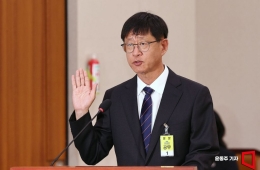
On September 6, Assemblyman Shin Dongwook of the People Power Party, a member of the National Assembly's Political Affairs Committee, analyzed a simulation model from KB Kookmin Bank looking at the top five apartment complexes per KB market price in each of Seoul's 25 districts, totaling 125 complexes of 84-square-meter (appr. 34 pyeong) units. The results show that, as of this year, 78 apartment complexes across 19 districts are subject to the comprehensive property tax according to the simulation.

If Seoul apartment prices continue to rise at the same annual rate of 11% as they did in the last year (June 2025 to May 2026), then by 2030, the number of non-owner-occupied complexes subject to the tax is projected to increase to 101 complexes across 22 districts. In this scenario, even in Gwanak, Nowon, and Jungnang—districts where none of the five sample complexes currently pay the comprehensive property tax—some will become newly subject to taxation, effectively expanding the tax base to nearly every district except Gangbuk, Geumcheon, and Dobong.
Of the 47 complexes currently exempt from the tax, 23 are projected to newly incur the comprehensive property tax by 2030. By district, this includes four each in Gangseo, Gwanak, Guro, and Eunpyeong; three in Seongbuk; two in Jongno; and one each in Nowon and Jungnang. For example, the 115-square-meter (appr. 35 pyeong) DMC SK View apartment in Eunpyeong is currently exempt, but is estimated to become subject to the non-owner comprehensive property tax from 2029—with an estimated KRW 1.13 million (about 1,130,000 won) to be paid in 2030.
The number of taxable properties is expected to temporarily decrease immediately after the tax system revision, but then rise again as cumulative housing price increases take effect. The number of non-owner-occupied taxable complexes is projected to fall from 78 this year to 68 in 2027, then climb to 82 in 2028, 94 in 2029, and reach 101 by 2030.
The total comprehensive property tax imposed on all households in the 125 apartment complexes is projected to surge from KRW 5.89 billion this year to KRW 52.62 billion in 2030 for non-owner-occupied properties—an 8.9-fold increase. For owner-occupied units, the increase is to KRW 33.47 billion, a 5.7-fold rise.
The per-unit average comprehensive property tax by complex rises from KRW 951,338 this year to a projected KRW 8,428,401 (8.9 times higher) for non-owner-occupied and KRW 5,549,778 (5.8 times higher) for owner-occupied units in 2030. This increase is particularly steep in non-Gangnam areas where the current tax burden is relatively small. For the main complexes in Eunpyeong, Guro, Seongbuk, Gangseo, Dongdaemun, Gwanak, Nowon, and Jungnang, the combined comprehensive property tax jumps from about KRW 720,000 this year to approximately KRW 40.58 million for non-owner-occupied properties in 2030—a 56.6-fold surge.
Even if the annual increase in housing prices slows to half the previous year's pace at 5.5%, the comprehensive property tax burden would still rise significantly. In this scenario, the number of non-owner-occupied complexes subject to the tax would reach 82 across 19 districts by 2030. Of the currently exempted complexes, four— all located in Gangseo—would newly become subject to the tax. The total comprehensive property tax across the 125 complexes would increase to KRW 29.26 billion for non-owner-occupied units (about five times higher than this year) and KRW 17.19 billion for owner-occupied units (2.9 times higher).
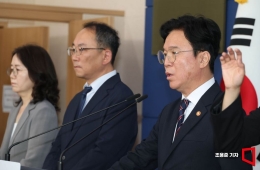
Assemblyman Shin stated, "Although the government's comprehensive property tax reform was partially revised, it has brought significant turmoil to the real estate market," adding, "Going forward, the comprehensive property tax will, in effect, become a 'Seoul citizen tax' that even ordinary people who own just one home in Seoul will have to pay."
Hot Picks Today
 "Why Is the Amount in My Account So Low?"... Why Pension Savings Subscribers Were Surprised
- "After Sleeping Well with Strangers"... Who Is the 24-Year-Old Woman Who Won 19 Million Won?
- "SK hynix to Hit 4.7 Million Won, Samsung 670,000 Won"... Why Nomura's Bold Forecast justifies it
- "Even Underwear Has to Be Cut Up with Scissors"... China Hit by Rise of "Trash Hunters" in an "If You're Slow, You're Out" Scramble
- "NPS loses 240 trillion won, 1990s-born get zero pension"... What's behind rumors spreading after the KOSPI plunge?

This simulation reflects both the government's comprehensive property tax reform plan and its revisions. From 2027 onward, the basic deduction is set at KRW 1.4 billion for owner-occupied and KRW 1.2 billion for non-owner-occupied properties, with the official fair market value ratio at 70% and the tax burden cap at 150%.
© The Asia Business Daily. All rights reserved. Unauthorized AI training and use prohibited.