Amount Owed to Banks for Policy Loan Rate Gap to Surpass 2 Trillion Won Next Year
MLIT Allocates 2.072 Trillion Won for Secondary Compensation Support in 2027 Housing and Urban Fund Plan
5% Increase over Previous Year
Government Required to Cover Interest Rate Gap for Banks on Policy Loans
Secondary Compensation Budget Surges Over Fourfold in Five Years
It has been revealed that the government has allocated a budget exceeding 2 trillion won for next year to repay the funds owed to banks during the implementation of policy loans such as Didimdol and Bogeumjari. The government is required to cover the difference between the interest rate on policy loans and that of commercial banks. This expense was less than 500 billion won as recently as 2022, but is expected to rise more than fourfold within five years. Given that a substantial amount of the budget is already being spent and even larger sums will likely be needed in the future, there are growing calls for greater external oversight in the process of budget planning and execution.
According to the 2027 Housing and Urban Fund operation plan prepared by the Ministry of Land, Infrastructure and Transport on September 6, 2.072 trillion won has been allocated for secondary compensation support next year. This is an increase of 100 billion won (5.1%) from this year's budget of 1.972 trillion won, marking the first time that the secondary compensation budget for the Housing and Urban Fund will surpass 2 trillion won in a single year. Although the National Assembly still needs to review the allocation, considering that such budget allocations have never been changed during the Assembly’s review process in the past, it is highly likely that the government's current proposal will be confirmed.

The secondary compensation system was introduced as a means to increase the number of policy loan recipients by utilizing bank funds when the Housing and Urban Fund lacked sufficient resources. Policy loans aimed at lower-income households, such as Didimdol or Bogeumjari loans, are offered at lower interest rates than those of commercial banks. For instance, if a borrower qualifies for the Didimdol loan at a 5% interest rate, while the market rate stands at 7%, the loan is executed using bank capital, and the government makes up for the 2 percentage point difference to the bank. If the spread between the policy loan and market rates is 2 percentage points, the same amount of funds could be used to benefit fifty times more recipients.
This is why the government has been actively expanding policy loans utilizing the secondary compensation approach. As the Housing and Urban Fund’s surplus diminished, direct loans from the fund were reduced, and the use of the secondary compensation system increased. Last year, of the total budget set aside for home purchase and jeonse loans—14.0816 trillion won—approximately 97%, or 13.6457 trillion won, was left unused, with most policy loans executed through the secondary compensation method.
According to the Ministry of Land, Infrastructure and Transport, new policy loans issued last year totaled approximately 34.4473 trillion won, but virtually the entire amount—34.0116 trillion won—used the secondary compensation approach. The funds directly lent from the Housing and Urban Fund amounted to only 435.7 billion won, equivalent to just 1.3% of the total. Although direct lending comprised a larger share of new policy loans until 2021, the situation reversed the following year, and the gap has continued to widen.

However, unlike direct lending, loans issued through the secondary compensation system cannot be recovered, as it is essentially a mechanism to compensate banks for their losses. There are further concerns that the amount of compensation required could grow substantially if interest rates rise in the future. The secondary compensation program is funded by transfers from the general account, which covers deficits by issuing government bonds. Home purchase and jeonse loans are commonly repaid over very long periods—sometimes 20 to 30 years—meaning the amount paid to banks accumulates significantly each year.
Hot Picks Today
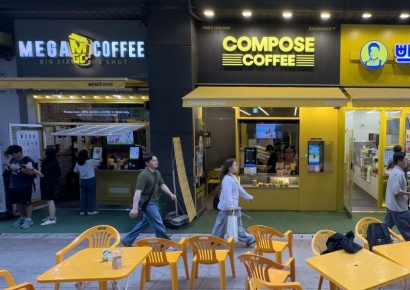 "I Went for the Cheap Coffee, but Now I Feel Uneasy"... Major Coffee Franchises Cited for Violations One After Another
- In Korea, Studying Medicine Is in High Demand, but in China, It's Shunned: "Why Become a Doctor When You Can’t Make Money?"
- "Surprisingly Real, Perfect Like AI" -- Global Media Praise Korean Fencer's Beauty
- "50 Million Won for Weekly Encounters"... Man in His 60s Sentenced for Deceiving Woman in Her 20s with Forged 1.4 Billion Won Account
- "I've Already Booked My Trip to Japan, But This Is Serious"...Highest Number of Measles Cases in Japan in a Decade Spurs Emergency Alert
Im Donghun, budget analyst at the National Assembly Budget Office, highlighted the issue in the 2025 Land, Infrastructure and Transport Committee’s budget settlement analysis report. He stated, "Even for loans already executed with the secondary compensation system, if they have not yet been repaid, the secondary compensation costs for those loans must continue to be paid, causing annual expenditures to increase," and added, "As government bond interest rates continue to rise, so too will the cost of interest payments."
© The Asia Business Daily. All rights reserved. Unauthorized AI training and use prohibited.