Lee Jaemyung's Welfare Experiment Bears Fruit: 'Geunyang Dream' Program Expands to All Cities, Counties, and Districts Nationwide
Expanded to a Nationwide Safety Net in Every City, County, and District
Used by 210,000 People so Far... Public-Private Cooperation Yields KRW 13.5 Billion in Donations
The 'Geunyang Dream' program, a food security safety net that does not require any proof of poverty in the face of hunger, is finally taking root in every city, county, and district in South Korea. A policy initiative first germinated by President Lee Jaemyung in the middle of the COVID-19 pandemic, when he was Governor of Gyeonggi Province six years ago, has now been realized as a nation-spanning welfare infrastructure.

President Lee Jae-myung and First Lady Kim Hye-kyung are visiting the Geunyang Dream project site at Chungju Health and Welfare Town in Chungbuk on February 11, engaging in discussions with officials about the operational status. Yonhap News.
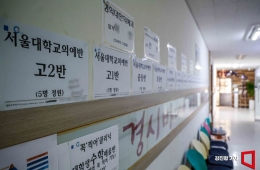
View original imageThe Ministry of Health and Welfare announced on the 6th that, starting this month, 55 local governments previously not participating will sequentially begin operations, meaning the Geunyang Dream Corner will be fully operational in all basic local governments nationwide, including Ulleung County in North Gyeongsang Province. Less than one year after a pilot run in 57 locations across the country in December last year, a network covering 175 cities, counties, and districts has been established, forming a single national system now expanded to all local governments. The program provides food and daily necessities immediately, without the need for complicated income verification procedures.
Gyeonggi-do's Experiment Becomes the National Standard
The origins of this project reflect President Lee's long-standing concerns. In 2020, when the COVID-19 crisis was at its peak, President Lee was deeply shocked by the case of the so-called "COVID Jean Valjean," who was sentenced to prison after stealing a tray of eggs due to hunger. He concluded that rather than expending vast social resources investigating, arresting, and correcting those who turn to crime simply because they have nothing to eat, it would be far more humane—and economical—for the nation to provide a meal without any conditions.
This is how the 'Gyeonggi Food Giveaway Corner' was launched in three places: Seongnam, Pyeongtaek, and Gwangmyeong. The initiative attracted an annual 314,000 visits, leaving a legacy of identifying those who had slipped through the welfare net and preventing crimes driven by need. It was later expanded to 31 areas, raising a total of KRW 3.3 billion in donations. The bold experiment by local government six years ago was formally elevated to a national project in September last year, when President Lee stated at a cabinet meeting that "preventing crimes committed out of hunger, in any circumstance, is a fundamental duty of the nation and society," and ordered its nationwide implementation.
The Power of "Support First, Administration Later"... Embracing 210,000 in the Margins

President Jaemyung Lee is visiting the Gyeonggi Food Gift Corner site in 2021 during his tenure as Governor of Gyeonggi Province. Gyeonggi Province.
View original imageWhen the system was first introduced, some skeptics argued that it would lead to moral hazards, such as people arriving in luxury foreign cars and sweeping up free food. In reality, however, the exact opposite occurred. Once the strict, application-based barrier—requiring individuals to prove their poverty—was removed, those truly facing hardship, previously hidden behind paperwork, finally stepped forward into the open.
So far, about 210,000 people nationwide have used the Geunyang Dream Corner. Installed in food markets and welfare centers, these corners provide any resident facing difficulty with essential food and three to five daily necessities worth KRW 20,000 per person, delivered on the spot. Through the natural face-to-face encounters during this process, 44,712 people received in-depth welfare counseling, and, among them, 4,437 were connected to institutional safety nets such as basic livelihood assistance and emergency welfare support.
Especially since the project became a mainstay program, the connectivity of the welfare delivery system has soared. The rate at which counseling cases are linked to outreach health and welfare teams in towns and neighborhoods rose from 46.4% during the pilot phase to 54.8% in the main program; the proportion of cases ultimately connected to public welfare services also dramatically increased from 15.2% to 25.1%. Unconditional distribution of food has thus become a decisive springboard for saving the lives of those isolated and in crisis.
From Island Villages to Urban Alleys... A Robust Public-Private Welfare Net in Action

With this latest nationwide expansion, 'Outreach Geunyang Dream'—for vulnerable groups with limited mobility—will be positioned at the forefront. The government will tailor three main models to local needs: a welfare team vehicle that directly visits islands and remote villages, as seen in Shinan County; a community volunteer delivery and crisis-monitoring network, as in Nonsan City; and a postal carrier collaboration where mail carriers deliver goods and check on recipients, as in Bucheon City. These models will be concentrated and distributed nationwide, depending on each local government’s conditions.
Efforts to ensure sustainability by promoting voluntary private donations, rather than relying solely on state finances, are also progressing smoothly. Shinhan Financial Group has pledged KRW 10 billion over three years, and donations from companies including Export-Import Bank of Korea, Lotte Holdings, Korea Agro-Fisheries & Food Trade Corporation, and chambers of commerce nationwide have brought total private contributions to over KRW 13.5 billion.
Hot Picks Today
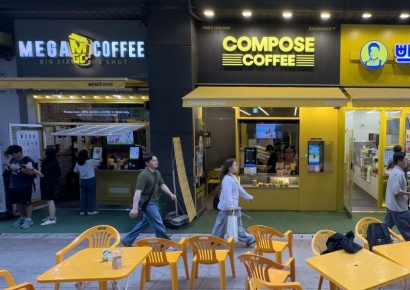 "Even on the Way to Work, There Are Lines at the 'Yellow Sign'... Mega MGC Coffee Achieves KRW 400 Million Sales Per Store with KRW 1,500 Coffee"
- "I Sold My Face for Just 100,000 Won"... My Likeness Appears as a Gangster or Adulteress Amid China Craze
- "Imprisoned Korean Women, Disguised as Massage Parlors"...Chinese Woman Sentenced for Running Largest Human Trafficking Ring
- Next Year’s Health Insurance Premium Rate Frozen at 7.19%... Additional 3.8 Trillion Won Expected from Semiconductor Boom (Comprehensive)
- "It’s a Place I Frequented"... Before Body Found in Cafe Freezer, 'Normal Operations Resume Tomorrow' Shocks Netizens
Minister of Health and Welfare Jeong Eun-kyeong stated, "In the past 10 months, Geunyang Dream has dramatically lowered the barrier to welfare by providing aid without requiring any proof in the face of hunger," adding, "With a foothold established in every city, county, and district, we will work with local governments and private entities to ensure that not a single citizen is left in hunger or isolation by activating the most comprehensive safety net possible." What began as a small food corner inspired by one local official’s empathy has now contributed to shifting South Korea’s welfare paradigm from 'application-based' to 'proactive protection.'
© The Asia Business Daily. All rights reserved. Unauthorized AI training and use prohibited.