'Regaining Glory Lost to Korea and China'... Japan Injects 1.8 Trillion Won to Revive Shipbuilding Industry
Targeted Support for Top 3 Firms Over 10 Years
First Execution of "Shipbuilding Industry Revitalization Fund"
Japan, whose presence in the global shipbuilding market has diminished due to the two-way rivalry between Korea and China, plans to inject approximately 1.8 trillion won in government subsidies to rebuild its domestic shipbuilding industry. The strategy, centered on large-scale government-led fiscal spending and automation-driven innovation, is aimed at restoring its former status as a maritime powerhouse.

On September 4, Japanese Minister of Land, Infrastructure, Transport and Tourism Yasushi Kaneko announced at a press conference held immediately after the Cabinet meeting that the government had decided to provide a total of 213.1 billion yen (approximately 1.843 trillion won) over the next ten years, until fiscal year 2034, to three domestic shipbuilding companies. This move marks the first execution of Japan's "Shipbuilding Industry Revitalization Fund," established to restore the shipbuilding ecosystem.
The government subsidies are concentrated on major companies recognized for their technological capabilities and production capacity. Industry leader Imabari Shipbuilding and its affiliate Tadotsu Shipbuilding secured nearly half of the allocated funds, receiving 113.8 billion yen (about 984.2 billion won). The second-largest company, Japan Marine United (JMU), was allocated 49.4 billion yen (approximately 427.2 billion won), while Namura Shipbuilding and its subsidiary Hakodate Dock received 49.9 billion yen (around 431.5 billion won) respectively.
Hot Picks Today
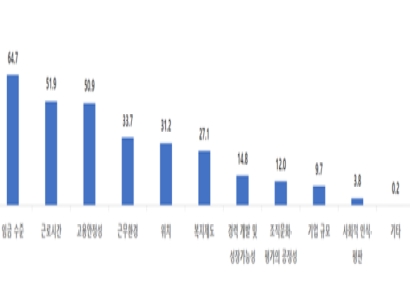 "Please Pay Me at Least 3 Million Won a Month": More Than Half of Young People Today Prioritize "Working Conditions" Over Company Size
- Selling Like Crazy Every Year... 30-Year-Old Hetbahn Takes on a New Challenge: Tastes Better Than "Mom's Home Cooking" [On-Site Report]
- "It's so popular you can't get it": 'Legendary liquor' returns after 11 years, causing a stir... 'Newtro' craze takes over convenience stores [How We Shop Today]
- "Hey, Lady, Teach Your Kids to Behave!" ... 300,000 Won in Cash and a Bodily Injury Claim Demanded Over Child's Door Ding
- Beachgoer Finds 'Plastic' That Turns Out to Be Perfume Ingredient Worth More Than Twice as Much as Gold
This round of subsidies signals the start of a long-term public-private investment initiative promoted by the Japanese government. Japan has set the goal of generating a total of 1 trillion yen (about 8.6 trillion won) in joint public and private sector facility investment in the shipbuilding field over the next ten years, and has already established a 350 billion yen (around 3 trillion won) revitalization fund as a policy primer.
© The Asia Business Daily. All rights reserved. Unauthorized AI training and use prohibited.