Conflict Over Duryu-ri Industrial Waste Landfill in Angang-eup, Gyeongju Intensifies... Residents to Hold Mass Rally on the 5th
Gyeongbuk Administrative Appeal Overturns Supreme Court Ruling
Announcement Citing "Prevention of Waste Export" Branded as Deceptive
Opposition Group Calls for Rejection at September 10 Urban Planning Review
The plan to construct a new industrial waste landfill within the Duryu Industrial Area in Angang-eup, Gyeongju, which had previously reached a final Supreme Court ruling, has resurfaced and is facing strong backlash from the local community.
With a review by the Gyeongju City Urban Planning Committee scheduled for September 10, residents of Angang-eup and civil society organizations have announced plans for a large-scale collective action at the site.

Declaration of Opposition to the Installation of Angang Wood Industrial Waste Landfill, outlining the main demands of the Angang Wood Industrial Waste Landfill Opposition Committee and local solidarity groups.
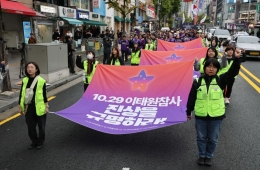
View original imageThe Angang Duryu Industrial Waste Landfill Opposition Committee and regional solidarity groups will gather at Angang Sports Complex at 9 a.m. on September 5 and hold a large-scale protest march and rally to the Bukgyeongju Administrative Welfare Center.
They argue that the issue goes beyond simple local self-interest and constitutes an administrative abuse of power that threatens the very foundation of the judiciary.
In the past, the plan to build the landfill on this site had led to litigation, which ended with the Supreme Court ultimately ruling that the Gyeongju City government’s decision to deny the project was legitimate.
According to local solidarity groups, at the time, the court clearly acknowledged that the existing landfill capacity in Gyeongju was sufficient to handle waste, and raised concerns about potential pollution of Chilpyeongcheon Stream and Hyeongsan River, as well as possible violations of the environmental rights of nearby residents, thereby confirming that the new facility was unnecessary.
However, the procedure was revived when the Gyeongsangbuk-do Administrative Appeals Commission handed down a ruling that contradicted the intent of the Supreme Court’s decision—a decision that local stakeholders describe as unconscionable. Gyeongju City further fueled controversy by advancing the urban planning review process.
Residents strongly criticized the city’s claim, made in its urban management plan announcement, that “domestic waste processing will reduce carbon emissions,” calling it a clear deception.
This criticism is based on the fact that, in reality, waste imported from outside the region is already exceeding six times the amount of industrial waste generated by Gyeongju itself.
The opposition committee has urged the Urban Planning Committee to reject the proposal at the September 10 review, insisting that the city administration must not function as a subordinate agency for private business interests.
Hot Picks Today
 A 12-Year-Old Girl Went to the Hospital After Her Blood Pressure Hit 225 and Was Stunned: "What Is This Coral Reef-Like Thing in Her Aorta?"
- "Samsung Electronics Employees Commute by Shuttle Bus"... More Than 5,000 Homes to Be Supplied in Seoul and Busan [Real Estate A to Z]
- "Hey, Lady, Teach Your Kids to Behave!" ... 300,000 Won in Cash and a Bodily Injury Claim Demanded Over Child's Door Ding
- "If This Airs, I'm Dead"... Why a Restaurant Refused to Let Jeon Hyunmoo's Show Film
- “I Thought Surely They Wouldn’t, but Grown Adults Did This”... Wedding Shoot Atop Tomb Sparks Controversy
The outcome of this review is expected to become a defining turning point in the long-running conflict over the Angang industrial waste landfill.
© The Asia Business Daily. All rights reserved. Unauthorized AI training and use prohibited.