Government Considers Troop Deployment to Hormuz... Ruling Party's Caution, Opposition Warns of Missed Opportunity
Innovation Party and Progressive Party: "No to Troop Deployment"
Opposition: "Clearly Missed Opportunity" and "Amateurish"
As the possibility of dispatching troops emerges as part of a “military contribution plan” to ensure freedom of navigation in the Strait of Hormuz, political circles are on high alert. While both the ruling and opposition parties are cautious about publicly stating their positions, resistance to the troop dispatch is spreading among some groups within the broader ruling coalition, including the Reformation Party and the Progressive Party.
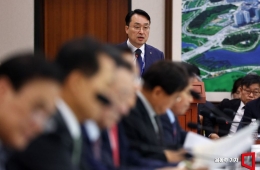
The Democratic Party did not issue an official statement on September 4 regarding the government’s consideration of sending troops to the Strait of Hormuz. Park Sung-joon, the Democratic Party’s chief spokesperson, told reporters that “any position on the troop dispatch should, at its core, fully incorporate the opinions of the relevant standing committee, namely the National Defense Committee of the National Assembly.”

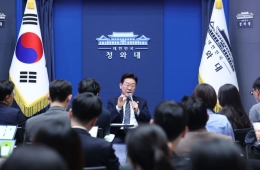
Previously, a senior official at the Office of the President stated to reporters that “nothing has been decided,” but added, “As long as there is no significant harm to our defense posture on the Korean Peninsula, we believe we can exercise some flexibility.” Depending on interpretation, this could be seen as leaving room for the possibility of dispatching troops.
The ruling party maintains a cautious stance, given the significant implications of the issue. Overseas troop deployment is a highly impactful matter, as seen in the troop dispatch for the Vietnam War in 1964 and for the Iraq War in 2003. During the administration of the Democratic Party, even the decision to send troops to Iraq led to significant internal strife and dissent among its supporters.
However, progressive parties within the broader ruling coalition, such as the Reformation Party and the Progressive Party, continue to voice opposition. Kim Jun-hyung, floor leader of the Reformation Party, stated, “It is absurd for the Lee Jae-myung administration, which claims to uphold the sovereignty of the people, to even consider dispatching troops to aid a country engaged in illegal aggression.” Kim Jong-hun, leader of the Progressive Party, also criticized, “The government should not even consider it.”
Lee Giheon, a Democratic Party lawmaker from the National Assembly’s Foreign Affairs and Unification Committee, wrote on social media: “Even the dispatch of non-combatant troops is clearly an act of participating in war. We cannot force our citizens and military into an endless war started and mired in by the United States. I will not consent to any request for dispatch.”
Of course, some argue for a prudent approach, taking the national interest into account. Another Democratic Party member from the Foreign Affairs Committee said, “Dispatching troops could be in violation of Article 5 of the Constitution, which stipulates that the Republic of Korea shall strive for international peace and renounce aggressive wars. In principle, not dispatching troops is the right approach, but we must consider our national interests.”
The opposition has highlighted the issue of a “missed opportunity.” U.S. President Donald Trump reportedly expressed strong dissatisfaction over South Korea’s refusal to provide support, and opposition lawmakers warn that this is destabilizing the U.S.-Korea alliance. Jeong Jeom-sik, floor leader of the People Power Party, said, “It is a clear missed opportunity to have lost U.S. trust and only now belatedly begin consideration of troop deployment.”
Lim Jongdeuk, an opposition secretary on the National Assembly’s National Defense Committee, also said in a phone interview, “While it would have been difficult to dispatch troops immediately from the outset, the government should have prepared for potential requests from the U.S. and taken into account our military capabilities. Instead, the government rejected the request out of hand, showing an amateurish response.”
Even within the party, some believe partial support might be necessary. Kim Gun, a member of the National Assembly Foreign Affairs Committee from the People Power Party, commented, “An alliance by its nature requires a willingness to become involved. While we should focus on national interests and the U.S.-Korea alliance, it is important to find an appropriate balance to avoid getting directly entangled in the war.”
Hot Picks Today
 Changing Outfits and Snapping Photos in Hotels... "Please Don't Take Pictures": Europe Cracks Down on Influencers Over Privacy Concerns
- "Please Let Me Go Home"... Customers Trapped in Department Store Parking Lot for 5 Hours Vent Their Anger
- "I Should Enjoy It After Retirement": Prices Quadruple... Memberships Over 100 Million Won Popular, but Closures Mount
- "A Flying Car? Now That's More Like It"... Startup Shows Off Tech That Outdoes Tesla
- "Come Live With Me on My Farm": Man Sells Everything and Travels 1,930 km, Trusting a Beautiful Woman
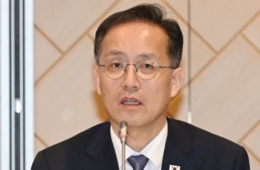
Song Seokjun, chairman of the National Assembly Foreign Affairs and Unification Committee from the People Power Party, stated, “We must avoid dispatching combat troops as in the case of North Korea, but from a standpoint of pragmatic diplomacy, there may be a need for indirect support as well. We should also make diplomatic efforts, such as prior consultations, to ensure that the other country (Iran) does not misunderstand our intentions.”
© The Asia Business Daily. All rights reserved. Unauthorized AI training and use prohibited.