"If a Fight Breaks Out in Prison, This 500 kg 'Officer' Responds First... What Is It?"
Height: 157 cm, Weight: 510 kg
Pepper Spray Used in Case of Non-Compliance
Video and Audio Streamed to Control Center
The Singapore prison authorities will trial the deployment of a 510 kg robot equipped with pepper spray to respond to violent situations inside prisons.

Singapore Prison Service (SPS) Deploys Patrol Robots. Singapore Media The Straits Times YouTube
View original imageAccording to The Straits Times, a Singapore media outlet, on September 3 (local time), the Singapore Prison Service (SPS) plans to deploy patrol robots inside prisons for a three-month period starting in October.
The robot, named 'PROTECT' (Prison Robotic Officer Enhancing Correctional Tactics), refers to its role in eradicating conflicts and threats within prisons. It was co-developed by the Singapore Prison Service (SPS) and the Home Team Science and Technology Agency (HTX) under the Ministry of Home Affairs. The robot stands 157 cm tall and weighs 510 kg.
The prison service explained that the robot was developed to ensure the safety of both inmates and correctional officers and to enable faster response to incidents within prisons.
The robot will patrol the prison yard at various times throughout the day. If a violent situation occurs, it will issue a warning to move away, and if an inmate does not comply, it will spray pepper spray toward them for about 20 seconds. The pepper spray has a range of approximately 5 meters. After this, correctional officers are dispatched to the scene. The robot transmits video footage and audio from the scene to the prison control center in real time.

Singapore Prison Service (SPS) Deploys Patrol Robots. Singapore Media The Straits Times YouTube
View original imageHowever, as the robot is still in the development stage, it cannot independently detect or respond to violent situations. It currently requires remote control by a correctional officer.
The robot is equipped with artificial intelligence (AI) technology that enables it to recognize people and navigate around obstacles. During the trial period, one robot will be deployed at each of three undisclosed correctional facilities.
Feng Chongtian, the lead engineer at HTX's Robotics, Automation and Unmanned Systems Centre, who led the development, explained that this is the first time such a robot has been developed in Singapore, and that it was designed from the ground up to meet the Singapore Prison Service's requirements.
This robotic introduction comes amid a rise in assault cases inside Singapore prisons. The number of assault cases per 10,000 inmates increased from 54.4 in 2024 to 76.7 last year.
In February, the prison service stated that the increase in young offenders and pretrial detainees contributed to a rise in prison assaults in 2025. According to the prison service, they often find it difficult to adjust after admission and tend to act impulsively, which increases the likelihood of violence in disputes with other inmates.
Hot Picks Today
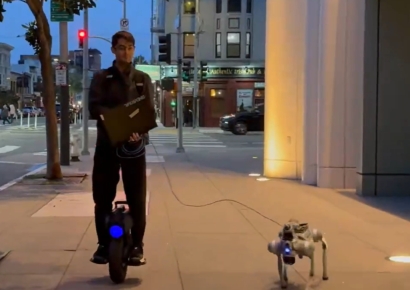 "27,000 Won for an Hour of Walking?"... Robot Dog-Walking Jobs in the U.S. Now Pay by the Hour
- "It's a Must-Have When It Gets Cold"... Japan on High Alert as Ingredient Costs Jump 70%, Raising Shortage Fears
- "Better than stocks and real estate": Chinese investors rush in and snap up 430 metric tons of 'this' in a week
- "Even with 9 Billion Won, I Can't Quit My Job"... The Unexpected Concerns of a Major-Company Employee in His 40s After an 'Investment Windfall'
- "I Made an Extra 6 Million Won a Month"... "This Can Actually Make Money?" The Twist Behind a Few Pieces of Junk
The prison service is currently using inmate reporting, violence prevention programs, and video analysis technology to detect and suppress violence inside prisons. It emphasized that even with the introduction of new technologies, correctional officers will remain at the core of decision-making and prison operations.
© The Asia Business Daily. All rights reserved. Unauthorized AI training and use prohibited.