"U.S. Senior Officials Seek Korean Technology, Propose Multi-Billion Dollar Energy and Infrastructure Projects [Changing Overseas Construction ②]"
Senior U.S. officials approach Korean delegation
Direct proposals for large-scale energy and infrastructure projects
U.S.-China rivalry reshapes supply chains and accelerates AI transition
Industrial facilities now account for over 70% of o
In July, when the Overseas Order Support Team led by Lee Tak Kim, the first Vice Minister of the Ministry of Land, Infrastructure and Transport, visited the United States on a business trip, the local atmosphere was said to be noticeably different from the past. According to government officials, top officials from the U.S. Department of Energy and the Department of Agriculture successively approached the Korean delegation, directly proposing large-scale energy and infrastructure projects worth trillions of won. This marks a complete reversal from the past, when domestic construction companies had to win contracts through vigorous on-site efforts. Behind this shift are the global supply chain reorganization driven by the U.S.-China power rivalry and the explosive energy paradigm shift brought about by the adoption of artificial intelligence (AI).

The proportion of industrial equipment used in plants is rapidly increasing in the overseas construction orders by sector of domestic companies. Getty Images
View original imageAccording to the Overseas Construction Information Service (OCIS) on September 9, the proportion of industrial equipment used in plants, among overseas construction orders by sector for domestic companies, was 64.8% (USD 123.5 billion) in the 2000s and 66.2% (USD 320.3 billion) in the 2010s. The share has since soared, reaching 74.6% (USD 35.27685 billion) last year and 71.4% (USD 8.4 billion) between January and July this year.
!["U.S. Senior Officials Seek Korean Technology, Propose Multi-Billion Dollar Energy and Infrastructure Projects [Changing Overseas Construction ②]"](http://www.asiae.co.kr/news/img_view.htm?img=2026090709575218012_1788742672.jpg)
In particular, the key regions for winning contracts have clearly shifted from the Middle East to North America and other developed markets. For the first half of this year, orders from the Pacific and North American regions more than doubled compared to the same period last year. This trend is driven by a spike in demand for data centers (DCs) for AI, resulting in a shortage of power supply and thus making renewable energy plants like energy storage systems (ESS) and solar power, as well as fertilizer and petrochemical plants, and liquefied natural gas (LNG) plants, promising key sectors. With global big-tech companies committing large new investments in expanding DCs, the infrastructure financing sector has entered an AI and DC infrastructure investment super-cycle, and North America is at the heart of this trend.
The United States has emerged as a key client for construction orders primarily to counter China's growing influence in the global infrastructure market. As the U.S. moves to undertake major infrastructure projects and reorganize supply chains domestically, Korea's strategic importance as a partner has become more pronounced. Industry insiders note that Korea has been considered the optimal partner because it possesses extensive construction experience and technical expertise, especially from challenging overseas project sites.
An official from the Ministry of Land, Infrastructure and Transport stated, "Korean companies have long accumulated advanced construction skills and know-how by undertaking projects in global markets including the Middle East. Currently, while the United States may have core source technologies, there are areas where its practical capability in construction or shipbuilding falls short of Korea." The official went on to explain, "In the ranking of overseas construction market leaders, Korea stands alongside China, Spain, France, and Turkey; among these, Korea, with low security risks and strong alliance ties, appears an attractive choice from the U.S. perspective."
Domestic construction companies are also widening their scope through investment development models in line with these trends, now directly investing equity and reaping operational profits. Hyundai Engineering & Construction recently declared its ambition to go beyond comprehensive engineering, procurement, and construction (EPC) work, aiming to become a 'Total Solution Creator.' It has participated in the 'LUCY' project, an energy investment and development project in the U.S., as an equity investor through a consortium with Korea Midland Power, KIND, and domestic private, public, and policy funds such as the Global Plant, Construction, and Smart City (PIS) Fund.
!["U.S. Senior Officials Seek Korean Technology, Propose Multi-Billion Dollar Energy and Infrastructure Projects [Changing Overseas Construction ②]"](http://www.asiae.co.kr/news/img_view.htm?img=2026090907263620902_1788906396.jpg)
Hyundai Engineering has also established mid- to long-term master plans for business expansion in areas such as hydrogen, renewable energy, small modular reactors (SMR), carbon capture, utilization and storage (CCUS), LNG liquefaction, and nuclear fusion. In particular, it is aggressively targeting the key mineral plant market, participating in projects like the Rhyolite Ridge lithium-boron project in Nevada, United States.
Daewoo Engineering & Construction is executing multiple strategies, not only focusing on residential real estate in North America but also aiming to secure large-scale plant contracts in emerging countries. In June, it launched the Palisades Park residential development project in Bergen County, New Jersey, and has also secured contracts for petrochemical and fertilizer plants as well as LNG plant projects in countries such as Nigeria, Mozambique, and Papua New Guinea.
Hot Picks Today
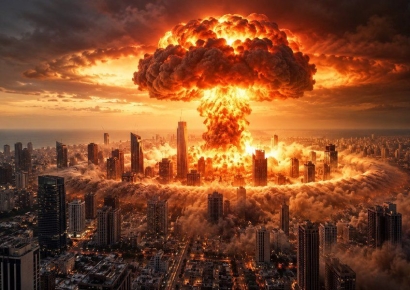 "If I Lose This Election, a Nuclear Bomb Will Fall?"... Netanyahu Posts Chilling Image Ahead of General Election
- "Everyone else is retiring"... People who say they'll work until 74: What's going on? [Pension Asset Polarization] 1
- "I Thought It Was Middle-Aged Men's Hiking Wear"... 20- and 30-Somethings Open Their Wallets for "This Padded Jacket"
- "What's All the Fuss About This Game?" ... U.S. Faces $1 Billion Loss as 1.5 Million Workers Call In Sick
- "Stockpile 9 Liters of Water and Three Days' Worth of Food"... UK Tense Over Nationwide Emergency Preparedness Advice
!["U.S. Senior Officials Seek Korean Technology, Propose Multi-Billion Dollar Energy and Infrastructure Projects [Changing Overseas Construction ②]"](http://www.asiae.co.kr/news/img_view.htm?img=2026090913352021754_1788928519.png)
An official from Korea Overseas Infrastructure and Urban Development Corporation (KIND) analyzed, "Since the start of the U.S.-China rivalry, we have been actively consulting with allied nations to replace equipment or projects that were formerly sourced from China. Compared to Europe or Japan, Korea still maintains price competitiveness, which is why we are being selected."
© The Asia Business Daily. All rights reserved. Unauthorized AI training and use prohibited.