"Twentysomethings Who Invested in Stocks All Lost"... John Lee Says, "Investing for Retirement? Put Your Money in This"
John Lee: "Leverage Investing Among Millennials and Generation Z... A Lack of Financial Education"
"Invest in Time... Focus on Retirement, Not Just Returns"
As the recent stock market rebound has led to a renewed rise in so-called ‘debt-fueled investing’ (investing in stocks using borrowed funds), concerns are growing over investment strategies chasing short-term gains. The rapid increase in margin loan balances among investors in their 20s and 30s is particularly notable. Financial expert John Lee emphasized that instead of leverage-based investing, investors should focus on accumulating assets over the long term by making good use of time.

A Surge in ‘Debt Investing’ Among 2030 Generation... John Lee Says, "No One Gets Rich Quickly"
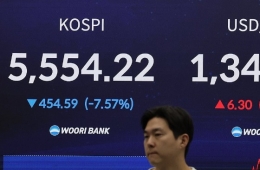
According to the financial investment industry on September 3, as of September 1, outstanding credit transaction loans in the Korean stock market had risen to approximately 33 trillion won. Margin loan balances, which had fallen to 27 trillion won during the market crash, have increased again in tandem with the rebound in stock prices.
This increase in young investors has been even more pronounced. As of the end of June this year, margin loan balances among investors in their 20s and 30s totaled 4.1943 trillion won, about 2.4 times higher than the 1.7607 trillion won at the end of 2024. Specifically, among those in their twenties, balances grew from 194.2 billion won to 476.8 billion won; for investors in their thirties, the figure rose from 1.5665 trillion won to 3.7175 trillion won.
Debt-fueled investing can result in greater losses if stock prices move in unexpected directions. In fact, the amount of forced sales due to margin calls grew from 707.6 billion won in May to 1.1229 trillion won in June, and remained high at 992.7 billion won in July.
Against this backdrop, in a video released on the YouTube channel 'Saemut TV' on September 2, John Lee, CEO of Buja School, responded to investors' concerns and warned against leverage-based investments aimed at securing short-term returns.

When a female investor in her mid-sixties said, "I recently saw a program where people in their twenties got into stocks and ended up losing money. I want to invest, but I don't know what I should study," John Lee replied, "The main problem seems to be the lack of financial education. Many people in their 20s and 30s have invested in leveraged products—because they want to get rich quickly. But wealth is never built quickly; you have to invest in time."
He also advised investors approaching retirement to carefully determine their stock allocation based on their investment horizon and to avoid leveraged products altogether. In contrast, for young people or children with long investment horizons, he explained that time itself could be their greatest asset.
Emphasizing Long-Term Investment in S&P500 and KOSPI200 ETFs
John Lee also wholeheartedly recommended long-term, active investing when a viewer asked about opening a stock account for a newborn. He said, "That's an excellent idea. The greatest asset your child has is time." He continued, "The best option is ETFs, whether it's an S&P500 ETF that invests in 500 major U.S. companies or a KOSPI 200 ETF that invests in Korean companies. Just buying those two—or splitting your investment between them—would be sufficient." The point was to build assets gradually over time by diversifying across many companies with ETFs, rather than chasing quick gains through picking specific stocks.
To the question of whether it’s advisable to invest all one’s retirement pension in an S&P500 ETF, he cautioned against focusing entirely on U.S. assets. John Lee said, "It's not a good idea to put 100% of your investment in the United States. I think it's important to invest in Korea as well. I personally don't think it's smart to believe that only the U.S. is a good investment destination."
"Checking Stock Prices Every Day Is Gambling... The Goal Is Retirement, Not Return"
What John Lee stressed repeatedly was the importance of investment duration and purpose. He said, "Why do we invest in stocks? For retirement. The goal of stock investing isn’t to play a game of returns. Returns will recover over time. For those accumulating shares, a weak stock market is actually beneficial."
He also pointed out the problem with obsessively tracking short-term stock price movements. "Some people buy 100 shares and then check their phones every day—that’s gambling. Gambling and investing are different. Some investors are more interested in whether foreigners are buying or selling today, but in the long run, what really matters is how AI will affect us and whether the companies are making money," he emphasized.
When asked whether a lump sum or systematic investment is more appropriate for investing a large sum in ETFs, John Lee said the answer depends first on the investor’s personality. "It varies from person to person. If you invest 100 million won and the market crashes, it can be scary. For those people, spreading the investment out over multiple months may be a good idea, but generally, investing all at once produces slightly better returns," he explained.
Hot Picks Today
 "There's a Drink Like This?"... Chinese Beverage With "Korean" in Its Name Rakes in 85 Million Won in Monthly Sales
- "Samsung Electronics at 70,000 won, SK hynix at 200,000 won"... Why the gloomy outlook despite 'record-breaking earnings'?
- Woman Found Collapsed Barefoot on Street, Leaving 3-Year-Old Child Unattended... Turns Out She's Part of a "Wealthy Royal Family"
- "I Put in 10 Million Won, but Only 2 Million Won Is Left" ... 77% Plunge Leaves Retail Investors in Samsung Electronics and SK hynix Leveraged ETFs Crying Out
- "The leggings are all see-through. It's so embarrassing to look at," complaints prompt Lululemon to fire development staff.
Ultimately, the investment principle John Lee advocated was to move away from short-term return competitions and focus on steadily building assets that can be held for the long term. He concluded, "The best time to invest is today. Don't hesitate—open an account right away. Especially if you don't have a retirement pension fund account, open one and start investing immediately."
© The Asia Business Daily. All rights reserved. Unauthorized AI training and use prohibited.