Shareholders, Staff, and Regional Opposition... ‘Mammoth Public Corporation’ Faces Rocky Path Ahead
KNOC’s KRW 18.7 Trillion Debt Raises Concerns Over KOGAS Shareholder Value
Power Company Integration Supported by Unions, But Staffing and Headquarters Location Remain Hurdles
Regional Opposition to Port Authority Merger: “Branch Demotion and Weakened Competitiveness”
The government has embarked on a sweeping restructuring of public institutions, aiming to consolidate the five regional power generation companies, Korea National Oil Corporation (KNOC), Korea Gas Corporation (KOGAS), and four port authorities into their respective "mammoth-sized public corporations." However, significant hurdles are expected before the mergers can be completed. As KOGAS is a listed company, shareholders are divided over concerns that KNOC's liabilities and negative equity might impact its corporate value. For the five power generation companies, the redistribution of more than 10,000 employees and the decision about the new unified headquarters' location are seen as major challenges. Regarding the integration of the port authorities, local communities are increasingly opposing the plan over fears that it may weaken regional economies and port competitiveness.
KOGAS Faces ‘Shareholder Barrier’... Concerns Over KNOC’s Liabilities Transfer
According to sources in relevant ministries on September 4, the area with the most complex stakeholder interests, as outlined in the government's public institution reform plan announced the previous day, is the proposed merger between KOGAS and KNOC. KOGAS, despite the government being its largest shareholder, is a stock company listed on the KOSPI. Therefore, beyond any policy-driven merger decisions, the property rights of private shareholders and the resulting corporate value must be taken into consideration.
If the government chooses a structure where KOGAS survives as the continuing entity absorbing KNOC, key issues will include how KNOC’s overseas resource development assets and its liabilities are valued and transferred. Concerns have been raised that, given KNOC’s state of complete capital impairment, transferring the financial burden to the merged entity could adversely impact KOGAS’s financial health and its dividend capacity.
According to the public institution management information disclosure system (ALIO), as of the end of last year—based on separate financial statements—KNOC’s total liabilities stood at KRW 18.6527 trillion. Its total equity amounted to minus KRW 2.529 trillion, and the company has been in a state of complete capital impairment since recording heavy losses in 2020. Accumulated retained deficits have reached KRW 15.0177 trillion.
If a typical merger approach is adopted, the integration process would also require procedures to protect minority shareholders, such as approval at a shareholder meeting and the exercise of appraisal rights under the Commercial Code.

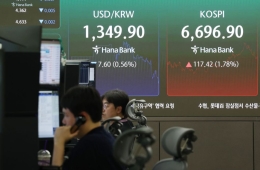
KOGAS shareholders are now focused on the future trajectory of the company’s share price, with both pessimistic and optimistic outlooks coexisting. On online message boards, concerns have been raised that merging with a completely capital-impaired KNOC would transfer that negative equity and burden of liabilities directly to KOGAS, thereby diluting its corporate value.
Conversely, there are expectations that, since the government is the largest shareholder, it will not simply transfer KNOC’s weak financial structure to KOGAS during the merger process. Optimists believe the government may simultaneously pursue additional recapitalization or debt-adjustment measures, and that consolidating oil and gas development, import, and stockpiling functions could enhance business competitiveness—ultimately benefiting KOGAS’s long-term corporate value. The way the government designs the new energy resource corporation’s capital structure and handles KNOC’s debts is likely to have a major impact on shareholder perceptions.
Five Power Generation Companies’ Integration: Staffing and Headquarters Relocation Complexities
The integration of the five power generation companies presents somewhat different challenges from those surrounding KOGAS and KNOC. During earlier discussions on restructuring the power generation sector, organizations such as the Korea Power and Technology Workers’ Union and the Federation of Public Industrial Workers' Unions argued that merging the five power companies is necessary for the energy transition. Since the split of the power generation division from KEPCO in 2001, the five entities have operated independently for 25 years, which, according to supporters of integration, has led to redundant investments and excessive competition.
Combining Korea South-East Power, Korea Midland Power, Korea Western Power, Korea Southern Power, and Korea East-West Power would create Korea’s largest power generation enterprise, operating approximately 53 GW of generation capacity, generating annual revenues of about KRW 30 trillion, and employing between 13,000 to 14,000 staff. The government also envisions pooling previously dispersed investment resources to ramp up renewable energy investments and enhance the overall execution force for the energy transition.
The real issue arises after the physical merger. The five separate firms, each with its own position, pay, and human resources system for 25 years, will need to standardize these systems and determine how to reallocate redundant headquarters teams and support staff. Though the government has announced it will protect employment during consolidation and not allow any deterioration in employee working conditions due to the integration, in-depth restructuring could ignite disputes over rankings, posts, and work locations.
Where to locate the new combined headquarters is also a matter of contention. The five existing headquarters are scattered across Jinju in South Gyeongsang Province, Boryeong and Taean in South Chungcheong Province, Busan, and Ulsan. Local governments are already vying to host the consolidated headquarters. Jinju Innovation City in South Gyeongsang Province is being actively proposed as a candidate, while local actors in South Chungcheong Province also stress their role as the center of Korea’s coal-fired power industry. Previous research proposed utilizing all existing headquarters as office spaces for the integrated company.
Port Authority Merger Faces Backlash Over ‘Demotion to Local Branches’... “Concerns Over Regional Economy and Competitiveness”
The announcement of the port sector consolidation plan is meeting mounting resistance at the local level. The government intends to merge the Incheon, Busan, Ulsan, and Yeosu-Gwangyang port authorities into a single entity, downgrading the current authorities to local branches under the new organization.
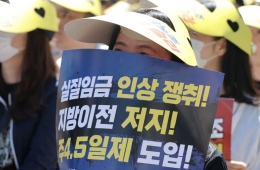
Local residents worry that downgrading these independent port authorities to branches of a central organization could weaken not just their organizational and budget authority, but also their influence over port-specific investment decisions. Given that Busan handles transshipment, Incheon specializes in trade with China, Ulsan focuses on liquid cargo and energy, and Yeosu-Gwangyang on steel and petrochemical raw materials, critics argue that folding them into a single entity could erode the unique competitive advantages of each port. Labor unions representing the four port authorities have also opposed the plan, warning that if decision-making must be routed through a central body, on-site responsiveness could suffer.
Civil groups in Busan, including the Busan Development Council for Marine Capital, have called for the withdrawal of the integration plan. They argue that Busan is the world's second-largest transshipment hub, Incheon is the gateway for trade with China, Ulsan is Korea’s specialized energy and liquid bulk port, and Yeosu-Gwangyang handles key steel and petrochemical imports, each playing an irreplaceable role. According to these organizations, the government’s plan is "a grave policy error that threatens the international competitiveness of Korea’s ports, local economic autonomy, and the foundation of decentralization and balanced development."
Political opposition is also mounting. Lawmakers from the People Power Party in Busan, Incheon, and Ulsan argue that, because each port performs distinct functions, a blanket consolidation would undermine competitiveness at the regional level, while Jeong Ilyeong, a Democratic Party lawmaker representing Incheon Yeonsu-eul, criticized the conversion to local branches as “practically a demotion,” calling on the government to reconsider.
Hot Picks Today
 "Surviving on One Meal a Day to Invest 3.5 Million Won Monthly... 'FIRE' Craze Sparks 'NISA Poverty' in Japan"
- "Seeing It With Their Own Eyes": Foreigners Flock to Chinese Factory Tours Despite $15,000 Price Tag
- "As Soon as Yong Hyein Was Nominated... After a 195% Surge, This Stock Suddenly Plunged"
- Causing Trouble Without a Simple "Sorry"... The Reason Behind the 'Gen Z Stare' Revealed
- "My Dog Doesn't Bite"... Controversy Over Unleashed Large Dog at Haeundae Beach
On this matter, the government has announced plans to develop detailed integration procedures through coordination with each institution. Vice Minister Huh Jang of the Ministry of Economy and Finance stated, “What the government announced is the overall direction of public institution functional reform,” adding, “Moving forward, we will revise required legislation through the National Assembly and pursue active integration discussions with labor organizations.” He continued, “We will ensure employee job security during the merger process, prevent any deterioration in compensation before or after integration, and actively introduce various support measures such as strengthened employee benefits and incentives for performance in management evaluations.”
© The Asia Business Daily. All rights reserved. Unauthorized AI training and use prohibited.