Beyond Fractional Investment: Token Securities to Include Shares and Bonds... Issuance Standards Set
From February Next Year, Private MMFs, Bonds, and Unlisted Shares for Institutional Investors Allowed
Expansion to Public Offerings and Stablecoin Integration to Follow
Fractional Investments in Real Estate and Music Rights Eligible for Public T
Starting from February next year, tokenization will be permitted for private placement funds and bonds exclusively for institutional investors, unlisted stocks, and public fractional investment securities. Additionally, the criteria for asset pooling—bundling multiple real estate properties into a single fractional investment security—have been clarified.

Limited Allowance for Tokenization of Funds, Bonds, and Stocks
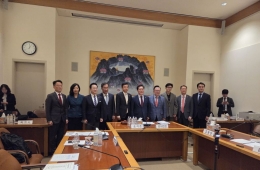
The Financial Services Commission announced this policy direction for security tokens (STO) during the third meeting of the Public-Private Joint Security Token Council, held on September 4. The comprehensive disclosure included the amended subordinate regulations and guidelines for the systemization of security tokens, which were previewed at the previous meeting.
Security tokens are securities issued and traded on a blockchain ledger. Previously, the terms “security tokens” and “fractional investment securities” were used interchangeably; however, the distinction lies in that fractional investment securities refer to a product structure where multiple individuals share ownership of a tangible asset or right, whereas security tokens are defined by their issuance—recorded and circulated using blockchain technology. According to the amended Electronic Securities Act and Capital Markets Act, the issuance and circulation of security tokens will become possible starting February 4 next year.
Under this new policy direction, the scope of security tokens will expand to encompass stocks, bonds, and funds. To support this, the Financial Services Commission has planned a three-stage implementation. In Phase 1, launching next February, tokenization will be permitted on a limited basis for funds, bonds, and stocks. Specifically, institutional investor-exclusive private money market funds (MMFs), private placement bonds, and unlisted stocks via trust methods will be eligible for tokenization during this phase. In the following second phase, stability and other aspects of the initial stage will be reviewed to broaden the scope to public security tokenization. In the third phase, security tokens will be linked with on-chain payment methods, such as stablecoins, to enable on-chain settlement.
This approach is interpreted as a measure to minimize market shocks and verify technological stability. The strategy aims to test the interoperability and reliability of distributed ledger infrastructure via institutional investors—who possess greater risk tolerance—rather than exposing retail investors immediately to potentially disruptive errors or market confusion from large traditional assets like bonds and funds.

Furthermore, the on-chain settlement planned for Phase 3 is intended to maximize financial efficiency by enabling simultaneous transactions. Moving settlement onto a blockchain network—not only for the issuance and trading of securities, but also for payment methods—will effectively eliminate the current T+2 (transaction plus two days) settlement delay. This development is expected to be a critical turning point for the Korean financial market to transition to a 24-hour, real-time settlement system in the future.
Tokenization of Public Fractional Investment Securities...Asset Pooling Also Permitted
Fractional investment securities, which are generally easier to tokenize than stocks, bonds, or funds, will be allowed for public tokenization right from Phase 1.
Criteria have also been established for asset pooling, which involves grouping multiple real estate properties or similar assets into a single fractional investment security. For non-monetary trust beneficiary certificates—using real estate or music copyrights that can be entrusted as underlying assets—pooling will be allowed, provided the following conditions are met: they must be of the same type, the criteria and purpose for pooling must be clear, problematic assets must be excluded, and differentiated information must be provided for each asset.
The issuance of fractional investment securities, backed by uncertain event-linked assets such as accounts receivable, will be permitted only in limited cases. This is possible only when the underlying debt security has a stable legal relationship and investor protections are in place, such as when collection is expected in the near future.
To protect investors, the Financial Services Commission has set a per-person subscription limit for public offerings of fractional investment securities at the lesser of 30 million won or 5 percent of the total offering amount. Furthermore, to prevent certain individuals from monopolizing the allocation, authorities recommended rules that set minimum ratios for allocation to general investors and for equal distribution in allocation guidelines.

Meanwhile, regarding the issuance of investment contract securities that directly distribute business profits without using a trust, the commission plans to conduct further study through commissioned research before deciding whether to establish a new licensing category. Among these, cases involving co-ownership shares require legal changes in the civil law system, since transfer cannot be completed solely by recording a transaction, thus restricting their circulation. There are also concerns about investor protection risks for purely business-type securities lacking co-ownership frameworks, such as insolvency isolation issues between issuers and jointly operated assets.
No Separate Licensing System for Security Tokens
Security tokens will only be managed by entities licensed to provide financial investment services, within the scope of their licensed operations. For example, securities companies licensed for beneficiary certificate brokerage will be able to publicly offer and broker fractional investment security tokens, while over-the-counter (OTC) exchanges licensed for beneficiary certificate trading will be able to support trading of fractional investment security tokens. However, OTC exchanges must consult with the Financial Supervisory Service in advance before supporting security token trading. For OTC exchanges, an individual annual net purchase limit of 100 million won per exchange has been set.
An issuing entity account management system will also be introduced for security tokens. Previously, only securities firms and banks could open and manage securities accounts. Going forward, in addition to these institutions, security token issuers will be able to manage accounts directly. This measure, which takes into account the joint recording and management features of distributed ledgers and the need for protection against unauthorized deletion, will be permitted exclusively to entities meeting requirements such as a minimum of 4 billion won in capital and the presence of account management professionals.
Hot Picks Today
 "Ppalli-Ppalli South Korea, This One Really Hurts Our Pride" Plunges from 1st to 22nd... Falls Behind Vietnam and Thailand
- Takes Off Belt, Assaults Employee... Cosmetics Company Executive in His 50s Causes Disturbance at Imported-Car Dealership
- "Shocking Quality": Chinese-Made Car Loses Both Rear Wheels on the Road
- "Shoulders Bumped," He Claimed After Killing Man in His 70s; Police Find Robbery Motive
- "I'll Give You 53.4 Billion Won to Keep Quiet"... Influencer Reveals Secret Deal; Musk Denies It
A representative from the Financial Services Commission stated, "Details on the scope of permitted security token issuance, licensing units for OTC exchanges, and transaction limits under this policy direction will be included in subordinate regulations to the Capital Markets Act and the Electronic Securities Act, which are scheduled for advance notice of legislation by the end of this month. We will continue to solicit market input and conduct in-depth discussions through the security token council."
© The Asia Business Daily. All rights reserved. Unauthorized AI training and use prohibited.