Controversy Over Housing Supply in Yongsan Park... Former Mayor Heeyoung Park Urges "Assess City Capacity First"
Thousands of Units on Paper, but On-site: Concerns Over Transportation, Schools, and Parking
Housing Supply Is More Than an Announcement—The Move-In Timeline Must Be Clear
Assessing Carrying Capacity and the Entire Yongsan Area Is Essential
The government is considering utilizing Yongsan Park as residential land, which is intensifying the controversy surrounding the Yongsan development.
On September 4, Heeyoung Park, former mayor of Yongsan District, stated in a written interview with The Asia Business Daily, "The first question should not be how many housing units can be built in Yongsan Park," and called on the government to verify the city's capacity to accommodate more residents.
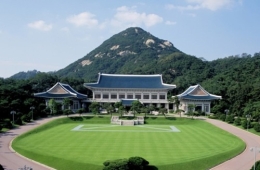
Park expressed opposition to the idea of utilizing Yongsan Park as residential land. She said, "The original plan for the International Business District included 6,000 housing units, and this number should be maintained to preserve its intended function as an international business hub. Yongsan Park must remain a national park, and the International Business District should be developed as an economic base focused on jobs." The following is a Q&A.

- How do you view the government's review of using Yongsan Park for housing and the proposal to expand housing in the International Business District?
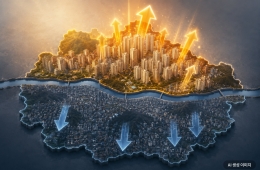
▲ These two issues cannot be considered separately. Yongsan Park should serve as a green infrastructure supporting Seoul’s downtown greenery, environment, recreation, and public functions. The International Business District is meant to become an economic center where global enterprises, industries, and jobs cluster—a core economic infrastructure. However, there are discussions about constructing housing in the national park, and separately, proposals to significantly increase residential space in the International Business District. We must ask whether shaking the very identities of these spaces for the sake of boosting housing supply is the right urban strategy.
- Are you against expanding housing supply in itself?
▲ No, I do not deny the need to expand housing supply given the population concentration in the greater Seoul area. Seoul’s housing issues must be addressed. However, we must closely consider not only how much and where to increase housing, but also which urban functions might be sacrificed in the process. We should not be weakening the key functions of the planned city, nor should we pass on this burden to residents.
- Why do you particularly emphasize 'city capacity to accommodate residents'?
▲ Having worked in urban administration, I know there is something more important to consider prior to calculating how many more units can be built: can the city actually support the additional population? More housing means increased demand for transportation, schools, childcare, parking, safety, and living infrastructure. On paper, the plan just specifies 'several thousand units', but once that becomes reality, it directly affects the daily lives of residents.
- How should this capacity be verified?
▲ If more housing is added to the International Business District and even to Yongsan Park, the projects should not be evaluated in isolation. The International Business District, Yongsan Park, and other surrounding development and maintenance projects must all be considered together to thoroughly assess whether the area's transportation, education, safety, and living infrastructure can handle the additional population. The impact does not end at the administrative boundary of Yongsan District; transportation, commerce, and daily life are closely connected to adjacent areas. City capacity for the entire Yongsan area needs to be verified first.
- Are you suggesting there is a gap between the central government’s supply plans and the perspective at the local level?
▲ At the central government level, 'several thousand units' might be seen as simply an administrative goal. However, in the local area, those numbers translate into real changes in traffic, education, safety, welfare, and everyday administrative needs. Housing numbers may be announced on paper, but the impacts and burdens emerge in the daily lives of residents.
- How do you evaluate the effectiveness of the government’s supply plan?
▲ We need to ask when the "housing supply" the government refers to will actually result in people moving in. Yongsan Park is not a typical newly-designated residential area. It is a site that must go through several preliminary stages, including the return of the U.S. military base, environmental studies and remediation, and the establishment of various plans and administrative procedures. Rather than simply stating a number of housing units, the government must first clarify when construction will begin and when people will realistically be able to move in.
- Why is the actual move-in date so important?
▲ Announcing housing supply does not automatically make it a reality. The site must be secured, administrative procedures and foundational infrastructure must be established, construction must begin and be completed, and only then can people actually move in—this is when the supply starts to have real effects. This is even more essential when the measures are meant to address urgent housing shortages. The government must answer whether a plan without a clear timeline for actual occupancy can really be considered a solution to the shortage.
- How should resident opinion be incorporated?
▲ The opinions of Yongsan residents must be reflected from the earliest stages of planning. Residents are not simply recipients who are informed about decisions after the fact—they are the ones who experience first-hand the changes in transportation, education, environment, and safety. As someone who has managed the district, I have often found that problems not visible in the planning stage become apparent on the ground. Transportation, school, and parking issues might be just a few items on a plan, but for residents, they are daily challenges. The larger the development, the more important it is to take into account on-site conditions and resident opinions from the initial stages.
- Finally, what would you like to say to the government?
Hot Picks Today
 "As Soon as Yong Hyein Was Nominated... After a 195% Surge, This Stock Suddenly Plunged"
- "Twentysomethings Who Invested in Stocks All Lost"... John Lee Says, "Investing for Retirement? Put Your Money in This"
- "Why Give to Remarried but Not Unmarried? Youths Stirred by 1 Million Won Marriage Support Fund"
- 6 Million Won for a Barbecue, 300,000 Won for a Mat... Intense Competition for Prime Spots at the Fireworks Festival
- "Why Buy a House? Invest in Stocks Instead"... 1.2 Million More 'Young and Rich' Opt for Renting in the U.S. Over the Past Decade
▲ Are Yongsan’s transportation, education, safety, and living infrastructure truly prepared for increased demand? When will the housing units the government is talking about actually become available for occupancy? What urban functions will we lose in exchange for more housing? These are the questions the government must answer before it announces how many more units it plans to build in Yongsan.
© The Asia Business Daily. All rights reserved. Unauthorized AI training and use prohibited.