"Youth-Oriented SMEs"... MSS Announces '5th Basic Plan for SME Workforce Support'
Expansion of Manufacturing AI Workforce to 1,600
Customized Talent Development for Industry Needs
New Preferential Track for Young Employees at Regional SMEs
Support for Long-Term Employment and Asset Building
Increase in Corporate Manpower Support Centers to 34
Strengthened Job Matching Initiatives
The Ministry of SMEs and Startups (MSS) is responding to the era of artificial intelligence (AI) transformation by significantly expanding practical AI personnel for small and medium-sized manufacturing companies, increasing the number from 600 this year to approximately 1,600 next year. AI-specialized contract departments will also grow from the current 10 to 30 by 2030. Support will be strengthened to promote long-term retention and asset-building for young people employed at regional SMEs.
On September 4, the MSS announced the “5th Basic Plan for SME Workforce Support,” which outlines these initiatives. This plan was created to nurture and supply talent required on the frontlines of SMEs, as well as to address both local SME recruitment difficulties and youth employment challenges.
From this year through 2030, these initiatives will focus on three key areas: ▲ customized training and supply of personnel based on field demand; ▲ creating work environments that make SMEs attractive employers; and ▲ infrastructure enhancement to mitigate job mismatches.

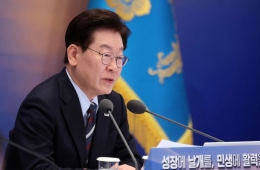
Noh Yongseok, First Vice Minister of the Ministry of SMEs and Startups. Photo by Yonhap News Agency
View original imageCustomized Talent Training and Supply Based on Field Demand
First, a comprehensive system for nurturing the AI talent essential to SME operations will be established and strengthened. The number of practical workers needed for manufacturing AI solution development within small and medium-sized manufacturers will increase from 600 this year to 1,600 next year. The duration of internships at SMEs will also be extended from three months to 12 months.
Next year, a new training initiative tentatively named the “Manufacturing AI Fellow Training Program” will launch to cultivate 500 participants. Four major science and technology institutes, including KAIST, will develop and operate specialized professional training programs for AI transformation (AX) in the manufacturing sector. Those who complete the training will be awarded a micro-degree in Manufacturing AX, with support for actual job placement at manufacturing firms.
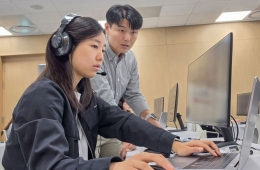
To consistently foster AI professionals for industrial sites, 10 new “AI-specialized contract departments” have been established this year, with plans to expand to 30 by 2030. To boost AI proficiency among SME employees, a “Manufacturing AI Education Center” will be established at the Small and Medium Business Training Institute, offering hands-on AI training to 10,000 participants annually.
Support for alleviating shortages of research personnel at regional SMEs will also be expanded. Through the “SME Research Personnel Recruitment Support Program,” assistance for companies outside the Seoul metropolitan area will be broadened. The proportion of support for SME hires will increase from 50% of all new hires to 60% this year. In addition, in conjunction with policies that promote the spread of smart factories, the quota for new research personnel support in manufacturing AI SMEs has been raised to two per company.
Utilization of both mid-to-late-career professionals and foreign workers will also increase. The requirement for companies to provide outplacement support to retirees will be gradually lowered from businesses with more than 1,000 employees (current standard) to those with 300 or more employees by 2029. For foreign workers, a comprehensive support roadmap will be established that covers everything from admission to settlement and continued residence.

Establishing an Attractive Work Environment at SMEs
The government will enhance support to promote long-term retention of SME workers and reduce the wage and benefit gaps between large corporations and SMEs.
Starting next year, a new “Regional SME Employee Preferential Track” will be introduced to the Youth Future Savings Account, helping young SME employees build up assets. In addition, for the Youth Job Incentive Program, a significant increase is planned for the youth subsidy supporting young people who join regional SMEs, offering up to 7.2 million won over two years. For vocational high school and university students, educational campaigns will be conducted to improve understanding of SMEs and share best practices, aiming to enhance the perception of SMEs among youth.
Furthermore, to improve working conditions in SMEs, government funding for accident prevention (slips, entrapments, collisions) at small enterprises with fewer than 10 employees will be expanded up to 90%. The government also plans to expand the scope of workplaces required to appoint safety and health managers under the Industrial Safety and Health Act, broadening the obligation from those with 50 or more employees to a wider range.
Strengthening Infrastructure to Alleviate Job Mismatches
Infrastructure aimed at mitigating recruitment challenges for SMEs will also be enhanced. The MSS will expand the number of corporate manpower support centers from 17 last year to 34 this year, and will establish cooperative systems with regional employment centers and universities. The Ministry of Education will provide scholarships and incentives to university students and high school graduates who wish to work at SMEs, while the Ministry of Employment and Labor will offer job market entry support for youth and other job seekers through the National Employment Support Scheme.
A new initiative tentatively called the “Youth Playground” will be introduced to support young people seeking employment or entrepreneurship. This program will showcase outstanding SMEs to job seekers and offer mentoring opportunities from senior entrepreneurs to aspiring founders. Tailored STEM workforce training programs matching the needs of local industries will be strengthened as well. The Small and Medium Business Training Institute will be linked with local governments, regional universities, and research institutions. Additionally, new training centers will open in Jeonnam and Jeonbuk next year.
Hot Picks Today
 "Please Pay Me at Least 3 Million Won a Month": More Than Half of Young People Today Prioritize "Working Conditions" Over Company Size
- Selling Like Crazy Every Year... 30-Year-Old Hetbahn Takes on a New Challenge: Tastes Better Than "Mom's Home Cooking" [On-Site Report]
- I Thought Only 'Old Guys' Ate It... Young People Are Hooked on This 'Unusual Food' at Risk of Disappearing? [Delicious Stories]
- "Hey, Lady, Teach Your Kids to Behave!" ... 300,000 Won in Cash and a Bodily Injury Claim Demanded Over Child's Door Ding
- Beachgoer Finds 'Plastic' That Turns Out to Be Perfume Ingredient Worth More Than Twice as Much as Gold
Noh Yongseok, First Vice Minister of the Ministry of SMEs and Startups, stated, “I hope that the 5th Basic Plan for SME Workforce Support will be an opportunity for a transformational shift that creates SMEs both sought after and nurtured by talent.”
© The Asia Business Daily. All rights reserved. Unauthorized AI training and use prohibited.