"Even ChatGPT Subscription Fees Are Too Much" ... Unfiltered Voices from University Students Poured Out to Budget Chief
Dialogue with Current and Former Student Council Presidents
Over 20 Student Representatives Voice Their Candid and Uncomfortable Stories
From the burden of paid subscription fees for generative AI tools, which have become essential for employment and studying, to the blind spots in tech startup support that is focused exclusively on master's and doctoral students, university student representatives candidly voiced the practical hardships they face on the ground to the Minister of the Planning and Budget Office, who oversees the national budget. At this event—organized with the intention of setting aside one-sided government policy promotions and listening openly to the honest and sometimes uncomfortable voices of young people—concrete and direct demands from university campuses emerged.

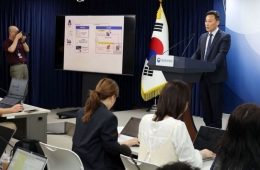
Hongkeun Park, Minister of Planning and Budget (center), is clapping at the "Future Response and Youth Policy Meeting with Former and Current Student Council Presidents" held on the afternoon of September 3 at Seoul Square, Jung-gu, Seoul. Planning and Budget Office.
View original imageOn September 3, Hongkeun Park, Minister of the Planning and Budget Office, invited 23 university students—including representatives from the union of current and former student council presidents, current and former presidents of individual universities, and science and engineering student representatives—to a Future Response and Youth Policy Dialogue at the Seoul Square conference room. Apart from a brief introductory presentation by young government officials on government-led policies, most of the event focused on open discussion and on-site suggestions from the student representatives.
Park Junggi, the student council president of Gachon University, remarked, "The cost of using generative AI tools is a significant financial burden for students." He requested that the government devise a national-level support plan that would provide tangible benefits to students, pointing out that even though some universities offer support, the clear reality is that there are strict usage limits.
Specific critiques highlighting flaws in existing government policies followed. Cha Hyunwoo, a student representative overseeing the semiconductor program at Ajou University, criticized the government's technology startup support policies for being concentrated in master's and doctoral research labs, leaving undergraduate students with good ideas excluded. He strongly advocated for the creation of a startup package exclusively for undergraduates, as well as a substantial increase in university research equipment funding to improve open lab environments. Park Kwangmin, president of the KAIST Graduate Student Council, also emphasized, "To attract top science and engineering talent, the government must take responsibility for ensuring a stable research environment and a sustainable pathway for growth."
There were also criticisms concerning the imbalance and criteria of financial support for universities. Lee Jimin, Chief of the Central Emergency Measures Committee at Korea University, said, "Current financial support is concentrated only on regional national universities," and argued, "We need to shift towards a more balanced support system so that students at universities in the metropolitan area and at private universities can also benefit." He added that any financial support should be based on concrete conditions that guarantee the quality of education, such as an increase in the number of tenured faculty members. Kim Sewon, president of the Catholic University Student Council, called for balanced allocation for the humanities and social sciences, stating, "The criteria for university support should be based not on the status of national versus private universities, but on real vulnerability, such as students' individual income and living circumstances."
In addition, Choi Jongkyu, former president of the student council at Chungnam National University, called for the adoption of regional settlement tracking indicators in university evaluations to incentivize staying in non-metropolitan areas and demanded the institutionalization of youth participation in both budget execution evaluation by the Planning and Budget Office and in the parliamentary review process. Kim Taeyun, former and current president of the united student councils, proposed a participatory structure where young people can directly propose budget plans, as well as the expansion of student-centered housing support such as the increase of rental housing around university areas.

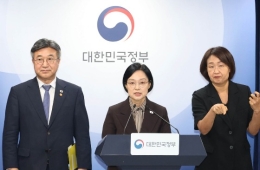
Hongkeun Park, Minister of Planning and Budget, is taking a commemorative photo with university student representatives at the "Future Response and Youth Policy Meeting with Former and Current Student Council Presidents" held on the afternoon of September 3 at Seoul Square in Jung-gu, Seoul. Ministry of Planning and Budget.
View original imageAfter listening attentively to the students’ candid feedback, Minister Hongkeun Park noted, "It is the government's heavy responsibility to solve the structural challenges facing young people, such as the hurdles of landing that first job and asset building," pledging to actively reflect the voices heard at the event in the development of policy. He also reaffirmed the principle that any surplus in tax revenue generated by the semiconductor boom and other factors should not be consumed in short-term spending within a single year. Instead, he revealed a plan to establish a Future Response Fund using the additional tax revenue with a strategy to reinvest in four areas—young people, growth engines, regional development, and education/talent—and to use it as a fiscal stabilization tool to prepare for fluctuations in tax revenue.
Hot Picks Today
 "Unable to Continue Mother-Son Relationship": Kim Youngsik Loses First Trial in Annulment Lawsuit Against LG Chairman Kwangmo Koo
The minister also shared the government’s policy to revise the current education grant formula, which is mechanically linked to domestic tax revenue, into a more stable structure for growth; the additional funds secured through this change are to be allocated to the education and talent category of the Future Response Fund, with particular focus on early childhood, secondary, and lifelong education. Minister Park declared, "Support for young people is not simply a form of welfare—it is an essential investment in our future," and stated his intention to push forward with a comprehensive investment approach tailored to each stage of youth development. The Planning and Budget Office plans to institutionalize forums like this dialogue session as a continuous opportunity to gather feedback directly from young people on the ground.
© The Asia Business Daily. All rights reserved. Unauthorized AI training and use prohibited.