People Power Party Criticizes Public Institution Relocation as 'Empty Declaration' and Warns of Showpiece Administration
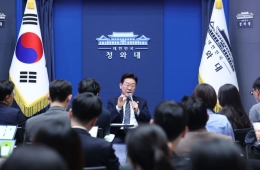
On September 3, the People Power Party criticized the government’s newly announced principles and direction for the second phase of relocating public institutions to regional areas, stating, "It is only a declaration without any concrete plans for funding or implementation."
Choi Sujin, the floor spokesperson, issued a statement on the same day, saying, "While we agree with the overarching goal of balanced national development, this announcement remains at the level of a declaration of principles, with no specifics on which institutions, regions, or the scale of relocation have been determined."

She went on to argue that diagnosing the failures of the first phase of public institution relocation should come first. Choi said, "A greater concern is the lack of thorough evaluation and reflection on the failure of the first round of relocations. The government itself has admitted that the impact of the first phase was limited to the areas around newly established innovation cities and that since 2023, those regions have seen a net population outflow. Mere slogans to 'relocate en masse' will only lead to a repeat of the same failures."
She further warned, "If the process is rushed by relying on temporary measures such as leasing private buildings, there is a risk that this will become a showpiece policy pushed through without sufficient consultation with labor groups and local governments. Funding plans must be transparently disclosed and there must be ample communication with local communities and labor representatives."
She also expressed concern about the proposed restructuring measures, which involve consolidating similar and overlapping functions of some public institutions and merging smaller organizations.
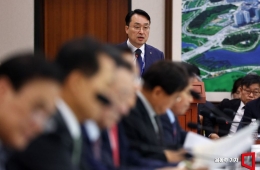
Yoon Sanghyun, a five-term lawmaker, stated on his personal social media (SNS) account, Facebook, on the same day, "If integration is pursued without targets for workforce, personnel expenses, or debt reduction, it may simply result in ‘bloated integration.’ We demand concrete and truly substantial reform measures, not superficial ones, and call for the annual implementation plans to be made public."
He further pointed out, "The plan to integrate port authorities, which includes converting Incheon Port Authority into a regional branch, should be reconsidered from scratch, as each port authority has different supporting industries, logistics demands, and growth strategies."
Hot Picks Today
 Changing Outfits and Snapping Photos in Hotels... "Please Don't Take Pictures": Europe Cracks Down on Influencers Over Privacy Concerns
- "Tried leveraged semiconductor stocks, watched 3.5 billion won shrink to 200 million won": Salaried investor in tears
- "Please Let Me Go Home"... Customers Trapped in Department Store Parking Lot for 5 Hours Vent Their Anger
- "I Should Enjoy It After Retirement": Prices Quadruple... Memberships Over 100 Million Won Popular, but Closures Mount
- "Come Live With Me on My Farm": Man Sells Everything and Travels 1,930 km, Trusting a Beautiful Woman
There was also continued opposition to the proposal to split Korea Land & Housing Corporation (LH) into two separate corporations—one for development and one for residential welfare. Park Dae-chool, a four-term lawmaker representing Jinju City in South Gyeongsang Province, stated on social media, "Five years ago, residents of Jinju and South Gyeongsang went so far as to protest in the rain in Seoul to stop the division of LH. Attempting this again is a direct affront to them. Gyeongnam Innovation City is a model case for balanced local development nationwide, and notably, LH is both a forefront driver of balanced land development and a symbol of Jinju."
© The Asia Business Daily. All rights reserved. Unauthorized AI training and use prohibited.