"What's With the Name? We Can't Accept This" - China Outraged by 'Taiwan Pavilion' Withdraws from Gwangju Biennale
Taiwan Pavilion Dispute Escalates Beyond the Exhibition Hall
China Pavilion Withdraws from Gwangju Biennale
China Pavilion: "Incorrect Designation Used... Politics Interfering in Art"
Taiwan: "Agreed from the Start on 'Taiwan Pavilion
Just two days before the opening of the 16th Gwangju Biennale, a cross-strait dispute over the name "Taiwan Pavilion" led to the complete withdrawal of the China Pavilion. Initially, there was conflict between the Gwangju Biennale Foundation and the Taiwan side over the name of the exhibition, and when the foundation ultimately allowed the use of "Taiwan Pavilion," China objected this time. The dispute that began at the exhibition space spread to statements by the Chinese Embassy in Korea and the Korean Ministry of Foreign Affairs, as well as the cancellation of a visit by a Chinese local government delegation to South Korea.

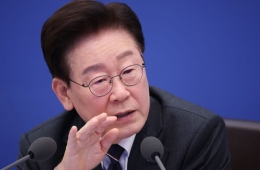
At a press conference held on the morning of the 3rd at the Hajungung Art Museum of the Gwangju Museum of Art in Gwangju, Jeonnam, Luan Wei, a Chinese curator (fourth from the left in the photo), announced the withdrawal of the Chinese Pavilion exhibition at the Gwangju Biennale. Photo by Yonhap News
View original imageThe China Pavilion exhibition team officially announced their withdrawal at a press conference held at the Hajungwoong Art Museum of the Gwangju Museum of Art on the 3rd. Luan Werae, curator of the China Pavilion's curatorial team, stated, "The organizers of the Gwangju Biennale used an incorrect name regarding the participation of the Taiwan region of China," and argued, "We cannot accept a situation where political factors interfere in the realm of art." The Chinese side highlighted that the withdrawal was determined unanimously as a "strong protest." The press conference concluded in about three minutes without a separate Q&A session.
The Chinese side had already stopped installing artworks since August 28. According to international art magazine The Art Newspaper, the China Pavilion, which was to be set up at the Hajungwoong Art Museum, was going to feature 18 artists and collectives, mainly from the China Academy of Art and related institutions. The exhibition aimed to explore the history of exchanges connecting the China-Europe freight railway and Central Asia, but due to the withdrawal decision, the exhibition will not be held.
The conflict originated not with China, but with Taiwan. The National Taiwan Museum of Fine Arts (NTMoFA) and the Taiwan Ministry of Culture maintained that they had consistently negotiated under the name "Taiwan Pavilion" during the process of participating in the Gwangju Biennale, but claimed that the foundation unilaterally changed this to "NTMoFA Pavilion" on official promotional materials from June. The Taiwan side protested, saying that the exhibition proposal was approved under the name "Taiwan Pavilion," and that the same name continued to be used when discussing the venue and exhibition preparations, so the change was unilateral.

Promotional material for the 16th Gwangju Biennale 'Taiwan Pavilion' (left) and the official pavilion website participant list. After controversy over the name, the foundation approved the use of 'Taiwan,' which is also listed on the website as 'Taiwan.' Ministry of Culture, Taiwan
View original imageIn contrast, the Gwangju Biennale Foundation explained that the National Taiwan Museum of Fine Arts was participating in the pavilion project not as a national entity, but as an institution, so they used the institution's name as the official designation, emphasizing that it was not political censorship. The foundation said it distinguishes between national pavilions and institutional pavilions and maintained it did not intervene in the exhibition content, artworks, or curating. Each side differed in their interpretation of the agreements and negotiations.
Taiwanese artists and curators issued a joint statement on August 15, criticizing the removal of "Taiwan" as "political censorship," and the Taiwan Ministry of Culture also demanded restoration of the original name. The controversy extended beyond Korea and Taiwan and became an issue in the international art world. The Art Newspaper, ArtReview, and Euronews reported intensively on the matter, focusing on the clash between administrative naming decisions by artistic institutions and issues of self-identity and expression by participants from Taiwan.
Eventually, on August 25, the foundation approved the use of the "Taiwan Pavilion" name after the Taiwan Ministry of Culture sent an official document stating that the National Taiwan Museum of Fine Arts was participating as a representative of Taiwan. The Taiwan Ministry of Culture welcomed this, announcing it had "reclaimed" the name "Taiwan," and work on installing the Taiwan Pavilion at the Asia Culture Center (ACC) resumed.
Consequently, the Chinese side acted. On August 27, Chinese Ambassador to Korea Xing Haiming met Mayor Min Hyung-bae of Gwangju to express regret and concern over the approval of the name "Taiwan Pavilion," and the next day, the Chinese Pavilion installation team stopped work. With both Chinese and Taiwanese pavilions participating in the Gwangju Biennale at the same time, the dispute over the exhibition name came to the surface.
The Embassy of China in Korea also heightened its response by releasing a spokesperson statement on the 3rd. The embassy argued that allowing the name "Taiwan Pavilion" violated the "One China" principle and undermined the political foundation of China-Korea relations. It went on to demand the retraction of the name, claiming that certain politicians and groups in Korea were crossing China's "red line" on Taiwan-related issues.

Three days ago, installation of the Gwangju Biennale China Pavilion artwork stopped at the Hajungwoong Museum of Art in Seo-gu, Gwangju Metropolitan City, Jeonnam. On the same day, the Chinese exhibition team held a press conference announcing their intention to withdraw from the Gwangju Biennale. Yonhap News Agency
View original imageThe Korean government separated the decision on the naming from its policy on Taiwan. Doosoon Park, spokesperson for the Ministry of Foreign Affairs, stated at a regular press briefing on this day that the naming of the Taiwan Pavilion was "a decision made independently in the private sector of arts and culture" and is unrelated to the Korean government's stance. He also emphasized that the government's basic stance—respecting the "One China" policy—remains unchanged.
The city of Gwangju also apologized, saying that there had not been sufficient communication among the participating institutions during the preparations, and reaffirmed its respect for the "One China" policy. The city explained that the expression "Taiwan Pavilion" is simply a name chosen by participants in the realm of art, and that neither Gwangju nor the Biennale recognizes Taiwan as a country. The Gwangju Biennale Foundation also issued an official statement on the 2nd, acknowledging there had been "administrative and contractual disagreements" over the use of the name and official promotional materials, and apologized for the confusion during the organizing process, expressing hope for the China Pavilion's participation in the future.
However, the China Pavilion ultimately decided to withdraw the following day. The aftermath extended beyond the biennale itself. The delegation of the Guangzhou Municipal People's Congress Standing Committee canceled its planned visit to Gwangju, which was scheduled for September 6-7. The visit was to include a courtesy call on the mayor, exchange with the city council, and attendance at the Gwangju Biennale. Delegates from Zhoushan, Zhejiang Province, also indicated their intention to cancel participation in the Yeosu World Island Expo promotional activities, and the organizing committee is trying to persuade them to take part.
Hot Picks Today
![[Exclusive] "Forecasts of Over 10 Billion, but Only 100 Million Earned"... 95% Followed This Pattern: Why Are KOSDAQ Special Exception IPOs Inflated? [KOSDAQ Inflated IPOs]①](https://cwcontent.asiae.co.kr/asiaresize/93/2026100609060151026_1791245160.jpg) [Exclusive] "Forecasts of Over 10 Billion, but Only 100 Million Earned"... 95% Followed This Pattern: Why Are KOSDAQ Special Exception IPOs Inflated? [KOSDAQ Inflated IPOs]①
[Exclusive] "Forecasts of Over 10 Billion, but Only 100 Million Earned"... 95% Followed This Pattern: Why Are KOSDAQ Special Exception IPOs Inflated? [KOSDAQ Inflated IPOs]①
- The Evolution of Spain's 200-Year-Old 'Human Tower'... World’s First Success with Nine People on Each of Nine Stories
- "My Debt Is 73 Million Won"... Sharing Every Repayment Led to an Unexpected Turn
- "Drinking This in the Morning Is Like Drinking Alcohol"..."Doctors Warn: Never Consume It"
- Is 'KOGUMA' Coming Too?... "Japan in Serious Trouble" - Archipelago on High Alert Ahead of Holidays
This controversy arose from the "Pavilion Project," which is operated separately from the main exhibition of the Gwangju Biennale. The Pavilion Project, launched in 2018, is an international cultural and artistic exchange program. The Gwangju Biennale Foundation describes it as a platform where both domestic and international institutions and artists engage in separate exhibitions to foster exchange. The main exhibition of the 16th Gwangju Biennale, "You Must Change Your Life," will open as scheduled on September 5 and run for 72 days until November 15.
© The Asia Business Daily. All rights reserved. Unauthorized AI training and use prohibited.