"Housing Welfare Dependent on Development Profits Faces Limits... Growing Need for Fiscal Support as LH Split Approaches"
Aftermath of Public Institution Restructuring
Separate Account within the Housing and Urban Fund
Similar to the Current Cross-Subsidy Model
Structural Reform Loses Significance if Booming Market Assumed
Rising Budget for Housing Welfare, Including Rental Housing
The government has proposed a plan to split Korea Land and Housing Corporation (LH) into two separate entities—one handling development projects and the other dedicated to housing welfare—but experts are questioning its effectiveness. This skepticism arises because the newly created separate account within the Housing and Urban Fund, which plays a key role after the company split, is not expected to differ much from the current cross-subsidy model.
LH currently operates under a cross-subsidy structure, using funds raised from land sales to manage leased housing. Aside from shifting this mechanism outside the company, little will substantively change. Furthermore, if revenue streams from development projects become unstable, it could be difficult to accumulate funds. The government is reportedly also considering injecting fiscal resources to ensure that housing welfare programs are not scaled back under any circumstances.
The most noteworthy aspect of the LH functional reform plan announced by the government on September 3 is the creation of a separate account within the Housing and Urban Fund. While tentatively deciding to split LH into the Housing and Urban Development Corporation (tentative name, hereafter the same), responsible for land development and housing construction, and the Housing and Urban Asset Corporation, in charge of housing welfare and land reserves, the government intends to establish a channel through which funds can flow between the two companies. The separate account will serve as a conduit for the development corporation to set aside a portion of its profits generated from development projects. The asset corporation will then use these accumulated funds as a resource for housing welfare projects.

The government did not disclose the specific reserve ratios or the exact scale of capital contributions and lending. However, the end result would create cash flows similar to the current cross-subsidy model, which allocates development gains to housing welfare projects. Baek Doo-jin, Head of Real Estate Finance Analysis at the Seoul Metropolitan Government, commented, "Whether the cross-subsidy is managed by one company or two is merely a technical difference. Housing welfare has long depended on cross-subsidization of development profits, as well as on housing subscription savings and national housing bonds, all predicated on a booming real estate market. If these foundational mechanisms are not changed, the reform loses its significance."
The Housing and Urban Fund, including debt, has assets exceeding 200 trillion won, making it the country’s largest fund with a specific policy objective. Currently, it consists of a housing account used for public rental and sales housing, and an urban account allocated to urban regeneration. Some believe that utilizing the fund appropriately makes sense, given its clearly defined purposes and uses.
Lim Jae-man, former co-chair of the LH Reform Committee and now President of the Korea Research Institute for Human Settlements, explained, "The sources and uses of the current fund’s resources are already determined. This measure would simply make internal cross-subsidization more transparent and ensure that development profits are fully utilized by the asset sector, so separating into a dedicated account is a rational approach."

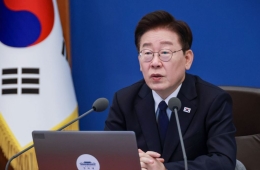
Prime Minister Hansung-sook is speaking at a press conference on September 3rd at the Government Seoul Administration Building in Jongno-gu, Seoul, regarding the relocation of administrative and public institutions and the reform of public institution functions. Attending the conference from the left are Yoon Hojung, Minister of the Ministry of the Interior and Safety; Kim Yoonduck, Minister of the Ministry of Land, Infrastructure and Transport; and Heo Jang, Second Vice Minister of the Ministry of Economy and Finance. September 3, 2026. Photo by Jo Yongjun
View original imageThe key point is how to supplement an unstable revenue structure from development, especially as budgets for housing welfare, including leased housing, are steadily growing. Last year, LH posted its first net loss since establishment, primarily due to the government’s policy of not selling public land. An official from the Ministry of Land, Infrastructure and Transport said, "Apart from public land, there are various plots including industrial complexes, single-family housing, and commercial properties that can still be sold, so it’s not as though the revenue stream will be cut off entirely."
President Lim added, "It’s not that land sales are completely prohibited; rather, the development corporation will directly execute private-participation projects and sell housing after project completion, which means land sales will be delayed during the period between land development and housing construction."
Hot Picks Today
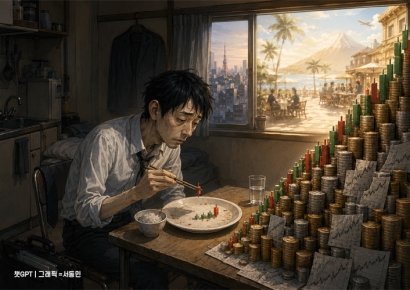 "Surviving on One Meal a Day to Invest 3.5 Million Won Monthly... 'FIRE' Craze Sparks 'NISA Poverty' in Japan"
- "Used for the Wedding" 300,000-Won Ring and Dress...Changing Wedding Trends
- "As Soon as Yong Hyein Was Nominated... After a 195% Surge, This Stock Suddenly Plunged"
- "Correction Over for Samsung and SK hynix" "670,000 for Samsung, 4.7 Million for SK hynix": Why Global IBs Remain Optimistic
- Causing Trouble Without a Simple "Sorry"... The Reason Behind the 'Gen Z Stare' Revealed
It is also reported that the government is considering including direct fiscal support measures in the soon-to-be-announced LH reform plan. The Ministry of Land, Infrastructure and Transport official explained, "If LH shifts from selling public land to realizing more profits through direct sales, development profit may not necessarily decline. But should development profits decrease and funding shrink, the government is discussing ways to cover the shortfall with the national budget rather than the Housing and Urban Fund."

Kim Yoonduk, Minister of Land, Infrastructure and Transport, is delivering a greeting at the "LH Reform Committee Launch Ceremony" held at the Kensington Hotel in Yeongdeungpo-gu, Seoul, last August. Photo by Yonhap News Agency
View original image© The Asia Business Daily. All rights reserved. Unauthorized AI training and use prohibited.