Jinwoo Sunim Re-elected as Jogye Order Chief Executive with 183 Votes... First 'Two-Term Leader' in 13 Years
All 321 voters participated: Jinwoo received 183 votes, Gyeongwoo 138 votes, with 57% to 43% share
Secures second term following uncontested victory in 2022; first consecutive reappointment since Ja-seung after the 1994 reform
"I will embrace all differences of opinion from the election"
Decentralization to districts, welfare for monks, K-Seon Meditation among key policies to be advanced
Four years ago, Jinwoo Sunim, who was elected without a vote as the sole candidate, has now secured another four-year term at the helm of the Jogye Order of Korean Buddhism after winning a competitive election for the first time in nine years. This marks the first reappointment in 13 years since Ja-seung Sunim consecutively served as the 33rd and 34th Chief Executive, and the second time since the 1994 reform of the Jogye Order that an incumbent Chief Executive has been re-elected.

Jinwoo, who was elected as the next Chief Executive of the 38th Jogye Order of Korean Buddhism General Assembly election held on the 3rd, is delivering a greeting after completing the opening ceremony at the main hall of Jogyesa Temple. Photo by Yonhap News
View original imageThe Jogye Order of Korean Buddhism announced on September 3 that Jinwoo Sunim, candidate number 3, was elected as the 38th Chief Executive during the election held at the Traditional Culture and Arts Performance Hall inside the Korean Buddhist History and Culture Center in Jongno-gu, Seoul. Jinwoo Sunim received 183 votes out of 321 voters, achieving a vote share of 57.0%. Candidate number 1, Gyeongwoo Sunim, received 138 votes (43.0%). All electors participated in the vote, with the margin between the two candidates at 45 votes.
This election marked the first contested Chief Executive race with multiple candidates going head-to-head since 2017. Initially, it was a three-way race among Jinwoo Sunim, Jeongnyeom Sunim, and Gyeongwoo Sunim. However, Jeongnyeom Sunim, the former abbot of Woljeongsa Temple, withdrew his candidacy on August 24 and declared support for Gyeongwoo Sunim, reshaping the election into a two-way contest between Jinwoo Sunim, who was seeking a second term, and Gyeongwoo Sunim, who called for a change in leadership.
Immediately after his victory, Jinwoo Sunim held a ceremony at the main hall of Jogyesa Temple to announce his election to the Buddha, stating, "Today's choice is not a personal endorsement but a solemn mandate to achieve a new leap forward in Korean Buddhism based on stability and harmony." He added, "I will value all the different opinions and views expressed during the election process," and pledged, "I will listen with greater humility, ensuring no one is marginalized, and work together with regional districts and the entire Buddhist community to open the future of the order."
He further emphasized, "I will dedicate my all to make the Buddhist Sangha more confident, the Order more stable, and Buddhism younger and more dynamic, ushering in a new century for Korean Buddhism." Given the contention between the two camps during the campaign, his acceptance speech reiterated the messages of 'harmony' and embracing 'differences in opinion.'

The 38th election for the Chief Executive of the Jogye Order of Korean Buddhism held on the 3rd at the Traditional Culture and Arts Performance Hall within the Korean Buddhist History and Culture Memorial Hall in Jongno-gu. Yonhap News
View original imageWith this outcome, Jinwoo Sunim can now fully advance his vision of moving 'from stability to progress,' building on the administration of the past four years. During the campaign, he presented a series of key policies: decentralizing authority from the central office to local districts, gradually reducing central contributions, providing full welfare and basic practice funds for all monks, strengthening the standing and rights of Buddhist nuns, and reforming the Chief Executive election system.
Expanding youth outreach through the use of AI and new media and promoting 'K-Seon Meditation' are also core objectives for his second term. Jinwoo Sunim aims to popularize Seon Meditation as practices of 'mental security' and 'mind training,' evolving it into K-Seon Meditation while also continuing to globalize Korean Buddhist culture through programs like Lotus Lantern Festival, templestay, and temple cuisine. At this year’s New Year press conference, he introduced the concept of 'Mind Civilization Buddhism,' which combines the wisdom of Seon meditation and practice as Buddhism's role in the AI era.
During his first term, his main achievements included reforming the cultural property entrance fee system, popularizing Seon Meditation, and expanding the societal presence of Buddhist culture. Last year, he reorganized the so-called 'three-office system'—previously divided into the Chief Executive Office, Education Office, and Missionary Affairs Office—integrating it around the Chief Executive Office. In his second term, there will be focus on how far he can shift the order’s operations from centralized control to district-centered governance, and how concretely he can address issues related to the decreasing and aging monk population through enhanced welfare systems.

On the 3rd, at the traditional culture and arts performance hall inside the Korean Buddhist History and Culture Center in Jongno-gu, Jinwoo Sunim, who was elected as the next 38th Supreme Patriarch of the Jogye Order of Korean Buddhism, is posing for the camera while receiving the certificate of election. Photo by Yonhap News.
View original imageHe also faces the task of resolving internal conflicts that surfaced during the election process. Near the end of the campaign, debates and counterarguments arose concerning Jinwoo Sunim’s qualification for a special full ordination in 1998. On August 19, the Central Election Commission of the Jogye Order reviewed the candidacies of Jinwoo Sunim, Gyeongwoo Sunim, and Jeongnyeom Sunim, and found “no issues,” thereby confirming their eligibility. Jinwoo Sunim’s team also clarified that the issue had undergone various reviews and repeated qualification assessments by the order in the past.
According to the Order’s Constitution, the Chief Executive serves as the representative of the Jogye Order and manages the overall administration. The Chief Executive oversees about 3,000 temples, including the main temples of the 25 districts nationwide, has the authority to appoint and dismiss temple abbots, oversees and approves the order’s and temples’ assets, and also serves as president of the Korean Buddhist Federation and co-chair of the Korean Religious Leaders Association, among other roles.
Hot Picks Today
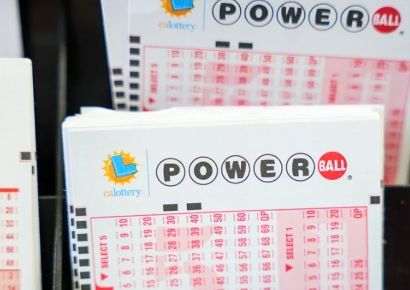 He Left It in the Car and Forgot... "I Nearly Collapsed with Joy": Man Wins $1.48 Million Lottery
- Goldman Sachs Cuts KOSPI Target by 25%... "Excessive Pessimism, Still Attractive"
- "'Nodding Off' on the Subway? Here's Why Koreans Are Getting Even Less Sleep"
- "Please Pay Me at Least 3 Million Won a Month": More Than Half of Young People Today Prioritize "Working Conditions" Over Company Size
- Beachgoer Finds 'Plastic' That Turns Out to Be Perfume Ingredient Worth More Than Twice as Much as Gold
Jinwoo Sunim will be officially inaugurated as the 38th Chief Executive for a second four-year term starting from September 28 after being formally endorsed at the Elder Councillors' meeting scheduled for September 4. Having taken novice monk vows in 1978 under his preceptor Jihung Baegun Sunim, he has served as abbot at Sinhungsa, Yongheungsa, and Baekyansa Temples, as acting Chief Executive, as president of the Buddhist Newspaper, and as the 8th director of the Education Office, among various roles.
© The Asia Business Daily. All rights reserved. Unauthorized AI training and use prohibited.