"Why Were Snacks in the Butcher Section?"... The Mystery Behind the Sold-Out Item Everyone Grabbed [How We Buy Now]
Kkokkalcorn Limited Edition Ssamjang Samgyeopsal Flavor Sells Out Everywhere
210,000 Bags Sold in One Month, Three Months’ Supply Exhausted
From Snack Aisle to Pork Belly Display: Breaking the Mold in Product Placement
"I came to buy pork belly, but when I saw snacks at the butcher section, I was drawn in and ended up putting them in my cart."
At the butcher section of a large supermarket in Seoul, an unusual sight among the packs of meat under the reddish lighting draws the eye: snacks that should be in the snack aisle are instead taking center stage on a display in the middle.

Butcher corner stock photo, not directly related to the main text. Yonhap News Agency
View original imageUnconventional display marketing that breaks industry stereotypes, combined with unique flavors, is driving consumers to open their wallets. Especially, products that add a new experience to familiar, long-standing brands are receiving attention, expanding industry competition from taste to experience.
One example is the limited edition "Kkokkalcorn Ssamjang Samgyeopsal Flavor" launched by Lotte Wellfood at the end of July. In just over a month since its release, 210,000 bags were sold (by supply contract), exhausting all initial stock prepared for what was originally expected to be nearly three months' worth of sales.

The speed of sales has also been exceptional. Normally, if a product sells more than 10 bags per day in the snack section of a large supermarket, it is classified as a "popular item." However, this product sells over 50 bags per day per major store. Some locations have had to restock quickly as initial supply was sold out.
Unique Display and Nightlife Trends Targeted... Adding 'Fun' to the Familiar
The success of this product is due not just to its flavor but also its placement in stores. Some large supermarkets display Kkokkalcorn not only in the regular snack section but also right next to the pork belly display. By exposing the product to shoppers there to buy meat, spontaneous additional purchases are encouraged.
The product’s planning also hit the mark. Recently, the "nightlife culture" that has spread mainly among those in their 20s and 30s and the familiar pairing of pork belly as bar food were combined in this snack. In particular, ssamjang—a flavor rarely seen in snack products—was used as the main taste, and the intuitive name "Ssamjang Samgyeopsal Flavor" quickly conveyed the concept to shoppers.
Offline, marketing efforts are also leveraging the "nightlife" atmosphere. Until September 13, Lotte Wellfood is collaborating with the long-standing pub "Mansun Hof" in Euljiro, Seoul, to offer a special set that pairs "Kkokkalcorn Special Nachos" with popular bar foods.

'Modisumer' Culture Fuels Buzz
The "modisumer" culture—where consumers enjoy products in their own unique way—has also generated buzz. Rather than simply eating the snack on its own, people are making new combinations such as eating it wrapped with pork belly or dipping it in ssamjang and sharing these ideas on social media, turning it into a kind of play culture.
On social media, this very style of consumption becomes content itself. Photos and videos shot by consumers introduce new combinations to people who haven't tried the product, prompting even more purchases in a viral loop.
From a Single Kkokkalcorn Hit to the Whole Brand... 'Rejuvenating' a Longstanding Product
The popularity of this specific product has spread interest to the entire Kkokkalcorn brand. According to Lotte Wellfood, demand for all Kkokkalcorn products has increased alongside the hit status of "Kkokkalcorn Ssamjang Samgyeopsal Flavor." Attention for the new product has spilled over to legacy products, broadening consumer touchpoints for the brand as a whole.
For legacy brands, this is significant because they can attract new consumers while leveraging existing brand equity. Rather than having to build name recognition from scratch, companies can bring renewed attention by layering new flavors and content onto a brand that consumers already know.
Retail experts say such strategies can expand touchpoints with younger consumers for longstanding brands. By combining familiar brands with unique product concepts and spatial experiences, companies can offer novelty to traditional customers and memorable experiences to the younger generation.
From 'Well-Made Flavors' to 'Products Designed for Play'
What is especially noteworthy in this case is that the product was deliberately designed to allow consumers room to experiment, rather than simply offering a unique flavor. In the past, the competitiveness of new snack products lay in taste, packaging, and pricing, but now how consumers experience and share the product is just as important. By providing new ways to enjoy the snack and encouraging mix-and-match combinations on social media, the consumer is enabled to generate their own content with the product.
For companies, this kind of consumption offers a spreading effect that cannot be achieved through advertising alone. User-generated photos, videos, and firsthand reviews stimulate curiosity in other potential buyers.
Hot Picks Today
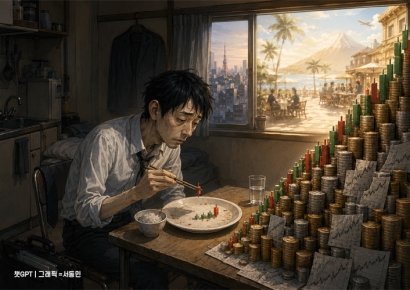 "Surviving on One Meal a Day to Invest 3.5 Million Won Monthly... 'FIRE' Craze Sparks 'NISA Poverty' in Japan"
- "Correction Over for Samsung and SK hynix" "670,000 for Samsung, 4.7 Million for SK hynix": Why Global IBs Remain Optimistic
- "Used for the Wedding" 300,000-Won Ring and Dress...Changing Wedding Trends
- Causing Trouble Without a Simple "Sorry"... The Reason Behind the 'Gen Z Stare' Revealed
- Nongshim Third-Generation Executive Sangyul Shin to Wed SKT Employee on the 13th
However, although social media buzz can spark initial interest, it does not necessarily lead to repeat purchases. Even if novel combinations get people’s attention in the beginning, ongoing sales depend on the product's actual taste, price, and purchase convenience. Now, it seems industry competition is expanding beyond simply creating new flavors to include the ways in which consumers can generate new experiences with products.
© The Asia Business Daily. All rights reserved. Unauthorized AI training and use prohibited.