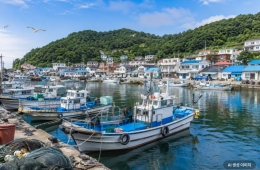
"Will We Soon Be Unable to Eat Sashimi?"... Why Staple Fish Flatfish and Rockfish Are Dying in Large Numbers
Sashimi Supply in Crisis Ahead of Chuseok
High Water Temperatures Trigger Mass Deaths of Squid and Hairtail at Fish Farms
As the Chuseok holiday approaches, prices for seafood items such as flatfish and rockfish—often considered staple fish for sashimi—are surging.

This sharp increase is due to continuous mass deaths of farmed fish caused by a dramatic rise in seawater temperatures during the summer heat wave, as well as the anticipated spike in demand for sashimi ahead of the holiday. In particular, rockfish, which are sensitive to temperature changes and prefer cold water, have experienced large-scale die-offs at South Sea fish farms even into September, intensifying further upward pressure on prices.
Flatfish at About 23,000 Won per Kilogram... 6.5% Increase from Last Year
According to data from the National Federation of Fisheries Cooperatives' Noryangjin Fish Market and others on September 3, the recent price for 1kg of farmed flatfish has remained in the low to mid-20,000 won range. The average price for farmed flatfish traded at Noryangjin Market between August 17 and 22 was 22,800 won per kilogram, up 6.5% compared to the same period last year. Previously, during July 27 to August 1, the average price soared 13.2% year-on-year to 22,300 won per kilogram.
The burden felt by consumers is even heavier. According to data from the Ministry of Oceans and Fisheries, the consumer price for flatfish in August reached 37,950 won per kilogram, while rockfish stood at 37,430 won per kilogram.
Even at large supermarket chains last month, 300 grams of flatfish sashimi sold for between 23,000 and 26,000 won, meaning that even a standard serving of sashimi now costs well above the mid-20,000 won range.
Squid and Hairtail Also Under Pressure... Government to Release 20,000 Tons from Reserves

A view of the agricultural and marine products wholesale market in Garak-dong, Songpa-gu, Seoul. Photo by Yonhap News Agency
View original imageThe outlook for other fish species such as squid and hairtail is also bleak. According to the Korea Agro-Fisheries & Food Trade Corporation (aT), as of August 27, the price for one large refrigerated squid was 5,210 won, 15.4% higher than one year ago.
One large refrigerated hairtail was priced at 14,171 won, up 7.8% from last year, while large frozen Alaska pollock also climbed 6.8% year-on-year to 4,146 won. Hairtail and Alaska pollock are likewise experiencing tight supplies due to insufficient catches.
To help stabilize seafood supplies ahead of Chuseok, the Ministry of Oceans and Fisheries will release 15,700 tons of Alaska pollock, 1,700 tons of squid, 1,500 tons of mackerel, 800 tons of hairtail, 200 tons of yellow croaker, and 100 tons of dried anchovies into the market by the 27th, totaling 20,000 tons of reserve seafood. The ministry stated, "Government-released seafood can be purchased at up to 40% below prevailing market prices."
Mass Deaths at Fish Farms Continue into September Despite Easing Heat

Fishermen are loading flounder caught in the West Sea onto trucks. Photo by The Asia Business Daily
View original imageThe main factor driving the spike in seafood prices is high water temperatures. In 2024, heatwave warnings lasted for 71 days, leading to the death of 28.28 million farmed fish in a single area in South Gyeongsang Province. The resulting decrease in supply from these massive die-offs continues to affect flatfish and rockfish prices this year.
If water temperatures rise above 27–28 degrees Celsius, flatfish drastically reduce their feeding and growth rates, and the risk of death increases significantly. Rockfish, which prefer cold water, are even more vulnerable to high temperatures, and because they are primarily farmed in marine cages, it is more difficult to lower the water temperature artificially compared to land-based fish farms.
As of early September, the damage remains unabated. According to Gyeongsangnam-do Province, from late July through September 2, as many as 5,587,000 farmed fish died in Namhae, Hadong, Tongyeong, and Geoje, while 440,000 abalone also perished. On September 2 alone in the Yeosu area, a total of 205,000 farmed fish—including 198,500 rockfish—were reported dead. Sea temperatures near Yeosu still hover around 28 degrees Celsius.
The Impact of High Temperatures Manifests with a Time Lag After Mass Deaths

Inside a frozen warehouse in Wando County, Jeollanam-do, on August 2, 2026. Tens of thousands of dead flatfish are stacked layer by layer from the floor to the ceiling. Photo by Lee Jung-Kyung, The Asia Business Daily
View original imageThe government, however, maintains that there is not yet cause for concern over a "supply crisis." As of June, the number of harvestable flatfish over 1kg was 11.48 million, only a 0.8% decrease from the previous year, and rockfish over 500g actually increased to 2.72 million, up 27.7% year-on-year.
Nonetheless, high-temperature alerts continue throughout the southern coast of Gyeongsangnam-do this month, and as dining out and sashimi consumption are expected to surge ahead of the holiday season, concerns persist. An industry insider cautioned, "The impact of high temperatures on supply and prices usually manifests with a time lag after the actual mass deaths occur. We need to closely monitor flatfish and rockfish prices throughout and beyond September."
Hot Picks Today
 Wealth Surpasses 20 Quadrillion Won... The Super-Rich Score Big, But Where Did the Money Flow?
- Trusted the 'Helper' and Opened the Door... She Returned and Stole Nearly 60 Million Won
- "Even as Stocks Tumble, I Trusted You"... The Secret of the ETF with Steady Upward Momentum [Weekend Money] [Weekend Money]
- "Kkokkalcorn Placed Next to Pork Belly Causes a Sensation... Sells Out Three Months’ Stock at Five Times the Usual Speed"
- "Just Drinking to Lift Your Mood"...Unexpected Warning: Raises Risk of Cancer Death
Farmers, facing an urgent crisis, are making every effort to conduct emergency releases—releasing large numbers of fish into the sea before they die. Last month in Taean, 2,677,000 rockfish and mullet were released, while 820,000 rockfish were released in Shinan and another 7,050,000 rockfish and other farmed fish in Yeosu. There are concerns that "while these measures may reduce immediate casualties, the entire quantity that would have reached market size for shipment in the future will be lost, potentially leading to serious supply shortages down the line."
© The Asia Business Daily. All rights reserved. Unauthorized AI training and use prohibited.