Gangnam and Seocho Decline, But Home Prices in Northern Seoul Surge... Outskirt Housing Market Booms Amid Tax Reform Backlash
Seoul Home Prices Up 0.22% from Previous Week
Gangnam and Seocho See Four Consecutive Weeks of Decline
Outer Seoul Districts Show Only Slight Slowdown in Growth
Buyer Demand Concentrated on More Affordable, Lower-Taxed Homes
While house prices in Gangnam-gu and Seocho-gu have been declining for four consecutive weeks, the outlying areas of Seoul continue to experience a persistent upward trend in property values. Analysts attribute this to an increase in rushed home sales in the Gangnam area due to the impact of the recent tax reform, whereas buying demand is concentrated in the suburbs, where many properties are valued under 2 billion won and the tax burden is lighter.
According to the weekly apartment price index for the fifth week of August (as of August 31), released by Korea Real Estate Board on September 3, the apartment sales price index for Seoul stood at 0.22%. This reflects a slowdown in the rate of increase compared to the previous week (0.29%).

A panoramic view of apartments in the Gangnam area as seen from the Lotte World Tower Sky Observatory in Songpa-gu, Seoul. Photo by Dongju Yoon
View original imageThe downward trend was especially pronounced in the Gangnam area. Seocho-gu apartment prices dropped by 0.23% from the previous week (-0.05%), widening the decline. Seocho-gu has now recorded declines for four consecutive weeks since the first week of August. Gangnam-gu also saw a 0.41% fall, a larger drop compared to the previous week's decrease of 0.11%. Songpa-gu posted a change of 0.01%, with the decline slightly narrowing from the previous week's 0.09% decrease.
In the Gangnam area, the recent 8.3 tax reform led to a spike in urgent property listings, which has put downward pressure on prices. Driven by the desire to take advantage of long-term ownership special deductions and reduce comprehensive real estate tax, elderly owners in particular have rushed to sell their homes. As a result, in the Apgujeong area, sales were closed at prices about 800 million won lower than the previous month’s asking prices.
In contrast, prices in outer Seoul districts such as Seongbuk-gu, Jungnang-gu, and Nowon-gu continued to rise by around 0.5%, maintaining a strong upward trend. Seongbuk-gu saw a 0.54% increase, compared to 0.55% the previous week. Jungnang-gu rose 0.52%, and Nowon-gu climbed 0.5%. Notably, Seodaemun-gu and Seongbuk-gu posted the highest cumulative increases this year at 10.45% and 13.05% respectively. This marks a significant jump compared to the same period last year (2.39% and 1.68%). The robust buying seen in lower- to mid-priced apartments in the suburbs, where prices are relatively affordable versus Gangnam, is believed to be a key factor.
Hot Picks Today
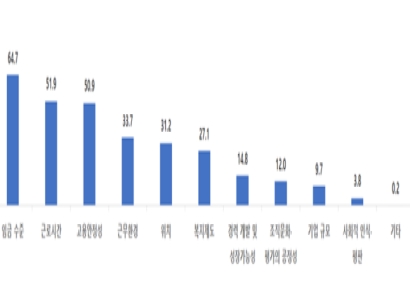 "Please Pay Me at Least 3 Million Won a Month": More Than Half of Young People Today Prioritize "Working Conditions" Over Company Size
- Selling Like Crazy Every Year... 30-Year-Old Hetbahn Takes on a New Challenge: Tastes Better Than "Mom's Home Cooking" [On-Site Report]
- Ran 18 km With 9-Year-Old Tied to Him at the Waist... "Man Banned From Competing for 3 Years"
- "Hey, Lady, Teach Your Kids to Behave!" ... 300,000 Won in Cash and a Bodily Injury Claim Demanded Over Child's Door Ding
- Beachgoer Finds 'Plastic' That Turns Out to Be Perfume Ingredient Worth More Than Twice as Much as Gold
In Gyeonggi Province, Yeongtong-gu in Suwon saw prices rise 0.65%, while Jungwon-gu in Seongnam and Gwonseon-gu in Suwon increased by 0.54% and 0.49%, respectively. Dongtan, Hwaseong—which posted the highest cumulative increase this year at 17.25%—rose by 0.25%, showing a slowdown in its rate of increase.
© The Asia Business Daily. All rights reserved. Unauthorized AI training and use prohibited.





![[Market ING] KOSPI Seeks Rebound in Superweek Packed with Corporate Earnings and FOMC](https://cwcontent.asiae.co.kr/asiaresize/307/2026102514484873155_1792907327.jpg)