North Korea Removes 'Unification Policy' from Workers’ Party Constitution... Adds New 'Wartime Provision'
It has been confirmed that North Korea has removed references to the theory of revolution against South Korea and policies regarding unification from the Workers’ Party’s constitution. However, analysts note that the terms “hostile nations” or “belligerent nations” were not codified, indicating that North Korea has left some room for future inter-Korean relations. New provisions related to “wartime preparedness” were also introduced into the party’s constitution.

North Korea's Korean Central News Agency reported on the 3rd that the 15th National Teachers' Conference grandly opened in Pyongyang on the 2nd. Yonhap News
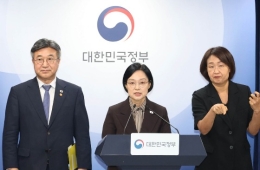
View original imageThe Institute for National Security Strategy (INSS) held a press conference on September 3, 2026 at Dalgaebi House in Jung-gu, Seoul, on the theme of “Analysis of the Amended Constitution from the Ninth Congress of the Workers’ Party of Korea and Evaluation of the Current Situation in North Korea,” and publicly released the results of its analysis of the amendments made at the Party’s Ninth Congress in February 2026.
According to the INSS, the amended constitution deleted all content related to the South Korea revolution theory and unification line. Expressions related to unification and the Korean nation, including “peaceful reunification of the motherland,” “united front,” “South Korea,” “great national unity,” and “on a national scale,” have disappeared. The INSS explained that the deletion of South Korea and unification-related content was carried out as part of North Korea’s process of formalizing a “two mutually hostile states” policy when the constitution was amended in June 2024, and this was maintained in the revised constitution adopted at the Ninth Party Congress. Kim In-tae, Senior Research Fellow at INSS, stated, “The complete abandonment of the policy for unification with South Korea has been reflected in the new constitution.”
However, North Korea did not include in the constitution expressions such as “hostile nation” or “belligerent nation.” Kim Ilgi, Director of the Peaceful Coexistence Strategy Center at INSS, said, “It is true that the South Korea revolution theory and armed unification clauses were deleted from the party constitution,” but added, “No new terms such as those regarding belligerent states or inter-state relations were inserted or codified.” He further analyzed, “By managing inter-Korean relations as a relationship between two sovereign states—while not codifying hostility—the constitution and laws consistently leave room for flexibility and avoid adding political burdens to future North-South relations.”
This is the first time provisions related to wartime situations have been explicitly included in the Workers’ Party constitution. New clauses on the activities of party leadership during wartime and the powers of the Politburo in wartime were added as Article 15 and Article 27, respectively. During wartime, the election procedures involved in forming party leadership bodies can be omitted, and the Politburo of the Central Committee is empowered to discuss and decide important matters on behalf of the plenary session.
Director Kim explained, “The actual practices previously existing as wartime party management measures have now been codified in the Workers’ Party’s constitution,” and added, “In reality, these additions are less about peacetime military functions and rather reflect an emergency defense command system led by the Politburo of the Central Committee.”
The party’s constitution now provides more specific regulations regarding the powers of Kim Jong Un as General Secretary of the Workers’ Party and Chairman of the State Affairs Commission. The amended constitution stipulates his authority to convene and lead party leadership bodies, appoint or dismiss key officials, grant or remove party membership, and dissolve party organizations. Senior Research Fellow Kim commented, “It appears these powers, previously exercised as a matter of party prerogative, have now been more precisely formalized and institutionalized,” diagnosing this as the consolidation of the “one-man leadership system.”
Sections pertaining to previous leaders were also reorganized. Senior Research Fellow Kim said, “The core provisions devoted to Kim Il Sung and Kim Jong Il have been rearranged,” and explained, “With the removal of two such sections, this revision marks the emergence of a constitution that is, in effect, Kim Jong Un’s constitution.” He added, “The party’s character is now explicitly defined as being centered around Kim Jong Un.”
Hot Picks Today
 "65 Million Won for a Cafe Window, 400,000 Won for a Lawn Spot"... 'No Way to Stop' Outrageous Prime Spot Selling
- "Mom, Now's the Time" Exchanged 100,000 Won at a Time... Japan Travel Demand Surges as Yen Drops to 850-Won Range
- 'Work-Life Balance Haven' Erupts: Fierce Labor Showdown in Germany Over Return to 40-Hour Workweek Without Wage Hike
- [Breaking] Government: "Tving account leak reaches 39.54 million... includes 17.37 million dormant or deleted accounts"
- Recently Rushing Out in Groups... "Slowly Blocking the Way, No Room to Pass" Sparks Public Backlash
INSS evaluated this constitutional amendment as a realignment of governing norms for Kim Jong Un’s long-term rule. Senior Research Fellow Kim assessed, “The essence of this revision is the strengthening of the Kim Jong Un leadership system” and described the Ninth Party Congress amendment as “a new starting point for the ‘Kim Jong Un Era 2.0.’” He further predicted, “From 2026 to 2031, during the 9th Congress period, North Korea will focus on solidifying the leadership system and reinforcing the foundations for long-term rule.”
© The Asia Business Daily. All rights reserved. Unauthorized AI training and use prohibited.