Gwangju Biennale "Taiwan Pavilion" Controversy... Chinese Artists Announce Complete Withdrawal
Chinese Side Claims "Political Factors Intruding on the Artistic Sphere"
Controversy has erupted over the use of the name "Taiwan Pavilion" in the Pavilion (National and Special Pavilions) project at the 16th Gwangju Biennale, leading the Chinese exhibition team to declare a complete withdrawal.

Three days ago at the Hajungung Art Museum in Seo-gu, Gwangju Metropolitan City, the Chinese exhibition team of the Gwangju Biennale expressed their intention to withdraw. Due to strong opposition from the Chinese side over the use of the name "Taiwan Pavilion" in the separate pavilion (special hall) exhibition apart from the main exhibition of the Gwangju Biennale, preparations for the "China Pavilion" exhibition have been halted. Photo by Yonhap News.
View original imageOn the morning of September 3, the curators of the China Pavilion held a press conference at the Hajungwoong Art Museum in the Gwangju Museum of Art, Seo-gu, Gwangju, and announced, "We are withdrawing from the Gwangju Biennale exhibition."
Luan Weilai, the lead curator and spokesperson, stated, "Chinese artists have regarded the Gwangju Biennale as significant and have devoted great effort to the planning and preparation of the China Pavilion. However, by using an incorrect name in relation to the participation of the Taiwan region of China, the organizers have allowed political factors to intrude upon the artistic domain."
He further emphasized, "The Chinese exhibition team cannot accept this circumstance under any condition. Therefore, we have unanimously decided to withdraw in a strong expression of protest." The press conference concluded in just three minutes without a separate Q&A session.
Since August 28, all on-site staff have withdrawn from the Hajungwoong Art Museum, the intended venue for the China Pavilion exhibition, and the installation of artworks has been completely halted. This incident was triggered by disputes over the naming of the pavilion by the National Taiwan Museum of Fine Arts.
Initially, the Taiwanese side requested the name "Taiwan Pavilion," but the Biennale Foundation changed the name to "NTMoFA" (the abbreviation for the museum) in June, citing that the contract was for an institutional pavilion, not a national one. In response, the Taiwanese Ministry of Culture and both domestic and international art circles criticized this as "political censorship," which delayed the arrival of the artworks.
Ultimately, concerned about disruptions to the opening, the Foundation approved Taiwan's application to rename the pavilion as a national pavilion on August 25.
However, this move elicited strong opposition from the Chinese side. On August 27, Dai Bing, the Chinese Ambassador to Korea, visited Min Hyung-bae, the mayor of Gwangju Integrated Metropolitan City, and conveyed China's regrets and concerns.
As the controversy intensified, Gwangju Integrated Metropolitan City issued a statement on August 31 affirming its respect for the "One China" policy in accordance with the diplomatic stance of the Republic of Korea, and clarifying, "The Taiwan Pavilion designation is simply a form of expression left to the participating artists and does not constitute official recognition as a nation." The Foundation also apologized for the operational confusion and repeatedly urged the China Pavilion to participate.
However, with the Chinese side making its final decision to withdraw just two days before the opening, the Pavilion Project—one of the Biennale's major events, featuring participation from 30 countries—has suffered a considerable setback.
Hot Picks Today
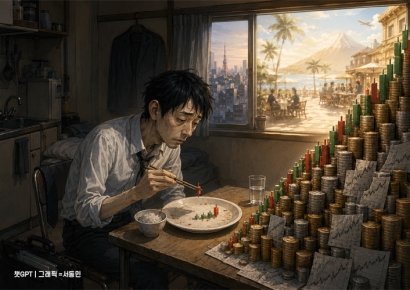 "Surviving on One Meal a Day to Invest 3.5 Million Won Monthly... 'FIRE' Craze Sparks 'NISA Poverty' in Japan"
- Causing Trouble Without a Simple "Sorry"... The Reason Behind the 'Gen Z Stare' Revealed
- SKT, KT, and Kakao CEOs Gather... "Everyone's Free AI" to Launch This Year, Ushering in the Era of "One Person, Multiple Agents" (Comprehensive)
- "Why Buy a House When You Can Buy Stocks?"... 1.2 Million More Young and Rich Renters in the US Over 10 Years
- "My Dog Doesn't Bite"... Controversy Over Unleashed Large Dog at Haeundae Beach
The 16th Gwangju Biennale is scheduled to take place from September 5 to November 15, 2026.
© The Asia Business Daily. All rights reserved. Unauthorized AI training and use prohibited.