Government: "Operating Profit N% Bonus Not Subject to Labor Disputes"... Voluntary Labor-Management Negotiation Allowed
Profit-Linked Bonuses Excluded from Mandatory Bargaining
The government has issued guidelines stating that labor unions' so-called “N% performance bonus” demands are difficult to consider as subjects of labor disputes. This clarifies the criteria that management performance bonuses linked to corporate profits are not considered mandatory subjects for collective bargaining, mediation, or industrial action.
On September 3, the Ministry of Employment and Labor announced the “Guidelines on Subjects of Labor Dispute Regarding Performance Bonuses and Similar Matters.” These guidelines were prepared to enhance predictability at worksites and prevent labor disputes, especially as demands have emerged for performance bonuses based on a certain percentage of operating profit during the process of industrial transformation involving technologies such as artificial intelligence (AI), and as corporate investment decisions have increasingly become points of negotiation between labor and management.

Performance Bonuses Linked to Corporate Profits Excluded from Mandatory Bargaining
According to the guidelines, even management performance bonuses are, in principle, subject to mandatory collective bargaining if they pertain to matters determining employees’ wages, welfare, or other working conditions. However, demands that fundamentally restrict a company’s business freedom, or the rights and interests of third parties such as the state or shareholders, are considered difficult to protect as mandatory subjects for collective bargaining.
In particular, demands for performance bonuses linked to corporate profits are addressed separately. Gross revenue is the income before deducting costs, and operating profit is the profit before subtracting interest, corporate taxes, and dividends, which are related to the rights of shareholders, creditors, and the state. Net income includes non-operating income such as interest and dividends, which are not directly related to the provision of labor.
The government also pointed out that corporate profits serve as the basis for various business decisions, including research and development (R&D), capital investment, and dividends. Therefore, demanding the pre-allocation of a fixed percentage of corporate profits as the source for performance bonuses could fundamentally limit a company’s freedom to conduct business. Accordingly, while management and labor may autonomously negotiate performance bonuses linked to corporate profits, such demands are difficult to classify as mandatory subjects for bargaining, mediation, or industrial action under the Trade Union and Labor Relations Adjustment Act. Instead, the government suggested that it is preferable for management and labor to negotiate performance bonuses based on a certain percentage or fixed amount of annual or base salary, or to discuss the standards, timing, and recipients in ways that are not directly linked to a percentage of corporate profits.

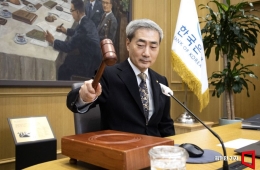
At a briefing on the same day, Vice Minister of Employment and Labor Kwon Changjun explained that the size of a performance bonus demand itself does not determine whether it is a mandatory subject of bargaining. He stated, “There have always been excessive wage demands, and such issues should be resolved through negotiation.” Even in cases where demands are made for a performance bonus of 1,000% of base salary, he maintained, “that too should be resolved through negotiation.” However, he clarified that demands to tie performance bonuses to a specific percentage of operating profit or net income are not considered mandatory subjects for collective bargaining.
However, these new guidelines do not invalidate existing performance bonus systems that management and labor have already agreed upon. Vice Minister Kwon emphasized that the government does not prevent management and labor from autonomously negotiating and reaching agreements, even regarding performance bonuses linked to corporate profits, and that existing collective agreements or performance bonus arrangements will not become void because of these guidelines. The guidelines are intended to serve as criteria for determining whether a dispute over such matters is subject to mandatory mediation or industrial action.
The government also reaffirmed the principles outlined in the “Revised Guidelines on Interpretation of the Trade Union Act” announced in February regarding business management decisions. Decisions such as corporate investment, mergers, spin-offs, transfers, or acquisitions are not, in themselves, subjects for mandatory collective bargaining. However, if such decisions are objectively expected to result in changes to working conditions, such as mass layoffs or restructuring and related reassignment, the related employment and working conditions may become subjects for bargaining.
The criteria for judgment have been further specified. If a management decision is simply announced or if there are only mid- to long-term management plans or abstract statements from executives, it is considered as only posing the possibility of changes in working conditions. Conversely, if there are concrete plans for mass layoffs, or if company notices, data from the labor-management council, or explicit confirmation by management during collective bargaining objectively anticipate changes in working conditions, those may become subjects for negotiation.
Regarding investments, such as establishing or relocating factories, the government specified that withdrawal or opposition to the investment decision itself, or decisions on site, scale, relocation area, or timing, are not subjects for bargaining. However, if concrete plans for mass layoffs, restructuring, or reassignment due to the investment are formed, issues such as changes in work location, changes in job duties, changes in working arrangements, and support for commuting or relocation expenses may be subject to negotiation.

Investment and Sale Decisions Themselves Excluded from Subjects of Negotiation
Sales or acquisitions of business are also treated in the same way: the sale decision itself, conditions of the sale, or demands related to the selection or exclusion of the buyer are excluded from bargaining subjects. However, if specific plans are made regarding employment succession, mass layoffs, or restructuring following the sale, then employment succession, employment stability measures, and the maintenance of existing working conditions become subjects for negotiation. Similarly, opposition to the adoption of new technologies such as AI or automation is not a mandatory subject of bargaining by itself. Still, if their implementation leads to changes in job duties, working arrangements, mass layoffs, or reassignments, then employment stability measures, adjustments to working hours, and occupational health and safety measures due to changes in work methods can be negotiated.
Hot Picks Today
 "Domestic Eggs Face Strict Rules, Imports Get a Free Pass?" ... "Loophole" Exposed in KRW 120 Billion Egg Imports
- Despite "Insufficient Balance" Notices, They Board Anyway... Reports of Foreign Fare Evasion Mounting
- "With studio rent alone at 1.5 million won, discontent across all walks of life was bound to erupt"... France seethes over economic hardship
- "Photos of Kim Jong Un Released by North Korea Are a Deception"... Debate Over Death Rumors Continues
- [Exclusive] "We Came for a KRW 140,000 Trip": Following Chinese Tourists in Korea Uncovers a 'Suspicious' Tour
In the mediation procedures of the Labor Relations Commission, demands related to performance bonuses linked to corporate profits or business management decisions themselves are also restricted. The Commission may recommend that the union amend its demands to make them more reasonable and may provide administrative guidance that these items do not constitute a labor dispute if the union fails to comply. If an industrial action is carried out with these demands as the primary purpose, the legitimacy will be determined according to Supreme Court precedent and related law. The guidelines also clarify that, since management performance bonuses linked to corporate profits or business management decisions themselves are not mandatory subjects for collective bargaining, a refusal by the employer to bargain on these topics is unlikely to be deemed an unfair labor practice.
© The Asia Business Daily. All rights reserved. Unauthorized AI training and use prohibited.