Fraudulent Bidding With Shell Companies: National Tax Service Launches Tax Probe Into 10 Wildfire Recovery Firms
False Tax Invoice Transactions and Fabricated Costs
Suspected Tax Evasion Totals 70 Billion Won
Manipulating Records with Shell Companies to Meet Bidding Criteria
Illegal Credential Rentals Instead of Hiring Essential Personnel
In North Gyeongsang Province, a forest industry operator, D, mobilized five companies (referred to as the "A group") and frequently changed business locations, bidding approximately 300 times for wildfire damage recovery projects and winning about 20 contracts. In order to meet the project performance requirements for bidding, although there was no reason for them to engage in service transactions with each other, D and the other companies issued and received false tax invoices worth hundreds of millions of won. In addition, about 1 billion won in corporate funds was siphoned off to nominal representatives of the A group, such as D's spouse, in the form of salaries, even though they did not actually work. The National Tax Service plans to conduct a strict investigation into the issuance and receipt of false tax invoices, the outflow of corporate funds, and the booking of illegal expenses by D and the A group.
On the 3rd, the National Tax Service announced that it had launched tax investigations into 10 wildfire recovery companies (which operated 41 shell companies), where clear tax issues such as issuing false tax invoices and recording fabricated costs were detected. The total amount suspected of tax evasion by these companies is estimated at approximately 70 billion won.

Lee Sunggeul, Director of the Tax Investigation Bureau at the National Tax Service, is briefing on tax investigations of 10 wildfire recovery companies at the Government Sejong Complex on the 3rd. National Tax Service
View original imagePreviously, in May, President Lee Jaemyung pointed out problems related to shell companies in wildfire recovery projects and instructed authorities to "sanction structural irregularities and devise fundamental solutions." In response, the National Tax Service immediately launched verification procedures and has now commenced its tax investigation.
Lee Sunggeul, Director of the Tax Investigation Bureau at the National Tax Service, said, "Illegal bidding activities involving shell companies can only be eradicated if we ensure that no one is able to reap economic gains through unfair bidding, not just through criminal or administrative sanctions but through thorough tax audits of all illegal and evasive acts." He added, "We are also conducting focused tax audits on all companies participating in public tenders that have long avoided scrutiny simply because of their small size."
The companies under investigation participated in about 6,500 bids for wildfire recovery projects using shell companies, winning around 260 contracts and about 23 billion won in total. In order to circumvent local bidding rules designed to protect regional small businesses, they moved their business locations multiple times; one company changed locations 16 times over five years.
To meet project performance requirements in the bidding process, these companies created false tax invoice transactions with shell companies. They also issued tax invoices with information that did not reflect reality by separating the winning bidder (the shell company) from the actual supplier of services (the actual operator), thereby dispersing reportable income.
Furthermore, they did not actually hire the essential technical personnel for forestry work; instead, they paid certificate rental fees disguised as salary to illegally book expenses. They also recorded fabricated costs to underreport income. The representatives of shell companies were often unrelated to the actual business, being family of the real owner or day laborers; the true owners transferred corporate funds to these individuals under the guise of salary payments. In the case of smaller companies, they took advantage of less stringent reporting checks by falsely including undeclared expenses as "miscellaneous" or "other expenses," submitting fabricated statements for day labor income payments.
The National Tax Service plans to thoroughly recoup all unpaid taxes from wildfire shell companies that exploited structural loopholes in the public contract bidding system to gain unjust profits.
Hot Picks Today
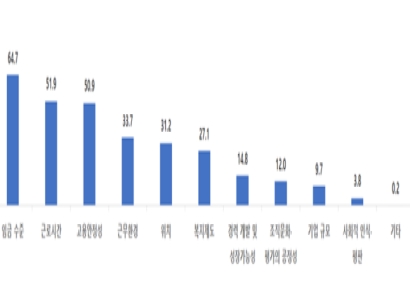 "Please Pay Me at Least 3 Million Won a Month": More Than Half of Young People Today Prioritize "Working Conditions" Over Company Size
- Selling Like Crazy Every Year... 30-Year-Old Hetbahn Takes on a New Challenge: Tastes Better Than "Mom's Home Cooking" [On-Site Report]
- "It's so popular you can't get it": 'Legendary liquor' returns after 11 years, causing a stir... 'Newtro' craze takes over convenience stores [How We Shop Today]
- "Hey, Lady, Teach Your Kids to Behave!" ... 300,000 Won in Cash and a Bodily Injury Claim Demanded Over Child's Door Ding
- Beachgoer Finds 'Plastic' That Turns Out to Be Perfume Ingredient Worth More Than Twice as Much as Gold
Director Lee commented, "During the investigation, we will employ all available methods, such as temporary seizure and bank account inquiries, to conduct a thorough probe. For business owners and their families suspected of illegally accumulating assets through unlawful profits, we will closely scrutinize the source of their funds. Since tax crimes such as issuing and receiving false tax invoices are involved alongside illegal bidding, we will make sure to enforce penalties under the Punishment of Tax Offenses Act whenever the criteria are met."
© The Asia Business Daily. All rights reserved. Unauthorized AI training and use prohibited.





![[Market ING] KOSPI Seeks Rebound in Superweek Packed with Corporate Earnings and FOMC](https://cwcontent.asiae.co.kr/asiaresize/307/2026102514484873155_1792907327.jpg)