Naver to Develop Korea’s Specialized Security AI Model... Selected as Final Operator for Government Project (Comprehensive Report 2)
Consortium Formed with 32 Industry, Academic, and Research Partners
Building a 700B-Scale Ultra-Large Cybersecurity Model
Utilizing 830TB of High-Quality Real-World Data

The Naver Cloud Consortium has been selected as the final contractor for the Ministry of Science and ICT's "Cybersecurity-Focused AI Foundation Model Development" public contest.
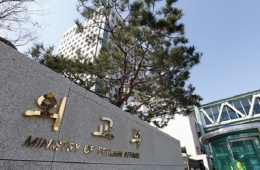
On September 3, the Ministry of Science and ICT announced that, after a presentation review and evaluation of the two participants (SK Telecom and Naver Cloud) in the "Cybersecurity-Focused AI Foundation Model Development" project contest, the Naver Cloud Consortium was chosen as the final project execution organization.
Starting this month, Naver Cloud will receive a total support of 256 B200 graphics processing units (GPUs) over the next 10 months. The support will be divided into two stages: the first 5 months will be provided initially, with the remaining 5 months granted based on the results of an interim evaluation.
A panel of external experts in AI and cybersecurity evaluated each consortium's business plan and presentations based on criteria such as technical capacity and development experience, strategy and development technologies, the excellence and feasibility of their goals, and marketability and ripple effects. Naver Cloud received high marks for its formation of a large consortium spanning industry, academia, and research, its strong technical capacity and development expertise, the inclusion of multiple agents and harnesses, and its outstanding development strategies and objectives.
The Consortium to Receive Total Support of 256 GPU B200 Units
Naver Cloud has formed a consortium with a total of 32 companies and organizations, including LG CNS, LG AI Research, LG Uplus, East Security, Trillion Labs, Theory Korea, HyperAccel, Korea Aerospace Industries, Korea Hydro & Nuclear Power, Financial Security Institute, Korea Institute of Science and Technology Information, Seoul National University-Industry Foundation, KAIST, and the POSTECH Industry-Academic Cooperation Foundation. The goal is to develop a practical model, perfectly suited to Korea's security environment and ready for immediate field deployment, based on their in-house "full-stack" capabilities spanning AI models, infrastructure, security, and data.
Notably, before the formal launch of the project, the consortium had already deployed 4,000 internal GPUs for preliminary training of security-focused AI models. In addition to the 256 units provided by the government, Naver Cloud plans to deploy another 4,000 B200 GPUs, and LG will add 256 H200 GPUs. This proactive investment will significantly shorten the development period, while the time saved will be reinvested into enhancing the performance of the model and field verification, thereby maximizing its completeness.

The consortium will build a state-of-the-art, cybersecurity-focused large language model with a 700B-parameter Mixture of Experts (MoE) architecture, based on Naver's HyperCLOVA X and LG AI Research's Exaone. Two independent models will be developed in parallel: one specialized in defense capabilities (HyperCLOVA X) and the other in attack capabilities (Exaone), to ensure comprehensive coverage across the cyber-attack and defense cycles. The objective performance of these models will be rigorously verified using two internationally certified benchmarks. Moreover, approximately 830TB of high-quality real-world data—an amount difficult for any single organization to procure—will be utilized for model training.
Advancing Through Field Demonstrations at Critical National Facilities and Industries
The data pool encompasses not only operational data from Naver Cloud and LG CNS but also core data from national infrastructure providers such as KEPCO KDN, Korea Hydro & Nuclear Power, and Financial Security Institute, covering key industries. Advanced data refinement technologies will be applied to process everything from threat information collection to labeling, standardization, and verification, so the AI model can learn real-world threat environments with precision.
The developed model will continually evolve, undergoing demonstrations at critical national facilities and major industry sites. Field demonstrations will take place across seven major sectors, including power, finance, science and technology, telecommunications, semiconductors, defense industry, and aerospace. The consortium aims to implement "closed network" operational technologies, ensuring stable operation even in secure environments with limited external network access.
Furthermore, the model developed through this project will be released as open source for commercial use, to spread its benefits across Korea's broader security ecosystem. Free vulnerability and cyberattack detection checkup services for small and medium enterprises will be provided, and Naver Cloud will actively support Korean security companies in commercializing AI services through its marketplace, thereby establishing a virtuous security AI ecosystem at the national level.
Yuwon Kim, CEO of Naver Cloud, commented, "Winning this contract is a comprehensive recognition of Naver Cloud Consortium's extensive AI infrastructure, data assets, and specialized security capabilities. We will approach this project with a strong sense of responsibility to develop nationally critical security AI with our own technology and lead the creation of Korea's representative national security AI model and ecosystem."
Hot Picks Today
 Despite "Insufficient Balance" Notices, They Board Anyway... Reports of Foreign Fare Evasion Mounting
- A 'Premium Dessert' from Korea... 'Orion Custard' Hits Big in China and Vietnam as Production Lines Expand
- "I Hide in the Classroom Alone to Eat Steamed Buns. Please Help Me"... Tearful Plea Draws 600 Million Views, But It Turns Out...
- "I Killed My Mother": Daughter in Her 40s Reports Herself to Police; Police Make Emergency Arrest
- [Exclusive] "We Came for a KRW 140,000 Trip": Following Chinese Tourists in Korea Uncovers a 'Suspicious' Tour
Meanwhile, SK Telecom, which competed against Naver and ultimately lost the bid, stated on the day of the announcement, "As a full-stack AI company with infrastructure, models, and services, we will continue striving to enhance Korea's AI capabilities. Separate from government projects, we will maintain discussions with consortium partners about future cooperation and keep working to strengthen our cybersecurity AI capabilities."
© The Asia Business Daily. All rights reserved. Unauthorized AI training and use prohibited.