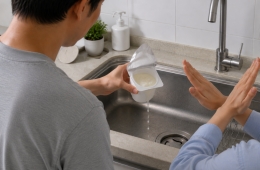
"Disposing of Human Fat and Blood in Toilets..." Seoul City Catches 25 Plastic Surgery Clinics for Violations
Tissue Medical Waste from Liposuction and Plastic Surgery Must Be Placed in Dedicated Containers and Stored in Refrigeration at 4 Degrees Celsius or Below
120 Clinics Selected for Investigation... Inspections Conducted Since Last Year
Twenty-five clinics and hospitals, including plastic surgery and dermatology practices, have been caught disposing of human fat and waste blood from liposuction or cosmetic surgeries into toilets and violating storage regulations.

A site photo of discarded fat (tissue waste) that must be refrigerated below 4 degrees Celsius but was stored at room temperature in a Cleanzo container. Provided by Seoul City.
View original imageOn September 3, the Seoul Metropolitan Government's Civil Affairs Judicial Police announced that it had uncovered 36 violations at 25 medical facilities, including plastic surgery and dermatology clinics, which were found to be in breach of medical waste handling standards. A total of 25 individuals were booked for these violations.
The Civil Affairs Bureau selected 120 facilities for investigation by analyzing materials from hospital websites and the medical waste electronic information processing system (Olbaro System). From January of last year, on-site inspections and supplementary investigations were conducted.
Medical waste such as blood, bodily fluids, and syringes is required to be managed separately to prevent secondary infection incidents. In particular, tissue biological waste like human fat decomposes quickly at room temperature, causing strong odors and heightened risks of secondary infections, and therefore must be stored in dedicated containers below 4 degrees Celsius in specialized refrigeration facilities.
Illegal Dumping and Storage of Medical Waste for 3–6 Months
This investigation identified two cases of illegal disposal. For example, tissue biological waste generated during liposuction and eye or nose cosmetic surgeries—such as fat and waste blood—was disposed of down sinks and toilets, while medical waste was placed in general trash bins and discharged together with household waste.
There were 24 cases detected involving violations of storage standards. These included mixing tissue biological waste with general medical waste and storing it at room temperature before outsourcing it for disposal as general medical waste. Additionally, medical waste with required storage periods of 15 or 30 days was held for three to six months or even longer.
In 10 cases, standards for using dedicated containers were violated. Either previously used containers were reused, or the start date for use was not indicated on the containers as required.
The Seoul Metropolitan Government has referred all 25 violators to the prosecution with a recommendation for indictment. According to the Waste Control Act, violating medical waste handling regulations can result in up to two years of imprisonment or a fine of up to 20 million won.

Cases of mixing tissue biohazard waste such as lung fat and blood contained in test tubes with general medical waste for storage. Provided by Seoul City
View original image"Educational Content and Scope Need Reinforcement…Public Officials' Authority Should Be Enhanced"
During the investigation, it was confirmed that there is a need to improve both the educational content and target audience for those who discharge or collect and transport medical waste. Many on-site staff, including doctors and nurses, were unaware of proper disposal standards, and even those who had completed mandatory training did not fully understand how to use the Olbaro System.
It was also found necessary to strengthen the verification authority of the public officials responsible for guiding and inspecting medical waste. Currently, inspections are mainly focused on the storage and emission of medical waste, and there are cases where entry to operating or treatment rooms is restricted due to infection concerns, or medical institutions refuse to cooperate with inspections.
The Seoul Metropolitan Government stated that it is reviewing ways to ensure confirmation of the types and volumes of medical waste generated at hospitals and clinics, including establishing a basis for checking records of surgeries and treatments and purchase histories of medical consumables such as syringes, needles, and scalpels.

A case was caught where discarded fat was stored in zipper bags mixed with general medical waste. Provided by Seoul City
View original imageThe city plans to share the confirmed violations and related photos from this investigation with each district, aiming to enhance on-site guidance and inspection capabilities of public officials. In addition, it will request system improvements from the Ministry of Climate, Energy, and Environment, including enhanced education, improvements to the electronic waste system, and amendments to punishment provisions for each type of violation. Related investigations will also continue to determine whether medical waste collection and transport companies have committed similar offenses.
Lee Changseok, Director of the Seoul Metropolitan Government's Civil Affairs Judicial Police Bureau, said, "Tissue biological waste decomposes rapidly at room temperature, increasing the risks of odor and infection. Hospitals and clinics must strictly comply with storage and disposal standards from the waste generation stage. We will continue to share these investigation findings with local districts, conduct on-site education, and work on system improvements to safeguard citizens from medical waste."
Hot Picks Today
 "650,000 Won for a Cafe Window, 400,000 Won for a Lawn Spot"... Rampant Trading of Prime Viewing Spots With No Solution in Sight
- KEPCO Proposes Advance Electricity Payment to Samsung Electronics and SK hynix... 25 Trillion Won for Five Years
- "Fifth Grader Grabs Teacher by the Hair and Kicks... 'Attendance Suspension' for Assaulting Teacher"
- Born in 1990 With White Hair?..."Is It Dye or Gray Hair?" Spotlight on Yong Hyein's Bangs
- Recently Rushing Out in Groups... "Slowly Blocking the Way, No Room to Pass" Sparks Public Backlash
© The Asia Business Daily. All rights reserved. Unauthorized AI training and use prohibited.