"Don't Use AI at School"... New York City, the Largest U.S. School District, Bans AI for Elementary and Middle School Students
"We Will Examine the Impact of AI on Student Learning and Development Over the Next Year"
New York City Public Schools, the largest school district in the United States, has decided to prohibit the use of artificial intelligence (AI) tools in classrooms for preschool, elementary, and middle school students for one year starting this semester.
New York Public Schools Ban AI Use Through 8th Grade

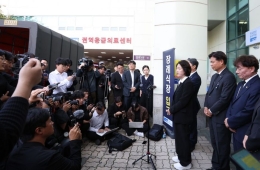
According to the Associated Press on September 3 (local time), New York City Mayor Zohran Mamdani and Schools Chancellor Kamar Samuels announced the new policy on AI and electronic device usage in schools the previous day, ahead of the new school year beginning on September 10. The policy applies to students from 2-K (pre-kindergarten for age 2) through 8th grade, which corresponds to preschool, elementary, and middle school under the Korean educational system.
Beginning in the 2026-2027 school year, New York City will institute a one-year comprehensive ban on generative AI software for students within these grades. The use of "companion chatbots"—AI chatbots that assist students with learning and communication—will also be prohibited for students. It is estimated that this new policy will affect about 600,000 students, accounting for roughly two-thirds of the city's public school enrollment.
Screen Time Also Restricted: "Human Relationships Are Needed"

Students' screen time will be restricted as well. For students in grade 2 and below, personal use of digital devices will be limited. Grades 3 through 5 will have a recommended daily screen time cap of 30 minutes, while students in grades 6 through 8 will have a 45-minute cap. Exceptions will be made for students with disabilities, multilingual learners, and those participating in career-preparation programs such as computer science.
New York City explained that these measures are intended to prioritize student safety and human interaction between teachers and students. Mayor Mamdani stated, "Children need human relationships with teachers in order to learn and grow," adding that over the coming year, the city will examine the impacts of AI on student learning and development. After implementing the policy, the city plans to form a committee—including teachers, parents, and experts—to evaluate how the AI restrictions affect schools.
Mixed Reactions in the Education Field: "Many Questions Remain"

This policy has received mixed reactions from education professionals. Michael Mulgrew, president of the United Federation of Teachers (UFT), expressed a positive view regarding restrictions on screen time, but pointed out that the AI policy "raises many questions."
Josh Golin, executive director of the children’s advocacy organization Fairplay, said that a one-year grace period is insufficient. He stated, "One year is simply not enough time for a thorough evaluation." He further argued that AI companies must prove the effectiveness and safety of their products, and demonstrate that they do not replace in-person interaction or encourage academic dishonesty.
Currently, at least 37 states in the U.S. have developed guidelines for using AI in schools, but there is still no unified standard for how to define AI literacy or how to teach it.
Hot Picks Today
 "I Ate It Often Because It Tasted Good"... This Eating Habit Linked to 40% Higher Odds of Asymptomatic Cerebrovascular Damage
- "Booked a Cheap Flight, Only to Get Blindsided"... Travelers' Complaints "Explode" Over Extra Fees
- Woman in Her 70s Assaults Sister in Her 80s: “She Had an Affair with My Husband”
- “Dad Just Gave It to Us as a Gift”... Scratched a Lottery Ticket at a Family Gathering and Hit a 1 Billion Won Jackpot
- "We've gone this far to save on lunch"... Where office workers are flocking instead of restaurants
Meanwhile, the U.S. Surgeon General issued a warning this past May regarding the health risks associated with excessive screen time among children and adolescents. Earlier, the Los Angeles (LA) Unified School District also announced similar measures to restrict the use of smartphones and other electronic devices in schools.
© The Asia Business Daily. All rights reserved. Unauthorized AI training and use prohibited.


!["Please, Just Take Them Off" - They Made It All the Way to Bed... Then Fecal Bacteria Struck [Deep Scroll]](https://cwcontent.asiae.co.kr/asiaresize/307/2026101610053063338_1792112730.png)