[2026 Regular Session of the National Assembly]③ 820 Trillion Budget Battle Begins... Clash Over 162 Trillion Future Response Fund
PPP: "Speculation with debt... we will introduce safeguards"
DP: "Store surplus tax in a 'fiscal dam'... a driver of growth"
The 820 trillion won “super budget,” which has passed the Cabinet meeting, was submitted to the National Assembly on September 3. It will undergo a preliminary review by the standing committees and a comprehensive review by the Special Committee on Budget and Accounts over the next 100 days. Nevertheless, friction is anticipated throughout the process. The key point of contention is the establishment of the Future Response Fund, worth 162 trillion won. The Democratic Party of Korea, the ruling party, likens this fund to a “fiscal dam” for the future, while the People Power Party argues that it could devolve into a “slush fund.”
Kim Minseok, leader of the Democratic Party of Korea, appeared on Democratic Party TV (MinTi) that day, stating, “This budget is for a great transformation and leap forward. Thanks to the semiconductor boom, we have had a record jackpot in earnings. The purpose is to use this for addressing polarization and supporting the youth, thus creating even greater opportunity—a bigger leap forward.” He added, “Some say we should pay off all our debts immediately, but our strategy and philosophy are clear: we aim to grow even further, and as we expand, we will also repay our debts.”
Park Honggeun, Minister of Planning and Budget and a member of the Democratic Party, appeared on the same broadcast. He asserted, “Under the Yoon Suk Yeol administration, spending was passive, and tax cuts led to an austerity-driven vicious cycle with stagnating economic growth.” He continued, "The Lee Jaemyung administration will be the first to establish a virtuous cycle between economic growth and fiscal soundness."

(Seoul = Yonhap News) Reporter Donghae Lee is striking the gavel at the opening ceremony of the regular National Assembly session held at the National Assembly on September 1, 2026. eastsea@yna.co.kr (End)
View original image◆Future Response Fund Divides Parties—PPP: "Speculative Investments...We Will Add Safeguards"= The People Power Party warns that the super budget threatens fiscal integrity, promising a thorough review. The most contentious issue is the Future Response Fund. Its framework is to spend 45.4 trillion won on four major sectors—youth, growth engines, regional development, and education & talent—while the remaining 104.4 trillion won is to be reserved as surplus funds, used to offset tax revenue declines or respond to economic fluctuations.
The People Power Party is concerned that the fund could become a “slush fund” outside the National Assembly’s control. These concerns stem from provisions allowing excess tax revenues to be transferred into the fund and allowing for internal adjustment of up to 30% of key expenditures without National Assembly approval.
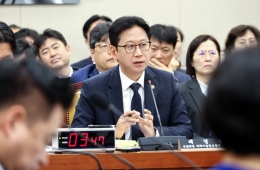
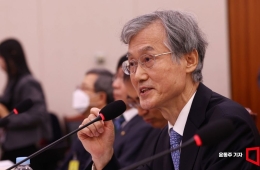
Lee Jongwook, a member of the People Power Party and a former budget official, said, “On one hand, government bonds are issued to pay interest, while on the other, they want to redirect surplus funds for higher returns. How is this different from speculative investment?” He further pointed out, “The Future Response Fund is an auxiliary budget bill, so it cannot even go through a fast-track process. We could consider safeguards such as eliminating the rule allowing up to 30% internal adjustment, or including independent members from outside the administration in the Asset Management Review Committee.” Yoo Sangbeom, People Power Party’s secretary on the Budget Committee, also stated, “Surplus funds should be prioritized for repaying national debt.”
Hot Picks Today
 "They Get a Good Night's Sleep and Earn Twice My Salary... Honestly, I'm So Jealous I Could Die": Civil Servant's Post Targeting Firefighters Sparks Outrage
- "My Wallet Is Closed"... Semiconductor-Led Growth in the 3% Range [Click e-Market]
- Man in His 60s Arrested for Dumping Body in Guro-gu, Man in His 80s for Ordering It (Updated)
- "Naked Again?" Controversial Actress Crosses a Line... Slammed for Sexualizing 'Child Characters'
- "You Mean Only Middle-Aged Men Got to Enjoy This?"... Where Japanese Women in Their 20s and 30s Are Flocking
By contrast, Ahn Dogeol, a Democratic Party lawmaker on the Finance and Economy Committee, argued, “The idea is to store surplus tax revenue in a fund, like a dam, and use it during periods of revenue drought.” Lee Yongwoo, also of the Democratic Party, added, “Excess tax revenue should not be used exclusively to pay off debt. A narrow, one-track approach is not suitable for effective state governance.”
© The Asia Business Daily. All rights reserved. Unauthorized AI training and use prohibited.