Afinit Files Joint Patent with Seoul National University for Advanced AI Credit Assessment Technology
Afinit has filed a patent for advanced artificial intelligence (AI) credit assessment technology in collaboration with the Seoul National University Office of Research Affairs and Business Development.

According to Afinit on September 3, the core of this new application is an improvement to conventional credit assessment systems that leave no record for customers whose loan applications are not approved. While data is accumulated for approved customers on whether they repay or default, there is no way to verify whether unapproved customers would have had the ability to repay. Consequently, although AI models predicting repayment probabilities could continue to improve thanks to available data, the criteria used to approve or reject applications had to rely solely on human-made rules because there was no verification data for unapproved customers.
Afinit and the research team at Seoul National University redefined this issue as a question of "How can we verify the actual repayment ability of unapproved customers and safely incorporate the results into screening criteria?" and developed a three-stage conversion process. First, the AI is trained to judge exactly like existing screening rules and undergoes simulation with historical data to validate whether it results in superior decisions. In addition to the default rate, the system factors in interest income, principal recovery, losses, and costs, comprehensively calculating both the missed opportunities from rejections and potential losses from approvals.
In the final stage, the process involves securing data from actual unapproved customers by selectively approving only those considered the safest among them for a pilot test. As repayment outcomes from these customers accumulate, this marks the first time "genuine repayment data from unapproved customers" is obtained. Afinit then feeds this data back into AI training to further refine screening standards and gradually expand the pool of customers considered safe. Rather than a sudden mass approval of previously rejected applicants, the system opens the door only in stages, according to the safety confirmed by the data.
Hot Picks Today
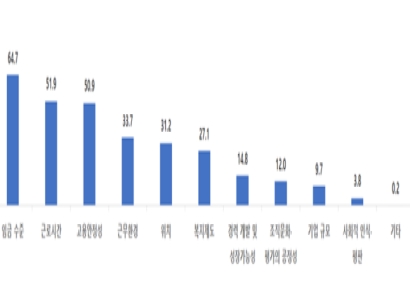 "Please Pay Me at Least 3 Million Won a Month": More Than Half of Young People Today Prioritize "Working Conditions" Over Company Size
- Selling Like Crazy Every Year... 30-Year-Old Hetbahn Takes on a New Challenge: Tastes Better Than "Mom's Home Cooking" [On-Site Report]
- "Americans Would Be Amazed If They Came": Wide-Eyed at a Sight They've Never Seen Before... Foreigners Also Fall for K-Baseball [K-Holic]
- Ministry of Finance and Economy's 'FSC Check' Theory, Lawsuit Allegedly Aimed at Securing Reappointment... Sh Suhyup Bank Chief Selection Grows More Contentious
- Beachgoer Finds 'Plastic' That Turns Out to Be Perfume Ingredient Worth More Than Twice as Much as Gold
Shin Jaehyuk, AI Lead at Afinit, commented, "The research that we started with Seoul National University has resulted in an actual patent application within just one year," adding, "This technology resolves a longstanding limitation of credit assessment systems, which previously learned only to predict default rates and not to make screening decisions. It opens the way for more accurate evaluations even for applicants who were previously rejected due to technical limitations."
© The Asia Business Daily. All rights reserved. Unauthorized AI training and use prohibited.