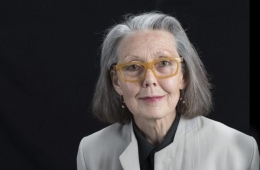
[How About This Book]"So What Will You Do With the Money?"... A Billionaire Shares the 'Sense of Wealth'
“‘The Sense of Korean Wealth’—An Interview with Turbo832”
In an era where AI narrows the information gap,
“The filter to discern what matters is now more important”
“Owning the same things as the wealthy won’t give you their sense—Taste must also be accumulated”
2026 marks the beginning of the ‘Age of Stocks’
The greatest variable ahead is US–China geopolitics
Is a wealthy person's taste the cause of their wealth, or the result of becoming rich?
![[How About This Book]"So What Will You Do With the Money?"... A Billionaire Shares the 'Sense of Wealth'](http://www.asiae.co.kr/news/img_view.htm?img=2026090304593713260_1788379176.jpg)
Better neighborhoods, quality education, cultural experiences, and opportunities to associate with capable individuals are generally more accessible to those with significant financial means. In that sense, advice to "develop a sense of wealth" could be said to favor those who are already affluent. When this was put to Turbo832, author of "The Sense of Korean Wealth" (ChangeUp Books), he did not dispute the premise.
"It's true that good living environments, education, cultural experiences, and access to excellent personal networks are more easily available to people who already possess economic capital. The more prestigious your university background and the better your job, the more such opportunities you are likely to receive."
Turbo832 is an expert in economics and asset management who operates a YouTube channel with 400,000 subscribers. After working as a certified public accountant and in manufacturing, he ventured into real estate, stocks, and business, and his publisher introduces him as a "wealthy individual with assets worth about 100 billion won." His new book covers topics ranging from supercars and wine, to art, fine dining, and even interpersonal relationships. However, what he shares is less about "what to buy" and more about "how to see": a sense of perception, space, relationships, and decision-making.
Are the belongings of the wealthy and their senses equivalent?
This is why Turbo832 brings up Pierre Bourdieu's concept of "habitus." Social class is not inherited only through money. Language, taste, and judgmental habits are also accumulated through one's environment. He adds, however, that "there are elements of habitus that money can buy, and others it cannot." Language is a prime example—it does not change overnight, even if one suddenly becomes rich. The words and sentences you use are not easily altered. On the other hand, education, learning, and the choice of whom you associate with and what groups you join can change over time.
So, can you learn the "wealthy person's sense" simply by drinking expensive wine and driving nice cars? He cites postpartum care culture as a counterexample: if your peer at the postnatal center buys a pricey stroller, you may feel compelled to buy one as well, making it uncomfortable to meet with more ordinary parenting gear. This standard can extend to preschools and private education. The money is spent not out of genuine desire but to avoid falling behind one’s reference group. He calls this "the trap of collective consumption."
On the other hand, there are people who, even after drinking the same wine, simply post a photo on social media and move on, and there are those who continuously compare, learning what they themselves truly like. "What matters is not what you consume, but how you consume it." He describes the latter as the process of "mapping one's sensitivities."
The possessions of the wealthy can be purchased with money. However, ascertaining why something is good, and whether it is good for you, is a separate matter.
The rise of generative artificial intelligence (AI) has made this distinction even clearer. Turbo832 observes that with advances in large language models (LLMs), the ability to search for and analyze information is becoming rapidly standardized; meanwhile, the ability to select what is important and connect those pieces is more vital than ever.
"Without an internal filter to sift through and organize those senses, most sensibilities will slip away like the breeze." Relationships are similar. He warns against people who "see all relationships strictly from the perspective of utility and network" as well as those who are "solely chasing money." Dividing people by the size of their bank accounts or revenue carries the risk of prioritizing immediate monetary gains over trust and reputation.

Visitors observing the exhibition works at the 'Lee Kun-hee Collection Special Exhibition: Lee Jungseop' held at the National Museum of Modern and Contemporary Art in Jongno-gu, Seoul. Turbo832 says that owning something good and looking at it to build one's own taste and judgment are different matters. Photo by Hyunmin Kim kimhyun81@
View original imageThe sense of making money can ruin your sense of living
Here the story of the investor "Albatross" continues. After surviving 28 years as a legend in the futures and derivatives markets, he amassed great wealth, but as he grew older, he felt "as if a certain part of his brain had been damaged." The nerves heightened by the market affected his everyday life. Thus, he advises juniors to cultivate hobbies they enjoy and to periodically step away from the market.
This prompted Turbo832 to reflect: "What is it we’re really trying to do by making money? Does earning money actually make things better, what kinds of tastes do we develop—and how can that deepen the quality of our lives?" The skills useful for making money are not necessarily the same as those necessary for living well.
Of course, one might also want to know where this billionaire sees opportunity now. Turbo832 describes 2026 as "the first year of the ‘Age of Stocks’ in Korea," citing the strengthened profit capability of export companies, the KOSPI’s escape from a long box range, and the beginning of improved corporate governance. However, he also points out that there are risks of short-term surges and concentration linked with leverage products.
He points to geopolitics—especially the U.S.-China hegemony contest—as the biggest variable in the next two to three years. With the value of manufacturing capability rising due to supply chain restructuring, countries such as Korea, with strengths in semiconductors, shipbuilding, and defense industries, now see new opportunities. He notes that a continued trend of interest rate hikes puts pressure on both stocks and real estate.
There is no way to know if his outlook will prove correct. However, the method of connecting corporate performance, government policy, and geopolitics into a coherent picture exemplifies the "internal filtration system" he described.
Not mistaking what others desire as your own
Finally, when asked what he would recommend as a starting point for people in their twenties and thirties with little to no assets, he says, "I think it’s most important to first understand who you are." In other words, you must accurately assess your own environment, resources, and talents. He cites as an example the case of a person who, despite not having an aptitude for study, aims to become a lawyer purely because of social esteem, and says, "Spending your time in a field where you have no talent or true enjoyment only lowers your average success rate."
He likens the process of finding one’s tastes and abilities to choosing a book at the bookstore. Even if a book is considered a classic by others, it may not suit you. You leaf through it, put it back, and try another. Only after passing through several books will you discover the one that truly fits you. Money gives you more options—but it does not tell you what you really want.
Perhaps the hardest thing is not to acquire the possessions of the wealthy, but to distinguish other people’s desires from your own. Turbo832 says the most important thing is this: "What matters is to turn the page and start reading."
Hot Picks Today
!["What Becomes of the Geniuses Who Devoted Their Lives?"... 722 Papers Released in Just 3 Hours Spark 'Shock and Awe' [Reading Science]](https://cwcontent.asiae.co.kr/asiaresize/93/2026100816554855490_1791446147.jpg) "What Becomes of the Geniuses Who Devoted Their Lives?"... 722 Papers Released in Just 3 Hours Spark 'Shock and Awe' [Reading Science]
"What Becomes of the Geniuses Who Devoted Their Lives?"... 722 Papers Released in Just 3 Hours Spark 'Shock and Awe' [Reading Science]
- "FAR Up to 1,300% Unlocked"... What Is the 'K-Entertainment New City' Rising on Changdong Depot's 170,000-Square-Meter Site?
- "South Koreans Are All Buying It to Take Home"... This "Drug" Costs 350,000 Won in Korea but Just 80,000 Won in Japan
- "Colombia, Then South Korea?" ... TB Cases Surge, but Elderly Screening Budget Slashed 30%
- Jang Wonyoung's Device Was Copied Too... "Counterfeits Even of Machines You Put Your Face Against?" The Shocking Reality Behind K-Beauty's Boom
The Sense of Korean Wealth | Written by Turbo832 | ChangeUp Books | 320 pages
© The Asia Business Daily. All rights reserved. Unauthorized AI training and use prohibited.





![[Test Drive] All-New Tucson Returns as a Family SUV, Delivering on Space, Quietness, and Safety](https://cwcontent.asiae.co.kr/asiaresize/307/2026100808284054272_1791415720.jpg)
![[Why&Next] Even Mala-Flavored Cereal? ... The Fall of the "Healthy Breakfast"](https://cwcontent.asiae.co.kr/asiaresize/307/2022072716231366097_1658906593.jpg)