Industry Says "Sufficient Time Needed" for 'T+1' Securities Settlement Cycle Reduction
KOFIA Hosts Discussion Among Investors, Industry and Academia
Korea Exchange to Announce Implementation Roadmap in October
While industry professionals and investors agreed on the necessity of shortening the domestic securities market settlement cycle from the current trade date plus two days (T+2) to one day (T+1), they also emphasized that sufficient time for preparation would be required. Issues such as time zone differences for foreign investors, foreign exchange, and system automation were highlighted as key challenges.
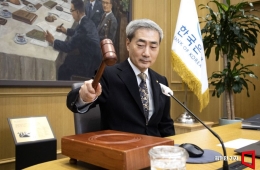
The Korea Financial Investment Association held an “In-depth Discussion on Shortening the Securities Market Settlement Cycle (T+1 Day)” at the KOFIA Bulls Hall in Yeouido, Seoul, on the 2nd. Individual and global investors, securities industry professionals, and officials from relevant institutions discussed both the expected benefits and challenges of transitioning to T+1.

The Korea Financial Investment Association held an in-depth discussion on "Shortening the Securities Market Settlement Cycle (T+1 Day)" on the 2nd at the KOFIA Bulls Hall in Yeouido, Seoul. Photo by Kim Youngwon
View original imageIf the settlement cycle is reduced to T+1, individual investors will be able to withdraw sales proceeds one day earlier after selling stocks. However, it will become necessary to process not only trade corrections, clearing/offsetting, and tax handling—which are currently handled on T+1—but also to more quickly complete trade confirmations and settlement instructions for institutional investors.
Kang Sohyun, a research fellow at the Korea Capital Market Institute, explained that “individual investors do not need to take significant steps to adjust their trading methods”; nonetheless, she added that “since schedules linked to settlement may be advanced, it is important to check related dates.” This includes the occurrence of unsettled funds and forced sale execution dates.
Foreign institutional investors must go through trade allocation by fund, settlement instructions, and reconciliation between domestic and foreign custodian banks after executing stock trades. Since the process is more complex than for individual investors, there are greater concerns about the shortened timeframe. Kim Mikang, Executive Director at Standard Chartered Bank Korea, noted, “If Asian and European markets, including Korea, transition to T+1 around the same time, there are concerns that the costs for building up systems and infrastructure could surge.”
She continued, “There are also worries that if T+1 is introduced in a short period, the currently stable settlement infrastructure could be compromised,” adding that “there is a strong consensus that sufficient time for verification should be ensured.”
The securities industry also stressed the need for adequate preparation time. Park Sanghyun, Deputy General Manager at NH Investment & Securities, said, “The settlement cycle functions as a cornerstone of the market, and changing this foundation while the market is operating is a delicate task. If even one or two securities companies fail to meet settlement obligations, it could turn into a trust issue for the entire market. Therefore, all market participants must have enough time to follow suit.”
Kim Jintaek, Senior Manager at the Korea Securities Depository, explained, “Since it will be difficult to revert to the previous system after implementation, emergency response plans such as an extension of settlement deadlines must be prepared in advance in case unforeseen problems arise.”
Hot Picks Today
 "Photos of Kim Jong Un Released by North Korea Are a Deception"... Debate Over Death Rumors Continues
- Despite "Insufficient Balance" Notices, They Board Anyway... Reports of Foreign Fare Evasion Mounting
- "Chinese Tourists Won't Go Anymore"... Arrivals Halved, but Koreans Say "Now's Our Chance" and Open Their Wallets in Japan
- "Even Underwear Has to Be Cut Up with Scissors"... China Hit by Rise of "Trash Hunters" in an "If You're Slow, You're Out" Scramble
- [Exclusive] "We Came for a KRW 140,000 Trip": Following Chinese Tourists in Korea Uncovers a 'Suspicious' Tour
Authorities are planning to announce a roadmap related to the shortened settlement cycle in October. Choi Hoon, Senior Managing Director at the Korea Exchange, stated, “Recently, we have hired a consulting firm to develop a roadmap for shortening the settlement cycle, and we are preparing to announce it in October. The roadmap will include key changes and an implementation timeline,” he added. “We will confirm the final transition schedule after reviewing the trends in competitive markets and globally, reflecting the policy direction of financial authorities and input from the industry to ensure the process is stable.”
© The Asia Business Daily. All rights reserved. Unauthorized AI training and use prohibited.