[Global Rate Shock] Will Card Companies Face Even Higher Funding Costs? Attention on Specialized Credit Finance Bond Rates
Government Bond Yields Reach Decades-Highs Globally
Domestic Interest Rates Remain a Concern
Card Companies Strive to Ease Funding Burden
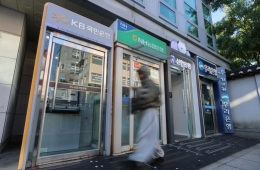
There are growing concerns that the simultaneous rise in global bond yields may increase funding burdens for credit card companies. With the yields on financial debentures issued by specialized credit finance companies (the primary funding tool for the card industry) approaching the mid-4% range, market observers warn that external rate hikes, the potential for additional domestic rate increases, and the added pressure from increased government bond supply could make it difficult for funding conditions to improve in the near term. Credit card companies that issued bonds at low interest rates in the past may also face greater financial costs when those bonds mature and need to be refinanced at higher current rates.
![[Global Rate Shock] Will Card Companies Face Even Higher Funding Costs? Attention on Specialized Credit Finance Bond Rates](http://www.asiae.co.kr/news/img_view.htm?img=2026090211200712333_1788315607.jpg)
According to the Bond Information Center of the Korea Financial Investment Association on September 3, the rate for Financial Debenture II (financial institution debentures, unsecured, AA+, 3-year), which serves as a benchmark for specialized credit finance company bonds, averaged 4.501% (based on five rating agencies) as of the previous day. After recording 3.337% on the first trading day of this year, the rate rose as high as 4.551% in July.
With specialized credit finance company bond yields consistently remaining in the 4% range, funding conditions for card companies have deteriorated compared to the beginning of the year. Recently, pressures have been mounting due to turbulence in the global bond market as well. This is because of a confluence of factors: growing inflation concerns, fiscal expansion in major economies, and uncertainty over monetary policy. On September 1, the yield on the 10-year U.S. Treasury note surged to 4.788% during the session, while the 30-year yield exceeded 5.2%. The yield on Japan’s 10-year government bond reached 3%, its highest level in nearly 30 years. Rising international oil prices are stoking inflation fears, prompting concerns that central banks in major economies may maintain high policy rates longer than expected, which in turn is causing a sell-off in bonds.
If geopolitical risks such as renewed instability in Middle Eastern oil prices were to push up domestic inflation, it could raise the possibility of another Bank of Korea rate hike. Combined with the funding burden stemming from increased government bond supply due to expansionary fiscal policy, analysts say the domestic market interest rate environment could remain unstable for some time.
If market rates stay elevated, credit card companies will feel the impact directly. Unlike banks, card firms do not take deposits or savings and thus are highly reliant on market funding such as the issuance of specialized credit finance company bonds. When these yields rise, the interest they must pay on new issues goes up as well. When bonds issued at lower rates in the past reach maturity, they must be refinanced at the currently higher yields. Since yields on products like card loans and installment finance are influenced by interest rates, demand, and competitive conditions, it is difficult for card companies to quickly offset higher funding costs.
Card companies are responding by broadening their funding channels via short-term bonds, commercial paper (CP), and overseas borrowing. By reducing their reliance on high-interest-rate long-term bonds and diversifying maturities and funding sources based on market conditions, they aim to minimize financial costs.
Hot Picks Today
 "I Came to Korea and Easily Made 3.3 Million Won a Month"... The "Easy Gig" Everyone's Talking About Among International Students Turns Out to Be...
- Influenza Cases Surge Sevenfold, 900 Schools Close... Japan in Turmoil Over Outbreak
- Amazon Seeks to Acquire AI Startup Decart for $7 Billion
- "Hand in Your Resignation and Get a Year's Salary"... This Country Pushes Early Retirement for Civil Servants
- "Oh Eunyoung's Consultation Fee: Millions of Won? Not Expensive"... Yonsei Professor's Sharp Rebuke over "300,000-Won Lecture Fee"
A financial industry insider commented, "Although it cannot be assumed that domestic specialized credit finance company bond yields will follow global interest rates exactly, domestic market rates are already high, and with the potential for further rate increases and the added pressure of increased government bond supply, the funding environment does not appear likely to improve easily." The insider added, "As bonds issued at lower rates mature, credit card companies will have to refinance them at today’s higher yields, further increasing their funding cost burdens."
© The Asia Business Daily. All rights reserved. Unauthorized AI training and use prohibited.