Yeouido and Gwanghwamun Lose Ground as 'Seoul Station SBD' Rises... Major Migration of Prime Offices
Advanced Office Complexes Rising around Seoul Station
Meritz Group, Hanwha Group, Samsung Financial Affiliates Join In
38% of Major Downtown Offices Aged... Seoul Station Emerges as the Alternative
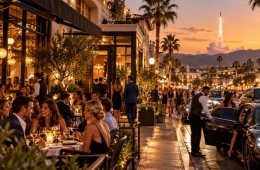
The influence of Seoul’s traditional central business district (CBD), focused around Gwanghwamun and Jongno, is waning, while the 'Seoul Station Business District (SBD)'—a transportation hub where KTX, GTX, and the Airport Railroad converge—is rapidly emerging as a new central business district.

A bird's-eye view of the 'IOTA' project led by Aegis Asset Management near Seoul Station, Jung-gu, Seoul. Aegis Asset Management
View original imageAccording to the commercial real estate industry on September 3, major capital and corporations are already quickly concentrating in the Seoul Station area. Meritz Fire & Marine Insurance is currently constructing the ‘Meritz Town’ office building in Bongrae District 2, Jung-gu, Seoul, where the group’s affiliates will be gathered. Across from it, at the entrance to Namsan, the 'IOTA' project led by Aegis Asset Management is underway. With a total project financing scale reaching 7 trillion won, this is a super-large development that will include prime office space, a hotel, and commercial facilities.
The area around Sunhwa-dong 7 in proximity to Seoul Station (Seoul Station·Seosomun Districts 1 and 2, Zone 1) is also on the verge of a major transformation. On the former site of the Samsung Life Insurance Seosomun Building, construction is underway for a business building with eight underground and 39 above-ground floors, and a gross floor area of 250,276 square meters (approximately 75,000 pyeong), with completion slated for June 2030.
JB Financial Group has finalized plans to sell its Yeouido headquarters and relocate to a new office in Seosomun. Hanwha Group is taking the lead in the northern Seoul Station development project amounting to 2.7 trillion won, while Korea Investment Holdings has acquired Seoul Square for approximately 1.3 trillion won.

The primary reasons for this shift in the city’s core are the aging infrastructure and spatial limitations within the CBD. According to the Ministry of Land, Infrastructure and Transport’s construction administration system (Seumter), in Seoul’s three major business districts, the share of outdated office buildings over 30 years old with a gross floor area exceeding 16,500 square meters stands at 38.8% in the CBD. Yeouido (40.1%) and Gangnam (38%) show similar figures, but there is a common analysis that the sense of obsolescence is especially pronounced in the city center areas of Gwanghwamun and Jongno.
Notably, the first-generation CBD offices built around the 1990s have relatively low average ceiling heights of 2.5 to 2.6 meters. In addition, due to the power limits per rack, these buildings find it difficult to accommodate artificial intelligence (AI) edge servers or high-performance IT control systems.
The Seoul Station area, driven by the city’s “100-Year Seoul Urban Space Grand Remodeling” policy vision, is seeing the acceleration of large-scale hyperscale office complex developments. When the 'IOTA Seoul' project (with a gross floor area of around 460,000 square meters) on the former Hilton Hotel site and Hanwha’s 'Northern Seoul Station Development' (about 350,000 square meters) are completed, a mammoth-scale business block totaling 800,000 square meters (approximately 245,000 pyeong) is expected to take shape.
Hot Picks Today
 Despite "Insufficient Balance" Notices, They Board Anyway... Reports of Foreign Fare Evasion Mounting
- "If It Helps My Child's Studies, It's Worth Every Penny"... U.S. Parents Open Their Wallets for $10,000 Tests
- [Exclusive] "We Came for a KRW 140,000 Trip": Following Chinese Tourists in Korea Uncovers a 'Suspicious' Tour
- [New York Stock Market] Nasdaq Plunges 2.6% on AI Investment Concerns
- "Baek Jongwon Had Been Quiet, Then Hit It Big"... Waits in the 100s in U.S. Despite KRW 46,000 Pork Belly
A real estate asset management industry insider commented, “The reason major capital and global corporations are gathering around Seoul Station is due to its ability to accommodate cutting-edge IT and AI infrastructure, and to attract outstanding talent from across the Seoul metropolitan area. Combined with the abundance of business opportunities, this will become a powerful stage for commercial real estate.”
© The Asia Business Daily. All rights reserved. Unauthorized AI training and use prohibited.