Jogye Order Chief Executive Director Election D-1 Amid Ordination Dispute: First Kyungwoo vs. Jinwoo Showdown in 9 Years
Voting from 1 to 3 PM on September 3: 321 Electors to Cast Indirect Votes
Kyungwoo: "Power Shift and Decentralization" vs Jinwoo: "Stability and Progress"
Two-Way Race after Jungnyeom’s Withdrawal
Last-Minute Clash over Jinwoo’s 1998 Special Ordination Eligibility... Election Commission Affirms Candidacy
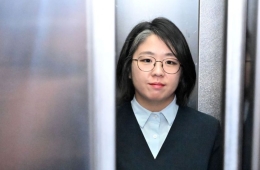
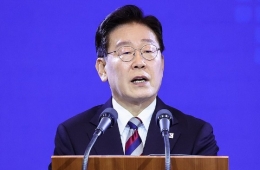
The election to choose the Chief Executive Director who will lead the Jogye Order of Korean Buddhism, the largest Buddhist order in Korea, for the next four years, is just one day away. The contest pits Monk Kyungwoo, the former head monk of Seonunsa Temple, against incumbent Chief Executive Director Monk Jinwoo, who is seeking re-election. This is the first time in nine years—since 2017—that the Chief Executive Director election features multiple candidates genuinely competing in the voting. As the final stretch of the campaign approaches, debates over Monk Jinwoo's past ordination qualifications, reports and accusations related to possible vote-buying, and legal skirmishes have overshadowed policy discussions, shifting the focus to candidate eligibility and the fairness of the election process.

Jinwoo Sunim (left) and Kyungwoo Sunim, candidates for the 38th General Secretary election of the Jogye Order of Korean Buddhism. Jogye Order
View original imageThe Jogye Order Central Election Commission will conduct the 38th Chief Executive Director election on September 3 from 1 PM to 3 PM at the Traditional Culture and Arts Performance Hall in the Korean Buddhist History and Culture Memorial Hall, Jongno-gu, Seoul. The election uses an indirect voting system in which 321 electors—including 81 members of the Central Council and 240 representatives chosen from 24 diocesan headquarters nationwide—will each cast one vote. Ballots will be counted immediately after voting concludes, and the winner will be determined. The new Chief Executive Director will serve a term beginning on September 28.
The Chief Executive Director is the de facto administrative head of the Jogye Order, overseeing general administration and external affairs for approximately 3,500 temples and 12,000 monks across the country. The position wields wide-ranging authority over the appointment of head monks for both main and branch temples, execution of an annual budget in the range of 100 billion won, and supervision and disposition of assets belonging to order-affiliated temples. The term of office is four years.
The race originally began as a three-way contest among Monks Kyungwoo, Jungnyeom, and Jinwoo. However, Monk Jungnyeom, former head monk of Woljeongsa Temple, withdrew from the race last month and endorsed Monk Kyungwoo, turning the election into a two-way race. If Monk Jinwoo wins, he will become the first Chief Executive Director to be re-elected in 13 years, following Monk Jaseung who started his second term in 2013.
The policy platforms of the two candidates have significant overlap. Both have identified the decentralization of authority concentrated in the central administration, the enhancement of the status of female monks, expansion of welfare for monastics, and the promotion of K-Buddhism as key tasks. Monk Kyungwoo has pledged to decentralize the right to appoint branch temple head monks to dioceses, enact diocesan law to realize a "local autonomy model," and form an artificial intelligence (AI) policy committee. Monk Jinwoo has promised a gradual reduction of central dues, support for basic practice allowances, and reform of the Chief Executive Director election system. Emphasizing "leap from stability," Monk Jinwoo is citing the order's stability and expanded social influence of Buddhism achieved during his past four-year tenure as key accomplishments.
The main point of contention in the final days of the campaign is Monk Jinwoo's ordination record. According to Jogye Order records, Monk Jinwoo, who was born in 1961, received the novice ordination (Sami-jie) in 1978 and was specially ordained with the full precepts (Gujokgye) in 1998. At the time, the notice for this special ordination reportedly set the eligibility for candidates at a minimum age of 40. Critics argue that Monk Jinwoo was under 40 at the time and thus failed to meet the ordination requirements, raising questions about the legitimacy of his full ordination.
In response, Monk Jinwoo's camp and the chief executive's office have asserted that the issue has already been resolved by religious law. They point to the "Special Ordinance on Clergy Status" enacted in 2013, which finalized the relevant clerical records, and stress that Monk Jinwoo underwent multiple qualification reviews while serving in key administrative posts such as Director of Education and Chief Executive Director. The Jogye Order Central Election Commission also convened its 434th meeting on August 19 and ruled that there were no issues with the candidate registrations for this election.
At the center of the counterargument is Monk Jookyung, chair of the central legislative body of the Jogye Order. Having explained the special ordinance as the planning chief in 2013, Monk Jookyung maintains that the law was intended to settle clerical records from before the 1981 unification of ordination lineages, not to retroactively recognize eligibility for special ordinations in 1998. Monk Jinwoo’s side argues that it is a political attack to revisit an issue already confirmed by competent authorities immediately before the election. The campaign committee supporting Monk Jinwoo has filed a complaint against Monk Jookyung for violating election law, while Monk Jookyung has countered by calling it "political maneuvering."
The controversy over the ordination record has now extended to legal proceedings. A petition requesting suspension of Monk Jinwoo's candidate registration as Chief Executive Director is currently pending before the Seoul Central District Court.
Controversy regarding possible vote-buying has also persisted. The Jogye Order’s Department of Justice announced on August 31 that it had received repeated reports that some electoral college members were either provided with or promised money or valuables by a candidate's camp. The Department stated that any complaints, accusations, or evidence will be investigated regardless of candidate or rank, and the matter will be handled according to religious law. Jogye Order electoral law stipulates that anyone who provides or receives money or financial benefits must pay a fine ten times the amount provided and has their voting and candidacy rights restricted.
Senior members of the order have also called for a fair election. Grand Master Jakwang, Chair of the Council of Elders of the Jogye Order, stressed in a statement on August 31 that this election should serve as a "model of harmony and unity."
Hot Picks Today
!["Please Teach Us the Technology"—Korea Once Sought Help from Japan... Now Threatens the Origin Country After 65 Years [Advance of K-Ramen]①](https://cwcontent.asiae.co.kr/asiaresize/93/2024110818333992902_1731058419.jpg) "Please Teach Us the Technology"—Korea Once Sought Help from Japan... Now Threatens the Origin Country After 65 Years [Advance of K-Ramen]①
"Please Teach Us the Technology"—Korea Once Sought Help from Japan... Now Threatens the Origin Country After 65 Years [Advance of K-Ramen]①
- "It's Hard to Succeed With Ordinary Credentials"... U.S. Parents Sending Children on 100 Million Won Around-the-World Programs
- Ignoring Parking Fines...London Struggles with Middle Eastern Supercars and Illegal Parking
- "Sea Hidden by Crowds": Greek Beach Becomes "Hell" After SNS Fame
- "Just a Month After Joining, I Feel Older... My Company Won't Safeguard My Looks" Office Workers' Survival Tactics Go Viral in China
The September 3 vote marks a turning point for the order, as it will decide whether to opt for continuity with the current executive or to shift power with a new administrative system. At the same time, given that the elections have sparked disputes over ordination qualifications, lawsuits, and vote-buying allegations, restoring order and trust within the organization is expected to be the most pressing task for the next Chief Executive Director, regardless of the outcome.
© The Asia Business Daily. All rights reserved. Unauthorized AI training and use prohibited.