Police Appointments Choose 'Responsibility Over Regional Ties'... Park Junseong in Daegu, Park Heonsu in Gyeongbuk
Simultaneous Replacement of Security Chiefs in Daegu-Gyeongbuk
14 Out of 18 Regional Police Chiefs Nationwide Are New Faces
Full Implementation of 'Hyangpije' Policy and Reorganization of Investigation Command
A Signal of Major Overhaul for the Police Organization
The leadership landscape within the police organization has undergone significant changes. Among the 18 regional police agency chiefs nationwide, 14 have been replaced, and both Daegu and Gyeongbuk now have new heads of public security simultaneously.
This personnel reshuffle is noteworthy because it goes beyond a simple transfer of executive positions; it marks the full-scale application of the principle of 'responsibility over regional ties' to police appointments across the country. This is due to the comprehensive implementation of the so-called 'Hyangpije' policy, which avoids assigning chiefs to areas connected to their birthplace or previous main workplaces, in all appointments of regional police agency chiefs.

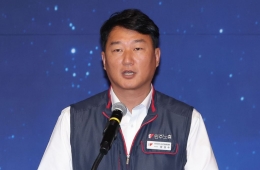
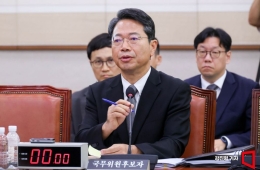
According to the police personnel announcement made on September 1, 2026, for the second half of 2026 concerning the promotion of Chief Superintendent Generals and Senior Superintendents, Park Junseong, Acting Director of the International Policing Cooperation Bureau at the National Police Agency, has been selected as the Acting Commissioner of the Daegu Police Agency. Park Heonsu, Superintendent affiliated with the Government Joint Investigation Headquarters for Narcotics Crimes at the National Police Agency, has been appointed as the new Commissioner of the Gyeongbuk Police Agency.
Both individuals were promoted to Senior Superintendent General in this reshuffle and have been newly assigned to lead the police command for Daegu and Gyeongbuk. For local police, with both Daegu and Gyeongbuk’s heads of public security replaced at the same time, a new command system has effectively been launched.
There has also been a change in the leadership of the National Police Agency. Kim Jongcheol, Chief of the Gyeongnam Police Agency, has moved to become the Deputy Commissioner General of the National Police Agency and will also serve as acting Commissioner General, a post that has been vacant for a prolonged period.
Go Bumseok, Chief Superintendent General who led the Jeonnam Police Agency, has been appointed Commissioner of the Seoul Police Agency. Yoo Seungryul, Head of Investigation Planning and Coordination at the National Investigation Headquarters, has become Commissioner of the Incheon Police Agency. The rank of Chief Superintendent General is immediately below the Commissioner General and forms the core of the police command structure.
The scale of this reshuffle is unprecedented. Leaders in 14 out of 18 regional police agencies have been changed, excluding Busan, Daejeon, Sejong, and Gyeonggi Nambu. In terms of regional police chiefs alone, around 78% have been replaced, and the rate of changes among Senior Superintendent General positions reaches up to 81%.
Yet more noteworthy than the sheer numbers is the direction of the personnel decisions. The National Police Agency applied the 'Hyangpije' policy to all 18 regional police chief appointments. This aims to structurally prevent potential collusion with local communities by restricting senior police executives from serving as heads of public security in places that are their birthplace or where they have formed extensive personal networks through long-term assignments.
In the past, regional connections and personal networks have been discussed as background influences in high-level police appointments. As such, this move is evaluated as an institutional measure aimed at strengthening the independence and impartiality of police leadership.
The investigative command line has also been reorganized. Reflecting the fact that the Criminal Procedure Act revision has substantially increased the police’s responsibility for investigations, personnel with first-hand investigative experience have been placed in key positions at the National Investigation Headquarters.
The role of Head of Investigation Planning and Coordination at the National Investigation Headquarters was given to Kim Gwangsik, Chief of the Gwanak Police Station in Seoul. The position of Director of the Investigation Bureau has gone to Oh Seungjin, Head of the Investigations Division at the Seoul Metropolitan Police Agency, both promoted to Senior Superintendent General in this reshuffle.
The makeup of regional police leadership has also seen significant change. Yang Youngwoo, Commander of the 101st Security Division at the Seoul Metropolitan Police Agency, was assigned to lead the Gwangju Police Agency. Choi Bohyun, Deputy Head of Investigation at the Seoul Metropolitan Police Agency, was appointed to lead the Ulsan Police Agency. Lee Seunghyeop, Director of the Crime Prevention Response Bureau at the National Police Agency, will head the Gyeonggi Bukbu Police Agency. Kwak Byungwoo, Spokesperson of the National Police Agency, was assigned to the Gangwon Police Agency.
In Chungbuk, Park Jongsup, Deputy Head of Community Safety at the Seoul Metropolitan Police Agency, will lead, while in Chungnam, Lee Seoyoung, Acting Director of the Bureau of Community Safety and Traffic at the National Police Agency, was assigned as acting commissioner. Shin Hyoseop, former head of the Chungbuk Police Agency, now leads Jeonbuk; Kim Hoseung, former head of the Chungnam Police Agency, will head Jeonnam; Lee Jaeyoung, former chief of the Jeonbuk Police Agency, was appointed to Gyeongnam; and Kim Byungchan, Director General for Police Administration and Personnel Planning, will take up leadership in Jeju.
On the other hand, Kim Seonghee (Busan), Baek Dongheum (Daejeon), Kim Honggeun (Sejong), and Hwang Changsun (Gyeonggi Nambu) retained their posts. The National Police Agency plans to expand the implementation of the 'Hyangpije' policy to major positions such as audit, inspection, and human rights officers in addition to regional police chiefs and restructure the personnel management system.
Ultimately, the success or failure of this reshuffle will depend not on 'who moved' but on 'what changes.' In particular, Daegu and Gyeongbuk now face the simultaneous challenges of expanded drug trafficking, voice phishing, abnormal motive crimes, and policing needs that reflect the regions' aging populations and rural characteristics.
The early test for the Park Junseong-Park Heonsu leadership is whether they can quickly stabilize the organization amid this large-scale personnel change and effectively link it to on-the-ground policing tailored to local needs.
Hot Picks Today
 "Inside, It's a Shock... A Daughter Born in the 1990s Ages Faster Than Her Mother Born in 1965"
- "Changing Diapers Where You Eat..." The In-Flight Table Flight Attendants Absolutely Avoid
- "Salty and Perfect for Beer, But Shocking"...The Unexpected Snack That Can Raise Cancer Risk Without You Knowing
- "Earns $53,000 Appearance Fee in One Month"... The Protagonist Driving China's Rapidly Growing Short-Form Drama Market
- 60-Year-Old Gwangju Legacy Hits Global Jackpot: "Young Adults Go Wild for Grandma’s Injeolmi"
Whether this reshuffle—which replaced 81% of the senior police command—will remain just a 'swap of personnel' or become a turning point for police appointments evaluated by competency and responsibility beyond local ties will be determined at frontline policing sites, including in Daegu and Gyeongbuk, going forward.
© The Asia Business Daily. All rights reserved. Unauthorized AI training and use prohibited.



![From 17-Year-Old Princess to 54-Year-Old Queen: Why Royal Women Joined the Military [World Photo]](https://cwcontent.asiae.co.kr/asiaresize/307/2026091710422132223_1789609340.png)