Min Hyungbae: "No Disadvantages from Integration"... 13.9 Trillion Won in National Funds Secured in First Year
8.205 Billion Won Increase Over Combined Previous Gwangju and Jeonnam Funding
Projects Exempted From Preliminary Feasibility Study, Such as Semiconductor Water and Power Supply, Not Reflected in Total
In the first government budget plan allocated since the launch of the Jeonnam-Gwangju Integrated Special City, a total of 13.9009 trillion won in national funds for the region has been included. This is an increase of 820.5 billion won compared to the combined amount secured by the former Gwangju City and Jeonnam Province in the previous year.
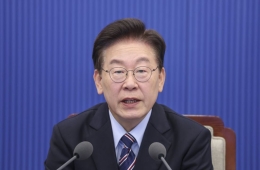
On the afternoon of September 2, Min Hyungbae, Mayor of the Jeonnam-Gwangju Integrated Special City, held a briefing at the Gwangju Government Complex to announce the progress in securing national funds for 2027.
Mayor Min assessed, "This is the first time we have secured national funds without any disadvantage, dispelling concerns that national funding support would decrease from two-seventeenths to one-sixteenth as a result of the integration."

Min Hyungbae, Mayor of the Integrated Special City of Gwangju in Jeonnam, is explaining the progress of securing the national budget for 2027 on the afternoon of the 2nd at the Gwangju Government Complex. Photo by Song Bohyun
View original imageThe rate of increase in national funding for the Integrated Special City is 6.3%. While this is lower than the government budget's overall increase rate of 12.8%, the city explained that, when excluding the Future Response Fund of 45.4 trillion won, the government's effective budget growth rate also stands at 6.4%, making the difference minimal.
Mayor Min noted, "Projects that were recently exempted from preliminary feasibility studies, as decided in the latest Cabinet meeting, have not been included in this round of total national funding." He added, "If we take into account the additional investments for projects such as water and electricity supply at the semiconductor industrial complex, and the establishment of the national medical school (180 billion won), the actual scale of support will be much larger."
The current government budget proposal also includes projects for which the former Gwangju and Jeonnam regions had competed, now allocated to each area separately.
Mayor Min explained, "A representative example of this competition is the National AI Data Computing Center." He stated that, "For projects that saw past competition, this time, a GPU-based center has been allocated 11.8 billion won in the former Jeonnam area, and an NPU-based center has been allocated 1.97 billion won in the former Gwangju area." He further commented, "Rather than competing, we have now established a mutually complementary AI computing ecosystem through collaboration."
Mayor Min highlighted, "We are leveraging the geographical characteristics and differing investment environments of the former Jeonnam and Gwangju areas as strengths of this integration." He continued, "Jeonnam is focusing on establishing AI data centers and the AI transition (AX) of core agricultural and fishery industries based on renewable energy, while Gwangju is concentrating on advancing AI semiconductors and future vehicle industries."
The government budget plan includes 66.8 billion won for the Jeonnam AI Data Center testbed, 117.8 billion won for rural basic income, 115.1 billion won for the creation of the Gwangju AX Demonstration Valley, and 6 billion won for the semiconductor advanced packaging demonstration center, among others.
Mayor Min emphasized, "Inclusion in the government budget is not the end, but rather a halfway mark." He added, "Now, during the National Assembly review process, we will make every effort to secure the additional inclusion of key projects that were left out, so that the power of integration leads to tangible changes in citizens' daily lives."
Hot Picks Today
 "Two Spend 500,000 Won in a Flash, Yet Wait Two Hours?" ... 'Dreamland' Shunned by Kids and Foreign Tourists
- The Era of Getting 200 Million Won After 30 Years Is Over... A Japanese Bank's "Perpetual Department Head" Who Just Clocked In Cries Out
- Spain Hit by Its Worst Tragedy... Lee Kangin, Moreno and Real Madrid Join Soccer World in Mourning
- They Said, “Make It Your Home for Life” - Then Suddenly Kicked 200 Passengers Off... What Happened to the Around-the-World Cruise?
- "130 Rice Bowls Sold Out in a Day"... 'Unfiltered Face' Adds 8 Million Won to Night Market Sales: China's Bungeunwoo
Meanwhile, Mayor Min also commented on the recent personnel reshuffles carried out ahead of an organizational restructuring. He stated, "Normally, personnel decisions do not warrant separate explanations of their intent or background. The personnel move itself conveys the message." He further explained, "Whenever necessary for efficient organizational management, personnel decisions can be made at any time. This recent adjustment was delayed because the organizational restructuring was postponed following the city council’s issues raised about the Deputy Mayor."
© The Asia Business Daily. All rights reserved. Unauthorized AI training and use prohibited.