Lee Hyung-il: "Residence-Centered Policy Still Valid... Full Mobilization of Finance and Tax Support for Housing Supply" (Comprehensive)
September 2 Deputy Prime Minister Nominee Press Briefing
"Top Economic Policy Priority: Price Stability... Starting Point for Addressing Polarization"
Deputy Prime Minister and Minister of Finance and Economy nominee Lee Hyung-il commented on September 2 regarding the reversal of strengthened tax measures for non-resident single homeowners, just 29 days after announcing the tax reform proposal. He stated, "The policy objective to differentiate between residents and non-residents, aiming to stabilize the market by promoting a housing culture centered on actual residence, still remains valid." He added, "We will continue with the overarching policy framework that seeks to address polarization by boosting the potential growth rate."

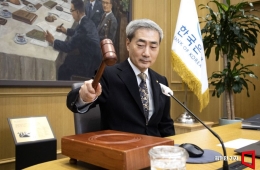
Deputy Prime Minister and Minister of Finance and Economy nominee Lee Hyungil is attending a meeting at the Ministry of Finance and Economy press room in the Sejong Government Complex on the 2nd. Photo by Yonhap News
View original imageReduction of Non-Resident Comprehensive Real Estate Tax Deduction Withdrawn ... "Resident-Oriented Housing Policy Direction Still Valid"
Lee made these remarks during a press briefing held at the Government Complex Sejong this morning. Previously, on August 3, the Ministry of Finance and Economy had announced a tax reform proposal to reduce the basic deduction of the comprehensive real estate holding tax for non-resident single homeowners from the current 1.2 billion won to 900 million won, and to raise the upper limit of the tax burden compared to the previous year from 150% to 200%. However, after growing criticism that this constituted excessive discrimination against non-resident single homeowners, the government finalized a proposal to withdraw this measure at a Cabinet meeting. Meanwhile, the basic deduction for resident single homeowners will be raised to 1.4 billion won as scheduled, thereby maintaining the principle of differentiation.
On this, Lee explained, "The reform plan announced on August 3 was intended to create a residence-oriented housing market by reducing excessive tax benefits, but the National Assembly pointed out that the differentiation between resident and non-resident was too extreme. Therefore, while easing the differentiation, we still need to maintain a distinction, which is why we set 1.4 billion won and 1.2 billion won as the respective thresholds." He further stated, "In addition, the plan to convert the holding deduction into a residence deduction will also be maintained as per the current government proposal and will be submitted to the National Assembly." Lee added that he would incorporate reasonable suggestions from lawmakers if raised in the legislative process.
He cited housing supply expansion as a core policy for stabilizing the real estate market. "The most fundamental and important factor for stabilizing the real estate market is to increase the volume of housing supply," Lee said. "There is no reason to refuse tax and financial support if we can increase housing supply." As for future housing price trends, he cited interest rates and changes in demographics and household composition as key variables. "Historically, when market interest rates rise, the real estate market has suffered," he stated. "With the population steadily shrinking, household fragmentation has been sustaining the market so far, but we need to consider how long that will continue. It's also necessary to think about what might happen to the housing market in the long term."
He continued, "Of course, there is a basic desire for everyone to own a home. In that sense, the government's policy is to expand supply so that people can more easily and readily acquire homes," stressing again, "There's no reason to refuse tax and financial support if it can help expand housing supply."
Regarding President Lee Jae-myung's order to prepare a system for large-scale public housing purchases in case of a collapse in housing prices, Lee noted, "We are currently consulting with related ministries," adding, "It's not yet the stage to disclose specific details."

Lee Hyung-il, Deputy Prime Minister and Minister-designate of the Ministry of Finance and Economy, is holding a meeting with journalists covering the Ministry of Finance and Economy at the Government Complex Sejong in Sejong City on the 2nd. Photo by Yonhap News Agency
View original image"Maintaining Core Economic Policy Principles... Will Strengthen Pre-Review and Inter-Ministerial Cooperation"
Despite the recent replacement of top economic policy officials—Deputy Prime Minister Koo Yoon-chul and Chief Policy Officer Kim Yongbeom at the Blue House—Lee emphasized his intention to maintain the established policy direction. "The policy stance to restore the potential growth rate and use that capacity to resolve polarization, ensuring inclusive growth, will continue," he affirmed, "and if new challenges emerge, we will find new solutions in the process of addressing them."
In response to concerns that the economic control tower role of the Deputy Prime Minister has weakened, Lee commented, "To enhance the pace and driving force of policy, we will greatly strengthen the pre-review and coordination function of the Ministerial Meeting on Economic Affairs. We also plan to establish a tentatively named Economic Affairs Briefing to allow major economic policies to be closely coordinated and examined with relevant ministries and the Blue House prior to being submitted to the Cabinet or publicly announced."
Lee referenced the former 'Green Room' meetings as an example, explaining, "The intention is to swiftly coordinate differing opinions and develop comprehensive countermeasures." The 'Green Room' meeting refers to confidential discussions that began in the mid-1960s when the late Jang Ki-young, who served as both Deputy Prime Minister and Minister of the Economic Planning Board, would meet privately with other economic ministers to discuss urgent matters in a small meeting room adjacent to the Deputy Prime Minister's office, which was furnished and carpeted in green.
Addressing the point that the Ministry of Economy and Finance's split this year into the Ministry of Finance and Economy and the Ministry of Planning and Budget has made it more difficult to exercise comprehensive authority over economic policy, Lee acknowledged, "It is a limitation to act solely with the tools of the Ministry of Finance and Economy.” He expressed the view that, as Deputy Prime Minister, communication skills and leadership are just as important as actual authority in fulfilling his role.

President Lee Jae-myung and Lee Hyung-il, First Vice Minister of the Ministry of Finance and Economy and nominee for Deputy Prime Minister, are conversing at the Cabinet meeting held at the Blue House on the 1st. Photo by Yonhap News
View original image"Price Stability Is the Starting Point for Reducing Polarization... Additional Measures for Chuseok"
Lee identified price stability as one of his top economic policy priorities. He stated, "Price stability is fundamental to people's livelihoods and is the starting point for reducing polarization. High prices hit vulnerable groups especially hard. The economic team's performance will be judged by how well we manage everyday living costs, and we will do our utmost to ensure price stability." Regarding the recently announced policy for the Chuseok holiday, he added, "We will consider and announce additional supply and discount measures."
At the previous day's Cabinet meeting, President Lee asked Lee whether he was confident about managing inflation. When Lee replied, "We will certainly get it under control," the President quipped, "If you fail, your nomination as Minister of Finance and Economy could be revoked. Are you really confident?"—drawing a laugh. The President added, "Although that's a bit of an exaggeration, the issue of price stability is something the people feel very acutely," repeatedly urging maximum effort. The government has forecast this year's consumer price inflation at 2.6% and set a goal of keeping the second half's rate below 3%. Consumer price inflation, which was above 3% in both May and June, dropped to the 2% range in July but rose again above 3% last month. Lee assessed, "With developments in the Middle East war still ongoing, oil price trends are crucial, but overall, the trend appears to be downwards."
Hot Picks Today
 Despite "Insufficient Balance" Notices, They Board Anyway... Reports of Foreign Fare Evasion Mounting
- "If It Helps My Child's Studies, It's Worth Every Penny"... U.S. Parents Open Their Wallets for $10,000 Tests
- [Exclusive] "We Came for a KRW 140,000 Trip": Following Chinese Tourists in Korea Uncovers a 'Suspicious' Tour
- France, Shaken by Violence, Restricts Protests; Bonds Keep Falling Amid Anxiety
- "Baek Jongwon Had Been Quiet, Then Hit It Big"... Waits in the 100s in U.S. Despite KRW 46,000 Pork Belly
Lee said, "The one year and three months since the launch of the Lee Jae-myung administration has been a time for recovery and normalization after the shock of martial law. Moving forward, I will strive to accelerate growth and solidify the rebound in potential growth, aiming to create an 'Irreplaceable Korea.'" In detail, he added, "We will swiftly promote three major megaprojects to generate large-scale investments and new growth engines, foster regions as new centers for growth, and expand proactive investment in advanced future technologies." He concluded, "We will focus our policy efforts on reducing polarization and stabilizing livelihoods so that the benefits of growth are shared with all citizens."
© The Asia Business Daily. All rights reserved. Unauthorized AI training and use prohibited.