"SME Exports to Reach $180 Billion by 2030"...Ministry of SMEs and Startups Rolls Out 'Four Major Export Innovation Strategies'
Focusing on Nurturing 500 Promising Export Companies
Tailored Support for 2,000 Firms Including Young Entrepreneurs and Small Business Owners
Diversifying Export Products in Consumer and Industrial Sectors
Expanding Support for Overseas Market Entry in Countries such as India, Brazil, and Singapore
In order to boost SME export volumes to 180 billion dollars by 2030, the government will focus on nurturing 500 promising export companies and provide tailored support for 2,000 firms, including young entrepreneurs and companies making renewed export attempts. Support will also be expanded for SMEs to enter emerging overseas markets, including India.
The Ministry of SMEs and Startups announced on the 3rd that, at the 13th National Policy Coordination Meeting presided over by the Prime Minister, it discussed the "Four Major Innovation Strategies for SME Exports" together with relevant ministries.
As of the first half of this year, SME exports reached a historic high of 64 billion dollars. With K-beauty and online exports emerging as new growth drivers, the government is working to strengthen the foundations to sustain this positive export trend.
To this end, the government will restructure export support measures across four main areas: companies, products, countries, and policies. Specific plans include: establishing a tailored support system for export entry and growth paths; discovering and supporting high-potential export products such as consumer and industrial goods; supporting pioneering efforts in emerging markets based on the outcomes of summit diplomacy; and integrating and advancing the global support system.

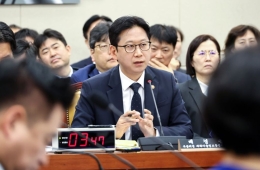
Sim Jaeyoon, Global Growth Policy Director of the Ministry of SMEs and Startups, is giving a preliminary briefing on the 'Four Major Innovation Strategies for SME Exports' on the 2nd in Seoul. Ministry of SMEs and Startups
View original imageEstablishing a Tailored Support System for Export Entry and Growth Paths
Firstly, through the "Global Scale-Up 500" initiative, the government will focus on nurturing 500 promising export companies with high growth potential. Individual export roadmaps will be created for each company, delivering multi-year, tailored packages of support. The scope of globalization policy will be expanded from a marketing focus to supply chains by adding a raw material sourcing menu to the export voucher program and discovering overseas expansion specialists. Inter-ministerial policy coordination will also be strengthened.
Through "Export ON 2000," customized support will be provided to 2,000 companies, including young entrepreneurs, small business owners, regional companies, and those making renewed export attempts. For young entrepreneurs, a support system tailored to various stages of global expansion, such as gaining export experience and preparing for global business, will be established. Small business owners, SMEs engaged in regional core industries, and companies making a renewed export push will also receive tailored support to foster export capability, leverage online platforms, advance into overseas markets collaboratively, and diagnose reasons for past failures to enable new export attempts.
Expanding Successful Consumer Goods Models and Cultivating Strategic Industrial Products
The range of export products will also be diversified. For consumer goods, next-generation “K-Brand strategic items” with high growth potential—such as fashion, food, and beauty devices—will be discovered and nurtured. The government will also facilitate diversification of overseas market marketing for SMEs by utilizing distribution networks and platforms held by leading distribution and media companies. In addition, inter-ministerial cooperation will be strengthened to resolve issues related to logistics, IP, and certification required for consumer goods exports. Tailored support will be provided by product type for industries related to consumer goods, as well as enhanced manufacturing, finance, and branding support to foster growth in this sector.
In the field of industrial and tech products, “K-Tech strategic items” will be selected with consideration for overseas industrial policies, supply chains, and technological changes. Tailored support will be provided for local proof-of-concept (PoC) projects and technology and product advancement in cooperation with large domestic and foreign companies. The government will assist, from participating in overseas exhibitions to developing potential buyers, to providing finance and consulting necessary for fulfilling export contracts, to ensure tangible results.

Foreign visitors are examining beauty products at a domestic exhibition. Photo by Yonhap News
View original imageSupporting Entry into Emerging Markets Based on Outcomes of Summit Diplomacy
The government will also work to break into new emerging markets by leveraging the outcomes of summit diplomacy. In India, integrated overseas support hubs will be established, providing exhibition and warehouse space. SMEs will also receive comprehensive support in manufacturing, proof-of-concept, investment, and recruitment through local institutions, venture capitalists, and universities. In Brazil, support will be implemented to expand online and offline K-beauty exports and strengthen cooperation with local regulatory agencies.
In Singapore, the government will establish a startup-focused hub and create a global venture fund (K-VCC). In Europe, a permanent K-brand pop-up store will be opened. In Mongolia, local distribution infrastructure such as convenience store networks will be utilized. Thus, the government will support SMEs’ overseas expansion through specialized policies tailored to each country.
Integration and Advancement of the Globalization Support System from the Corporate Perspective
The export support system will also be reorganized to be company-centric. The government will integrate SME export support programs into a single announcement, simplify application paperwork, and use artificial intelligence to provide tailored recommendations of buyers and support programs. A "24/7 Issue Reporting Center" will be established to respond to changes in the global environment. In addition, data analysis of imports and service exports will be enhanced, and the "Overseas Expansion Promotion Act for SMEs" will be enacted to provide a legal foundation for these policy initiatives.
Hot Picks Today
 "They're Coming After My Pension Too?" Public Unease Mounts... Spain Sees Mass Protest Over Reform Push
- "Where Do You Go Every Lunch Break?"... 'Time-Poor' Men in Their 40s: Where They Spend Their Money.
- National Office of Investigation: "Investigations continue until cases are transferred to SCIA... No 'case ping-pong'"
- "Naked Again?" Controversial Actress Crosses a Line... Slammed for Sexualizing 'Child Characters'
- "A Really Beautiful Butt"... How Did Nicki Minaj React to Trump's Unexpected Remark?
Noh Yongseok, First Vice Minister of the Ministry of SMEs and Startups, stated, “We will focus our policy capabilities on ensuring that the Four Major Innovation Strategies for SMEs are firmly established in the business field so that SME exports can surpass the current national policy target of 150 billion dollars and climb to 180 billion dollars by 2030.”
© The Asia Business Daily. All rights reserved. Unauthorized AI training and use prohibited.