KISO Concludes First Self-Regulatory Review of 27 Cases of False or Manipulated Information... No Deletion Orders Issued
First Review Conducted Two Months After Revised Information and Communications Network Act Took Effect
Seventy Percent of Cases Involved Advertising or Promotional Posts; Opinions and Evaluations Excluded
Since the enforcement of the revised Information and Communications Network Act, which aims to tackle the spread of false and manipulated information online, there have been no instances in which any content was found to be false or manipulated and subsequently ordered to be deleted.
On the morning of September 2 in Gwanghwamun, Seoul, the Special Committee on False and Manipulated Information Review of the Korea Internet Self-Governance Organization (KISO) held a press briefing and released the results of its review on 27 posts flagged as false or manipulated information. This marks the first time KISO has disclosed how its self-regulation standards regarding false and manipulated information have been applied in actual reviews since the revised law took effect on July 7.

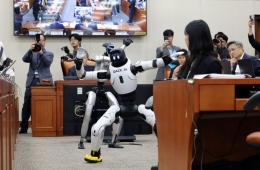
Minho Kim, Chair of the Special Committee on False and Manipulated Information of the Korea Internet & Security Agency (KISO), is speaking at a briefing held on the morning of the 2nd. Photo by Myunghwan Lee
View original imageThe committee reviews cases brought forward by KISO member companies to determine whether or not the content constitutes false or manipulated information. Member companies include Naver, Kakao, Daum, Nate, Naver Webtoon, Kakao Entertainment, and Ppomppu, among others.
The amended Information and Communications Network Act, which contains measures to address false and manipulated information online, requires large platform operators to establish self-governance policies on such information, process related reports, and release transparency reports. In addition, online content publishers with either more than 100,000 subscribers or an average total monthly view count of over 100,000 in the previous three months, who intentionally or through gross negligence disseminate illegal or false and manipulated information causing harm, may be subject to punitive damages.
KISO completed its final reviews on 23 of the 27 total cases reported, excluding four cases that were deleted during the review or were subject to temporary action due to defamation or rights infringement. As a result of the review, there were no cases determined to be false or manipulated information, and all were classified as “not applicable.”
Categorizing the nature of the reported posts, 19 out of 27 (70%) fell under the “information, review, or promotional type,” which included content such as restaurant reviews, discount information for products, beauty procedure reviews, and travel product feedback. Other reviewed posts involved disputes, slander, or were interest- or entertainment-oriented. Some posts dealt with opinions or claims in academic or religious contexts.
KISO assessed the cases using its "KISO Guideline for Self-Regulation on False and Manipulated Information." According to Article 9, Paragraph 1, Item 1 of the guideline, the committee examines the reports and evidence to determine whether the posts constitute false or manipulated information. If no such falsity or manipulation is recognized, the case is ruled as "not applicable."
In assessing falsity or manipulation, the committee did not mechanically decide based only on whether parts of the information matched the facts. They also considered the main message and its actual effect on the perception of users. Therefore, even if there were minor errors in specifics, some inaccurate wording, a lack of updated information, or possible posting by mistake, the committee would not recognize it as false or manipulated information unless it qualified as such in a broader context.
If falsity or manipulation is recognized, the committee further reviews whether there was any intent to cause harm, seek unfair benefit, or infringe on the rights of others or public interest. At this stage, factors such as repeated posting, distribution channels, and the context of public discourse participation are considered collectively.
However, the committee excludes from their judgment cases involving subjective evaluations or opinions and academic, scientific, or religious controversies where objective truth has not been established, as stipulated by the guidelines. In matters of personal rights infringement, such as defamation or invasion of privacy, existing temporary action procedures may be utilized. For some cases related to rights infringement, temporary action was taken during the review process, so the committee did not make a determination regarding false or manipulated information.
Minho Kim, Chair of the Special Committee on False and Manipulated Information Review at KISO, stated, "These review results show that KISO's self-regulation operates on the principle of taking necessary action only with respect to information that meets the requirements and criteria defined in the guidelines, rather than categorizing all inaccurate information or rights infringement online as false or manipulated information."
Hot Picks Today
 "Expensive, Smelly and Scary"... What's Happened to the "Honeymooners' Paradise" Tourists Have Abandoned?
- Women Who Say "A Husband's Annual Salary of 100 Million Won Is a Given"... Matchmaking CEO: "They Talk About It Like It's Nothing"
- "I Want to Eat Like Koreans..." Foreigners Who Once Opened Ramen Packs Now Keep Gochujang in Their Pantries
- FSC Finally Leaving Seoul... 2027 Sejong Move Sees Ministry Merger Talk 'Resurface'
- "I'll Give You 53.4 Billion Won to Keep Quiet"... Influencer Reveals Secret Deal; Musk Denies It
He further added, "KISO will continue to accumulate review cases and transparently disclose the results under the principle of minimizing harm from false and manipulated information while fully respecting freedom of expression and the right to know, thereby enhancing both the predictability and reliability of self-regulation."
© The Asia Business Daily. All rights reserved. Unauthorized AI training and use prohibited.