Earn 40 Million Won More Than in the Metropolitan Area... "More Subsidies and Lower Taxes"—'Regional Premium' to Begin Next Year
A Benefit Gap of Up to 39.9 Million Won Over 10 Years for Continuous Employment and Childrearing
Dual-Income Couples Could See the Difference Grow to 60 Million Won
Beginning next year, there will be a so-called "regional premium" where the government support and tax benefits young people can receive over 10 years will differ by nearly 40 million won, depending on where they live and work. Young people working in designated non-metropolitan regions will receive additional employment subsidies and greater tax relief, as well as increased support for asset formation and for childbirth and childrearing. In this system, even with the same annual salary, those living and working in regional areas will be able to access greater government support compared to those in the Seoul metropolitan area.

President Lee Jae-myung is giving the closing remarks at the 'Youth Budget Unboxing 2027' held at the Blue House on the 28th. Photo by Yonhap News.
View original imageAccording to an analysis and simulation by The Asia Business Daily of the "2027 Budget Proposal" and the "2026 Tax Reform Plan" on September 4, a young worker at a small or medium-sized enterprise with an annual salary of 35 million won could receive more than 39.9 million won in additional cumulative benefits over 10 years if they work in a regional priority area, have one child, and raise them through elementary school, compared to their peers in the Seoul metropolitan area. This calculation is based on the national median monthly income for wage workers (2.88 million won in 2024), using 35 million won as the assumed annual salary. The scenario assumes 10 years at the same company and raising one child to age 12. The specific designation of “regional priority areas” will be announced next month by the Ministry of the Interior and Safety and is expected to mainly include cities and counties outside of major metropolitan cities.
Differences begin from the very start of employment through the "Youth Job Jump Incentive Program" (which provides wage subsidies for new hires and incentives for continuous service). Over the first two years of employment, young people in the Seoul metropolitan area receive 4.8 million won in subsidies, while those in regional priority areas can receive up to 18 million won—13.1 million won more. In addition, the 90% employment income tax reduction (which lasts five years in the metropolitan area and up to 10 years in regional areas) creates an extra 3.5 million won benefit over 10 years for the latter.
Youth living in regional areas also receive more support for asset building and cultural life. Young people contributing 500,000 won per month for three years to the "Youth Future Savings Plan" in a regional priority area would receive 4.5 million won in government matching funds, which is 1.8 million won more than the maximum 2.7 million won received by those in other regions. For the "Youth Culture and Arts Pass," young people in regional areas are eligible for 150,000 won per year compared to 100,000 won in the metropolitan area, resulting in a cumulative difference of up to 800,000 won over 16 years.

The gap becomes even wider at the stages of childbirth and childrearing. The first child birth support payment is 10 million won in the Seoul metropolitan area, but rises to 15 million won—an extra 5 million won—in regional priority areas. Furthermore, the basic child allowance provided from age 0 to 12 is 300,000 won per month in regional priority areas compared to 200,000 won in the metropolitan area. Over 13 years, this means young people in regional areas receive 15.6 million won more. In total, combining the childbirth grants and childrearing subsidies, those residing in regional areas gain an extra 20.6 million won. If a dual-income couple with a combined annual salary of 35 million won each lives in a regional priority area, the cumulative gap over the period could approach 60 million won compared to their counterparts in the metropolitan region.

However, there are limits to how many young people can actually benefit from these advantages if sufficient jobs and cultural and educational infrastructure are not present in the regions. This, in turn, highlights the reality that it is difficult to attract young people to regional areas without offering substantial economic benefits. The government is concentrating regional preference benefits throughout the entire life cycle of youth, from employment to asset building, and childbirth and childrearing. The strategy is to make it unambiguously clear that settling in regional areas is economically advantageous, thereby addressing issues of overpopulation in the Seoul metropolitan area and the risk of regional decline simultaneously.
Hot Picks Today
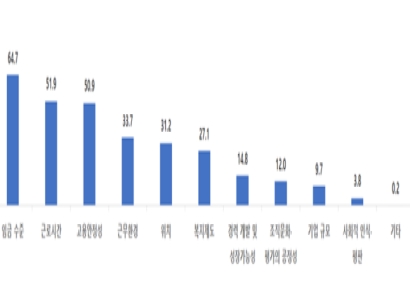 "Please Pay Me at Least 3 Million Won a Month": More Than Half of Young People Today Prioritize "Working Conditions" Over Company Size
- Selling Like Crazy Every Year... 30-Year-Old Hetbahn Takes on a New Challenge: Tastes Better Than "Mom's Home Cooking" [On-Site Report]
- "Is This Really Possible?" The World Is Watching... Could My Car Become a "Mobile ESS"? [Energy Odyssey] 15
- "Hey, Lady, Teach Your Kids to Behave!" ... 300,000 Won in Cash and a Bodily Injury Claim Demanded Over Child's Door Ding
- "Don't Trust This Woman": Documentary on 'Investment Scammer' Earns KRW 22 Billion in One Week
Honggeun Park, Minister of Planning and Budget, appeared on the YouTube channel "Democratic Party TV" on the 3rd, stating, "The President’s aim is to create a Republic of Korea where people can have many children and live in their hometowns." At last month’s meeting of the National Assembly Special Committee on Budget and Accounts, he emphasized, "We meticulously designed projects across the entire budget to provide even greater support for local youth." Analysts suggest this reflects the government's determination to mobilize every possible tool—budget, tax policy, and beyond—to hold young people in regional areas.
© The Asia Business Daily. All rights reserved. Unauthorized AI training and use prohibited.






![[Market ING] KOSPI Seeks Rebound in Superweek Packed with Corporate Earnings and FOMC](https://cwcontent.asiae.co.kr/asiaresize/307/2026102514484873155_1792907327.jpg)