[Energy Odyssey] ① The Garbage Bag Rebellion... How War Exposed Korea as an 'Energy-Poor Country'
Ⅰ. South Korea Trapped in an Energy Bottleneck
The Cry of a Nation Without a Drop of Crude...The "Hormuz-Induced" Energy Shock
Between Energy Transition and Industry Restructuring: The Dilemma of Feedstock Supply Gaps
Direct Conversion and Recycl
Due to recent supply chain crises resulting from the war in the Middle East, as well as government mega projects, the importance of energy has grown more than ever. South Korea, which relies on imports for most of its primary energy sources, is faced with the difficult task of achieving energy security, carbon neutrality, and economic growth simultaneously. This feature series presents reporters covering the energy sector on the ground, analyzing current issues and exploring possible solutions for the government and industry.
# An oil tanker filled with crude oil (ultra-light crude) is entering the waters off Seosan, Chungcheongnam-do. At the dock, the crude oil is stored in tanks owned by Hanwha TotalEnergies through pipelines. The crude oil stored in the tanks undergoes a distillation process and is separated into LPG, gasoline, diesel, and other products. During this process, naphtha— a transparent liquid— is also produced. Hanwha TotalEnergies, which operates both a refining facility (CFU) and a naphtha cracking center (NCC), transports the naphtha to the NCC. When naphtha is cracked at temperatures as high as 800°C, basic feedstocks such as ethylene and propylene are obtained. After rapid cooling, compression, and separation, these are converted into polyethylene, which is used to make vinyl and packaging materials, and polypropylene, which is used to produce airtight containers and car parts. This is the typical process by which crude oil delivered via maritime routes is transformed into raw materials for everyday essentials like vinyl and plastics.
The massive yet intricate supply chain has now begun to falter in response to shocks occurring on the other side of the globe.
![[Energy Odyssey] ① The Garbage Bag Rebellion... How War Exposed Korea as an 'Energy-Poor Country'](http://www.asiae.co.kr/news/img_view.htm?img=2026090110302710532_1788226228.jpg)
At the end of February, following growing tensions with the United States, Iran announced it would blockade the Strait of Hormuz, sending crude oil prices into turmoil. The same was true for naphtha, known as the 'rice of industry.' South Korea relied on imports for half of its naphtha demand, and 58% of that imported volume came from the Middle East, passing through the Strait of Hormuz.
Concerns mounted that with naphtha import routes blocked, basic necessities like trash bags could soon become difficult to obtain, triggering a wave of hoarding. Fears over raw material supply disruptions and soaring prices spread rapidly across the country.
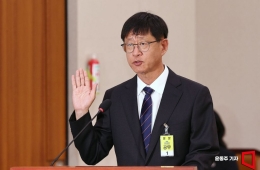
Since the implementation of the pay-as-you-throw trash bag system in 1995, this was the first time a trash bag hoarding phenomenon had occurred. Kim Sung-hwan, Minister of Climate, Energy, and Environment, personally addressed the public, saying, "Don't worry, everything will be fine." However, public anxiety failed to subside. In the end, the minister even announced that imposing per-person purchase limits—similar to those implemented for masks during the COVID-19 pandemic—was under consideration.
![[Energy Odyssey] ① The Garbage Bag Rebellion... How War Exposed Korea as an 'Energy-Poor Country'](http://www.asiae.co.kr/news/img_view.htm?img=2026030309013158634_1772496092.jpg)
Soaring Prices and the Domino Effect of Force Majeure: A Warning on Imported Energy Dependence
Within just two months, domestic naphtha prices soared by nearly 75%. According to the Ministry of Trade, Industry and Energy's raw material price information, the average naphtha price per ton rose from $608.60 in February to $1,018.64 right after the Strait of Hormuz blockade in March, and further up to $1,063.15 in April.
As raw material supply shortages worsened, more naphtha cracking center (NCC) operators declared force majeure. Force majeure is an exemption measure that absolves contractual parties from liability when delivery becomes impossible due to uncontrollable external factors, such as war or natural disasters. Yeochun NCC, the largest ethylene producer in Korea, was the first to notify its customers, citing delayed raw material arrivals for shipments scheduled for delivery in March. This was soon followed by announcements from Lotte Chemical, LG Chem, Hanwha Solutions, and others, as concerns mounted over possible plant shutdowns.
At the root of a country being shaken over the supply of trash bags lies the harsh reality of relying almost entirely on foreign sources for raw materials. While naphtha prices began to stabilize after two months, this incident nonetheless exposed the vulnerability of South Korea’s supply chains—heavily concentrated in specific regions of the Middle East and lacking alternative options. Policies for how to respond to future crises of this sort remain largely absent.
Equipment Cuts Under Pressure From China Money...Security Over Basic Feedstock Is at Risk
Since the operation of Korea's first NCC by Korea Oil Corporation in 1972, the nation has rapidly expanded into the global market. Particularly after China joined the World Trade Organization (WTO) in 2001 and hosted the Beijing Olympics and Shanghai Expo, its economic growth fueled a surge in petrochemical imports, allowing Korean petrochemicals to claim the largest share of the Chinese import market and facilitating rapid industry development.
However, it did not take long for China to become South Korea’s most formidable competitor. China massively ramped up production capacity and started supplying low-priced commodity materials. The Korean petrochemical industry, focused on commodity products, was pushed to the edge by the onslaught of cheap Chinese ethylene supplied in overwhelming volumes. At the same time, China was pursuing both “full self-sufficiency in basic feedstocks” and large-scale state-led integrated refinery and petrochemical projects.
![[Energy Odyssey] ① The Garbage Bag Rebellion... How War Exposed Korea as an 'Energy-Poor Country'](http://www.asiae.co.kr/news/img_view.htm?img=2026090116272011310_1788247640.png)
As sales abroad dwindled and profitability deteriorated, both government and businesses opted to restructure the petrochemical industry. In September of last year, the government announced its “Petrochemical Industry Restructuring Roadmap,” with the aim of cutting 2.7 million to 3.8 million tons—up to 25%—from total domestic NCC production capacity. The plan called for reducing output from commodity materials in order to resolve oversupply and shifting to higher-value-added, environmentally friendly products.
According to the Korea Chemical Industry Council, as of last year, China topped the global ranking with 58.23 million tons—24.86%—of the world’s total 234.16 million tons of production. The United States followed with 46.907 million tons, then Saudi Arabia with 17.631 million tons, and South Korea with 13.012 million tons.
As a result of this restructuring, the first integrated company—formed by the merger of HD Hyundai Chemical and Lotte Daesan Petrochemical—officially launched on September 4. HD Hyundai Chemical absorbed Lotte Daesan Petrochemical (H&L Advanced). For the next three years, it plans to reduce operations for less profitable commodity facilities. As the “second phase” of restructuring, four companies based in Yeosu National Industrial Complex—Yeochun NCC, Lotte Chemical, Hanwha Solutions, and DL Chemical—are preparing to establish a unified entity. Korean petrochemical firms plan to curb commodity output while expanding into higher-value-added industries.
Once the industry overhaul is finished, both the output of commodity products and NCC operation rates will naturally decline. However, it is important to note that polyethylene, needed for making trash bags, is classified as a commodity material. The recent crisis in the Middle East has sparked criticism that indiscriminately cutting back production of commodity materials, which may lack price competitiveness, is not the right answer. Should production capacity be drastically reduced purely for profitability reasons, and if external supply chains are subsequently disrupted, the entire manufacturing sector could be paralyzed—plunging the country into an even deeper crisis.
Beyond Export Controls, Toward Process Innovation: The Urgent Need for Basic Energy Self-Reliance
With the Middle East crisis ongoing, the government has banned naphtha exports until January next year. The supply adjustment measures for naphtha and petrochemical products, originally intended to last until August 26, have now been extended by five months due to the unresolved conflict. As a result of this extension, naphtha businesses are prohibited from exporting naphtha without prior approval from the Minister of Trade, Industry and Energy, and hoarding is also banned. Producers must report their daily production, shipments, destinations, and inventory to the ministry.
There is a growing call for alternatives that will preserve supplies of key industrial feedstocks while also moving beyond the structural deficit of commodity materials.
S-OIL is currently progressing with the “Shaheen Project” at the Ulsan Oil Complex. Unlike other petrochemical firms that are scaling down their NCC facilities, S-OIL is building new ones. The key to the Shaheen Project is the TC2C (Thermal Crude to Chemicals) process, which converts crude oil directly into petrochemical feedstocks. By introducing advanced separation and catalyst technologies, the process more than triples or quadruples the naphtha yield from the same amount of crude compared to traditional methods.
S-OIL believes that if it cannot secure cost competitiveness against China or the Middle East even in basic feedstocks such as ethylene and propylene, it will be difficult to stay price-competitive in the finished high-value-added product market. The manufacturing of high-value-added products requires not only advanced technologies but also competitively priced base materials.
An S-OIL official said, “As confirmed during the Hormuz crisis, the dependence on imported naphtha makes the supply chain extremely vulnerable to external geopolitical risks. The Shaheen Project allows us to flexibly secure feedstocks internally. We therefore expect it to serve as an effective shield should a similar supply chain shock occur in the future.”
Some experts suggest that in the short term, existing facilities and infrastructure should be maximized and applied as immediate countermeasures, absorbing the initial shock. Over the medium to long term, South Korea should pursue a gradual transition, expanding diversified recycling technologies as much as possible and promoting both innovation in processes that could replace NCC and a shift toward bio-based feedstocks.
Lee Sora, Senior Research Fellow at the Korea Environment Institute’s Circular Economy Research Office, said, “We must first expand the use of mechanical recycling—washing and shredding waste plastics to produce recycled resins—for commodity, low-end product categories. This is an already commercialized technology. In the short term, adjusting feedstock blends to increase the use of LPG instead of naphtha, without investing in new facilities, is a feasible way to mitigate short-term risks.” She further added, “Over the long term, we should consider alternatives such as making plastics from bio-based materials like corn syrup, or substituting synthetic naphtha produced using Carbon Capture and Utilization (CCU) technology.”
Hot Picks Today
 "Why Is the Amount in My Account So Low?"... Why Pension Savings Subscribers Were Surprised
- "After Sleeping Well with Strangers"... Who Is the 24-Year-Old Woman Who Won 19 Million Won?
- "SK hynix to Hit 4.7 Million Won, Samsung 670,000 Won"... Why Nomura's Bold Forecast justifies it
- "Even Underwear Has to Be Cut Up with Scissors"... China Hit by Rise of "Trash Hunters" in an "If You're Slow, You're Out" Scramble
- "NPS loses 240 trillion won, 1990s-born get zero pension"... What's behind rumors spreading after the KOSPI plunge?
![[Energy Odyssey] ① The Garbage Bag Rebellion... How War Exposed Korea as an 'Energy-Poor Country'](http://www.asiae.co.kr/news/img_view.htm?img=2026090711044018263_1788746680.png)
© The Asia Business Daily. All rights reserved. Unauthorized AI training and use prohibited.