U.S. Launches Another Large-Scale Strike on Iran... Oil Prices, Long-Term Yields Surge
Second Attack in Three Days
Iran Warns "U.S. Will Regret It"
Brent Crude Surges to the $94 Range
U.S. 10-Year Treasury Yield Rises to 4.79%
Oil Tankers Attacked... Inflation Fears Mount
The U.S. military has launched another large-scale airstrike targeting Iran's Islamic Revolutionary Guard Corps (IRGC). This marks the second attack against Iran in just three days. As Iran immediately vowed to retaliate, the U.S.-Iran military standoff—which had entered a lull for about a month—has once again intensified. With tensions rising around the Strait of Hormuz, international oil prices have surged, and government bond yields in the United States and other major countries have also climbed.

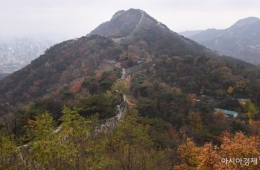
Photo of an Iranian nighttime air raid released by the U.S. Central Command in July. Photo by Yonhap News.
View original imageOn September 1 local time, U.S. Central Command (CENTCOM) announced that it had begun strikes on IRGC targets within Iran starting at noon Eastern Time. The operation was described as a response to recent IRGC attempts to attack civilian ships passing through the Strait of Hormuz, as well as U.S. forces in the Middle East.
U.S. President Donald Trump also stated via Truth Social that the strike was a retaliation for Iran's attempt to lay naval mines in the Strait of Hormuz and its missile attack on a U.S. military base in Jordan. He characterized the airstrikes as "large and formidable attacks" and warned that if Iran retaliates again, "the response will be even stronger and on a much higher level."
Iran Vows Retaliation, Says U.S. "Will Regret" Its Renewed Strike
According to Iranian state media, explosions were reported in various locations, including the southern port city of Bandar Abbas, Qeshm Island, Konarak, and Chabahar. Sepah News, a media outlet associated with the IRGC, said that a fish processing plant on Qeshm Island, a fishing boat dock and port management facilities in Sirik, and other sites were hit in the airstrikes.
Iran immediately announced plans for counter-retaliation. Hossein Mohebi, spokesperson for the IRGC, stated, "Harsh punishment awaits the invaders," warning, "The United States will regret its new attack." The Khatam al-Anbiya Central Command, which leads the unified Iranian military, also declared that the U.S. would "pay a heavy price" and promised to deliver "destructive and deadly blows."

This latest strike came just two days after U.S. forces hit two IRGC rocket launchers on Larak Island in the Strait of Hormuz on August 30. At that time, the U.S. said that Iranian forces were preparing rocket launches as part of efforts to deploy mines into the Strait of Hormuz, prompting the attack.
In response, Iran launched missiles at U.S. military facilities in Jordan. With tit-for-tat attacks intensifying, the period of relative military calm that had lasted since late July has effectively come to an end.
Iran Warns, "If We Can’t Export Oil, No One Else Will Either"... Strains in the Strait of Hormuz Escalate
Tensions between the two sides over the Strait of Hormuz are also escalating. Mohammad Bagher Ghalibaf, Speaker of Iran's Parliament, declared that Iran would use military force to neutralize any U.S. attempts to block Iranian crude exports. He warned that if Iran cannot export oil, other countries in the Gulf region will not be able to export theirs either.
The Strait of Hormuz is a crucial energy transit route, through which roughly 20% of global oil shipments passed before the conflict. Recent reports that two large oil tankers were attacked by projectiles while exiting the Strait just before the renewed U.S. strikes have once again heightened concerns over the waterway's security.
The U.S. recently claimed that it has completed mine-clearing operations on key international shipping routes in the Strait of Hormuz, ensuring the safety of navigation. However, Iran continues to assert control over the Strait and maintains that it will respond militarily if U.S. restrictions escalate.
International Oil Soars to $94... 10-Year U.S. Treasury at 4.79%

US Conducts Another Large-Scale Airstrike on Iran... Oil Prices and Long-Term Interest Rates React Sharply
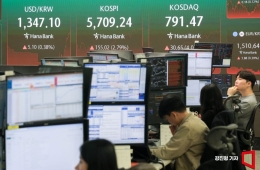
View original imageIn response to the renewed military clashes, the international energy market reacted immediately. Brent crude surged over 4% during the day to trade above $94 per barrel, while West Texas Intermediate (WTI) crude approached $90 per barrel.
Renewed concerns over disruptions to Middle Eastern oil supply also intensified inflationary risks. The yield on the 10-year U.S. Treasury bond climbed to 4.79%, its highest level since January 2025.
Amid growing expectations for additional Federal Reserve rate hikes, concerns that rising oil prices might further fuel inflation fueled bond selling. Japan's 10-year government bond yield also reached 3%, the highest since 1996, and long-term U.K. government bond yields soared to multi-decade highs.
Hot Picks Today
 "Everyone in the U.S. and Europe Is Clamoring to Buy It"... APR's Overseas Boom Puts 3 Trillion Won in Annual Revenue Within Reach
- "I Can't Take the KOSPI Anymore" as Investors Flee, Banks Say "Now's the Time" to Attract Funds
- "Female Teachers Must Wear Skirts in Class"... Outrage Erupts Over Principal's Demand: What's Happening in North Korea?
- 'Big Investor' NPS Has Already Cut Its Losses... Sold Department Store Stocks in Q3 Despite Strong Earnings Outlook
- "The leggings are all see-through. It's so embarrassing to look at," complaints prompt Lululemon to fire development staff.
Market participants warn that if the U.S.-Iran conflict becomes prolonged once again, disruptions to oil shipments through the Strait of Hormuz could expand, driving both international oil prices and global inflation higher simultaneously.
© The Asia Business Daily. All rights reserved. Unauthorized AI training and use prohibited.
!["Please Take Them Off!" They Made It All the Way to the Bed... Then "80% of Fecal Bacteria" Struck [Deep Scroll]](https://cwcontent.asiae.co.kr/asiaresize/307/2026101610053063338_1792112730.png)